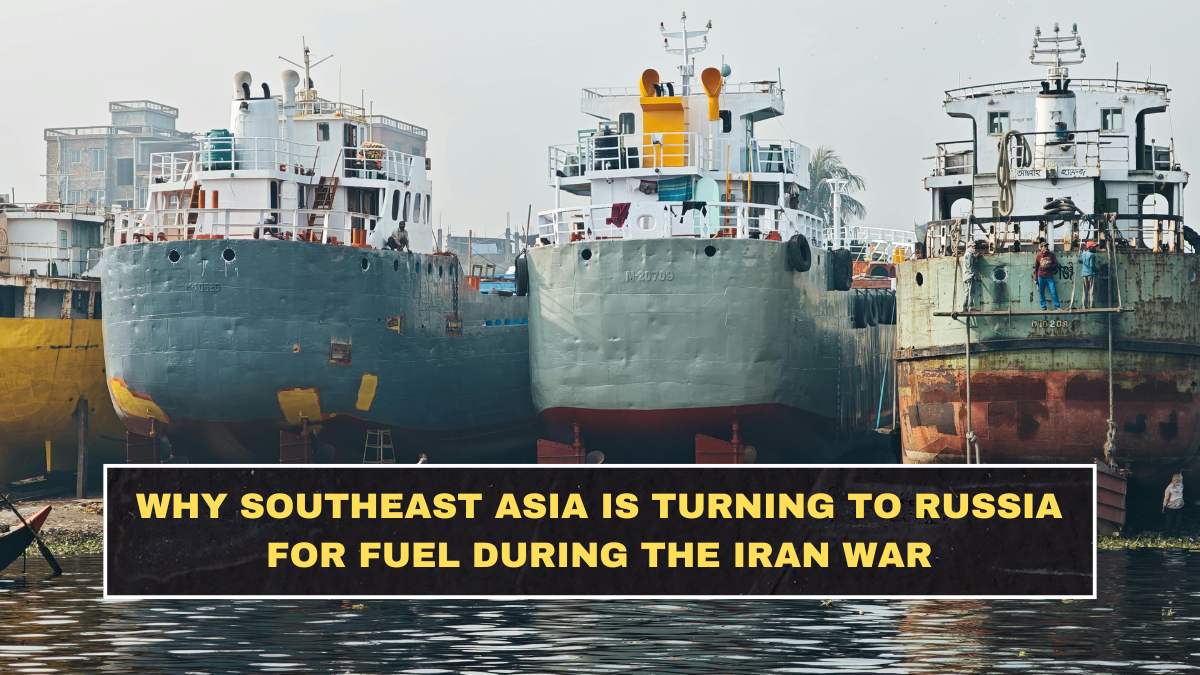
Southeast Asia is turning to Russia because the Iran war has disrupted energy and fertilizer supplies from the Middle East, leaving governments desperate for alternatives. The Guardian reported that countries from Jakarta to Manila are looking to Russia to plug fuel and fertilizer gaps caused by the conflict, even as the European Union warns that buying Russian oil helps fund Moscow’s war in Ukraine.
This is not about ideology. It is about survival economics. Southeast Asian countries need fuel for transport, electricity, factories and food supply chains. They also need fertilizer for rice, palm oil, fruit, vegetables and other agricultural production. When Middle East supplies become unreliable and prices rise, governments start looking for any supplier that can deliver volume quickly.
What Has Changed Since The Iran War Disrupted Supply?
The biggest change is that Southeast Asian energy security has become urgent. Many countries in the region depend heavily on imported fuel, and the Middle East is a major source of oil, gas and fertilizer inputs. Once conflict disrupts shipping routes and raises prices, governments face pressure to protect consumers from fuel shortages and inflation.
The World Bank has warned that energy prices could surge 24% in 2026 because of Middle East war disruption. It also expects fertilizer prices to rise 31%, driven by soaring urea costs. That combination is painful for Southeast Asia because fuel affects transport and electricity, while fertilizer affects farming and food prices.
| Country Or Area | What They Need From Russia? | Why It Matters? |
|---|---|---|
| Indonesia | Crude oil and energy supplies | Protects fuel availability in a large economy |
| Philippines | Resumed Russian fuel imports | Helps ease pressure from high energy prices |
| Thailand | Fertilizer discussions | Protects farming and food production |
| Vietnam | Nuclear energy cooperation | Supports long-term energy diversification |
| Wider ASEAN | Alternative fuel and fertilizer sources | Reduces dependence on disrupted Middle East routes |
Why Is Russia An Attractive Supplier Right Now?
Russia is attractive because it has oil, fuel, fertilizer, nuclear technology and a strong incentive to find buyers outside the West. Since Western sanctions limited Russia’s access to some markets, Moscow has been pushing harder into Asia. Southeast Asia now gives Russia a chance to sell energy while expanding diplomatic influence.
The Guardian reported that Indonesia has committed to importing 150 million barrels of Russian crude, the Philippines has resumed imports, Thailand is discussing fertilizer purchases, and Vietnam is accelerating an existing nuclear power deal. That shows Moscow is not only selling oil. It is offering a wider package: fuel today, fertilizer for farms, and nuclear partnerships for long-term energy security.
Why Is The European Union Warning ASEAN?
The European Union is warning ASEAN because buying Russian oil can indirectly support Russia’s war economy. EU foreign policy chief Kaja Kallas urged Southeast Asian countries to seek alternatives to Russian oil, arguing that such purchases can fund the war in Ukraine. Reuters reported that the warning came as ASEAN nations were looking toward Russian oil amid Middle East supply disruptions.
But here is the uncomfortable reality: moral pressure works poorly when countries fear fuel shortages and food inflation. European leaders can tell ASEAN to avoid Russian oil, but Southeast Asian governments must answer to their own citizens first. If petrol, electricity and food prices rise sharply, voters will blame local leaders, not Brussels.
Why Is Fertilizer Just As Important As Fuel?
Fertilizer is just as important because Southeast Asia’s food security depends on affordable farm inputs. Rice, vegetables, fruit, palm oil and other crops need fertilizer to maintain yields. If fertilizer prices rise too much, farmers may use less, which can reduce harvests and push food prices higher later.
Reuters reported that fertilizer supplies have been cut off by Middle East war disruption and warned that farmers may be worse off than during the 2022 fertilizer crunch. Analysts fear planting and yields could suffer if disruption persists. That means the current crisis is not only about filling petrol tanks. It is also about protecting next year’s food supply.
How Does This Affect Ordinary People In Southeast Asia?
Ordinary people feel this crisis through fuel prices, bus fares, electricity bills, food prices and job security. When diesel becomes expensive, trucks charge more to move goods. When electricity costs rise, factories and shops face higher bills. When fertilizer becomes expensive, farmers spend more and food can become costlier.
Governments may try subsidies, fuel-use restrictions, reserve releases or new supply deals to soften the impact. But those tools are expensive and temporary. Bloomberg’s reporting, republished by The Economic Times, said Asian nations are already using costly subsidies and fuel-use restrictions while trying to diversify energy sources and tap reserves.
Is This A Strategic Win For Russia?
Yes, this is a strategic win for Russia, and pretending otherwise would be naive. Moscow is using the Iran war to deepen ties with Southeast Asia at a time when Western governments want to isolate it. Energy and food security give Russia practical leverage because countries under pressure care about reliable supply more than diplomatic lectures.
Russia may not have the same economic weight in Southeast Asia as China, Japan, the US or the EU, but it has commodities that matter during crisis. Oil, gas, fertilizer and nuclear technology are not soft-power slogans. They are hard assets. In a supply shock, that gives Moscow a real opening.
Is Southeast Asia Taking A Risk By Buying Russian Supplies?
Yes, Southeast Asia is taking a risk. Buying Russian fuel can create diplomatic friction with the EU and possibly the United States. It can also expose companies to sanctions complications, insurance problems, payment issues and reputational pressure. The deals may solve short-term supply problems but create long-term strategic dependence.
The smarter approach for ASEAN countries is not to simply swap Middle East dependence for Russian dependence. That would be a lazy fix. The real solution is diversification: more suppliers, larger reserves, cleaner energy, regional power grids, fertilizer alternatives and better energy efficiency. Russia can be part of the emergency answer, but it should not become the only answer.
What Is The Bottom Line?
Southeast Asia is turning to Russia because the Iran war has made fuel and fertilizer security urgent. Countries need affordable energy, stable food production and protection from inflation. Russia can offer crude oil, fuel, fertilizer and nuclear cooperation at a time when Middle East supplies are disrupted.
The blunt truth is that Southeast Asian governments are choosing practicality over Western pressure. That may be understandable, but it is not risk-free. Russian supplies can ease today’s crisis, but overdependence on Moscow could create tomorrow’s vulnerability. The region needs emergency imports now, but it also needs a serious long-term plan to stop being trapped by every global energy shock.
FAQs
Why Is Southeast Asia Buying More Fuel From Russia?
Southeast Asian countries are looking to Russia because the Iran war has disrupted Middle East fuel and fertilizer supplies, creating shortages and price pressure across the region.
Which Southeast Asian Countries Are Turning To Russia?
Reports mention Indonesia, the Philippines, Thailand and Vietnam among countries engaging with Russia for crude oil, fuel, fertilizer or nuclear energy cooperation.
Why Is The EU Against ASEAN Buying Russian Oil?
The EU argues that buying Russian oil can help fund Moscow’s war in Ukraine. EU foreign policy chief Kaja Kallas urged Southeast Asian countries to seek alternatives to Russian oil.
Why Is Fertilizer Part Of This Crisis?
Fertilizer is part of the crisis because energy disruption raises urea and fertilizer prices. If farmers use less fertilizer, crop yields can fall and food prices can rise later.
Is Russia Becoming More Influential In Southeast Asia?
Yes. Russia is using fuel, fertilizer and nuclear energy cooperation to strengthen ties with Southeast Asian countries during the Middle East energy crisis.