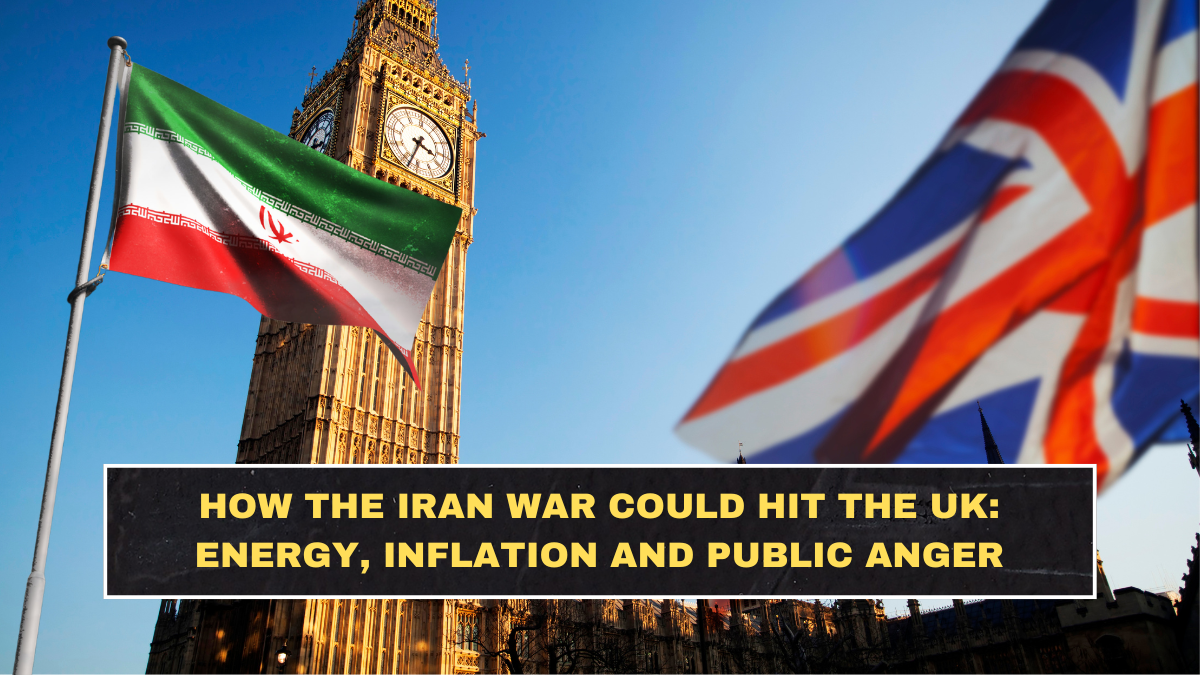
The UK is exposed to the Iran war because it remains vulnerable to global energy shocks, even though it does not buy all its energy directly from the Middle East. Oil and gas are traded globally, so disruption in the Gulf can raise prices everywhere. When global prices rise, British households feel it through petrol, gas bills, transport costs, food prices and business expenses.
Reuters reported that the National Institute of Economic and Social Research cut the UK’s growth forecast sharply because of the Iran war and inflation pressure. NIESR now expects UK growth of only 0.9% in 2026 and 1% in 2027, down from earlier forecasts of 1.4% and 1.3%. That is not a minor adjustment. It is a warning that the war is already being priced into Britain’s economic future.
How Big Could The Economic Hit Be?
The possible economic hit is large. The Guardian reported that NIESR warned the UK could face a £35 billion blow and a higher risk of recession this year because of the Iran war’s impact on energy prices. Even in its more optimistic scenario, the think tank expects weaker growth and more inflation pressure.
That matters because Britain was already struggling with weak growth, stretched public finances and pressure on living standards. A fresh energy shock makes everything harder. The government has less room to offer support, businesses face higher costs, and households may feel like the cost-of-living crisis never really ended.
| Impact Area | What Could Happen In The UK? |
|---|---|
| GDP growth | Slower expansion and higher recession risk |
| Inflation | Prices could stay above target for longer |
| Energy bills | Household gas and electricity costs could rise again |
| Petrol prices | Higher crude prices can push pump prices higher |
| Interest rates | Bank of England cuts may be delayed or reversed |
| Public anger | Living-cost pressure can turn into political pressure |
Why Could Inflation Rise Again?
Inflation could rise again because energy sits inside almost every price in the economy. When oil and gas become more expensive, the cost of transport, manufacturing, heating, electricity, farming and shipping also rises. Those costs then move into food, goods, services and travel.
Reuters reported that UK inflation rose to 3.3% in March from 3.0% in February, showing the first impact on prices from the Iran war. The Bank of England is worried because Britain has already suffered from stubborn inflation in recent years, and another energy shock could delay the return to normal.
What Has The World Bank Warned About Energy Prices?
The World Bank has warned that energy prices could surge sharply in 2026 because of Middle East war disruption. Reuters reported that the World Bank expects energy prices to rise 24% this year, with Brent crude projected to average $86 per barrel and possibly reach $115 if the conflict persists or deepens.
For the UK, this is dangerous because higher global oil prices can hit petrol and diesel quickly. Gas prices can also raise household bills and business energy costs. Britain may not be the most exposed country in the world, but it is exposed enough for this shock to hurt growth, inflation and political confidence.
Why Could The Bank Of England Face A Difficult Choice?
The Bank of England could face a difficult choice because the Iran war creates the worst kind of economic mix: weaker growth and higher inflation. If inflation rises, the Bank may need to keep interest rates high or even raise them. But if growth weakens, higher rates can make mortgages, loans and business investment even more painful.
Reuters reported that NIESR expects inflation to rise to 4.1% by early 2027 and not return to the Bank of England’s 2% target until 2028. In a more severe conflict scenario, the UK could enter recession and the Bank may need to raise rates up to 5.25%. That is a brutal policy trap.
How Could Households Feel The Impact?
Households could feel the impact through higher fuel, energy and food bills. If petrol prices rise, commuting becomes more expensive. If gas and electricity bills rise, monthly budgets become tighter. If businesses pass on higher transport and energy costs, grocery and service prices can rise too.
The Resolution Foundation warned that sustained conflict in the Middle East could deliver an £11 billion hit to UK family finances. That is the part politicians cannot ignore. People do not judge inflation through economic models. They judge it at the petrol pump, in supermarket aisles and when the energy bill lands.
Why Could This Become A Political Problem?
This could become a political problem because British voters are already tired of repeated cost-of-living shocks. After years of high bills, higher mortgage costs and weak wage growth, another inflation wave could create real anger. If people feel they are paying for a foreign war through household bills, pressure on the government will rise quickly.
The Guardian reported that the economic strain comes as Prime Minister Keir Starmer’s government faces political pressure, while higher borrowing needs could eat into the chancellor’s limited fiscal headroom. That means the government may be expected to help households while also being warned not to borrow too much.
Can The UK Protect Itself From This Shock?
The UK can reduce some damage, but it cannot fully escape global energy markets. Short-term help may include targeted support for vulnerable households, careful fuel-duty decisions and pressure on energy suppliers. But broad support schemes are expensive, and Britain’s public finances are already tight.
The longer-term answer is less dependence on volatile fossil fuel markets. Domestic renewables, storage, grid upgrades, energy efficiency and insulation reduce exposure to global oil and gas shocks. That is not a slogan; it is basic economic protection. If Britain keeps relying heavily on global fossil fuel prices, it will keep importing other countries’ crises into household bills.
What Is The Bottom Line?
The Iran war could hit the UK through a painful chain: higher oil and gas prices, higher inflation, weaker growth, tighter household budgets and more political anger. NIESR’s downgrade, the World Bank’s energy warning and the latest UK inflation data all point in the same direction.
The blunt reality is that Britain is not insulated from the Middle East energy crisis. A war thousands of miles away can still make petrol, food, bills and borrowing more expensive at home. If policymakers treat this as a temporary headline instead of a structural vulnerability, they are fooling themselves.
FAQs
How Could The Iran War Affect The UK Economy?
The Iran war can affect the UK through higher oil and gas prices, weaker growth, higher inflation, more expensive imports and pressure on household budgets.
How Much Could The UK Economy Lose?
NIESR warned that the Middle East energy shock could wipe around £35 billion from the UK economy and raise recession risk this year.
What Is The UK Growth Forecast Now?
NIESR expects the UK economy to grow by 0.9% in 2026 and 1% in 2027, down from earlier projections of 1.4% and 1.3%.
Why Could UK Inflation Rise Again?
Inflation could rise because higher oil and gas prices increase transport, heating, manufacturing and food costs. UK inflation already rose to 3.3% in March as the Iran war impact began to show.
Click here to know more