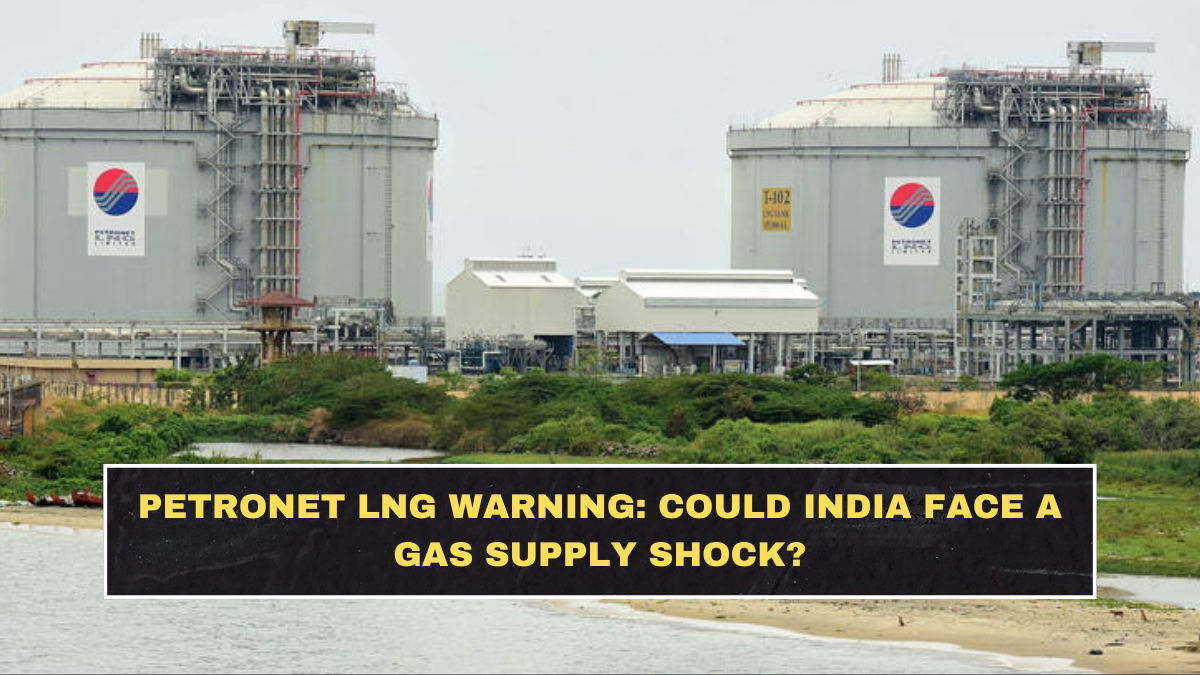
Petronet LNG’s warning matters because the company is India’s biggest liquefied natural gas importer, and any disruption in its cargo movement can affect industries that depend on gas. In March 2026, Petronet issued a force majeure notice after vessels could not safely reach Qatar’s Ras Laffan loading port because of the West Asia crisis and Strait of Hormuz disruption. Reuters reported that the situation affected LNG supplies from Qatar and led Indian gas firms to restrict local supplies.
This is not a small company-specific problem. LNG is used by fertiliser plants, city gas networks, refineries, power producers, steel units, ceramic factories, glass makers, and many other industrial users. When LNG supply becomes uncertain, the pain does not remain limited to one terminal or one balance sheet.
The household impact may not be immediate, because priority is usually given to essential users like homes and transport. But if the disruption lasts, gas costs can rise for industries, and those higher costs can eventually move into fertiliser, food, power, transport, and manufactured goods.
What Actually Happened With Petronet LNG?
The core issue was vessel movement through the Strait of Hormuz. Petronet said its LNG tankers could not safely transit through the route to Qatar’s Ras Laffan port, which is a major LNG loading hub. Argus reported that acts of war were excluded under the company’s insurance, and only one of Petronet’s three captive LNG tankers on the India-Middle East route had managed to unload at the Dahej terminal at that point.
That point is important because energy supply is not only about production. Even if gas exists in Qatar, it must be loaded, insured, shipped, delivered, regasified, and transported through India’s gas network. A disruption at any stage can create pressure across the chain.
The problem became serious enough for force majeure notices. Force majeure is a legal and commercial clause used when extraordinary events prevent a company from meeting normal obligations. In plain language, Petronet was signalling that the disruption was beyond ordinary business risk.
How Dependent Is India On LNG From This Region?
India has meaningful exposure to LNG supplies from Qatar and the Gulf region. Wood Mackenzie said India sourced 59% of its 2025 LNG imports from Qatar and the UAE, and a Strait of Hormuz closure could curtail up to 1.45 million tonnes of LNG deliveries per month. It also noted that India may be able to replace only around 50% of the shortfall in such a disruption scenario.
That is the part people should not ignore. Replacing LNG cargoes is not like ordering something from another shop overnight. Spot LNG may be expensive, cargoes may already be committed elsewhere, and shipping routes may become costlier because of risk premiums and insurance conditions.
| Area | Why It Matters | Possible Impact |
|---|---|---|
| Qatar LNG supply | Major source of Indian LNG imports | Cargo delays or shortfalls |
| Dahej terminal | Key receiving point for imported LNG | Lower utilisation if cargoes fall |
| Industrial gas users | Fertiliser, steel, ceramics, power and chemicals depend on gas | Supply cuts or higher costs |
| City gas networks | CNG and PNG need steady supply | Priority protection, but cost pressure possible |
| Spot LNG market | Replacement cargoes may be expensive | Higher landed gas price |
Could CNG And PNG Consumers Face Cuts?
For now, the stronger risk appears to be industrial curtailment rather than immediate household disruption. Reuters reported that no gas supply cuts had been announced for households or the automobile sector in the initial disruption phase, while fertiliser production and industrial users were affected.
That makes sense because governments and gas companies usually prioritise sensitive categories first. Household piped natural gas and transport CNG are politically and socially important. Cutting these quickly would create public anger, so the system normally tries to protect them before reducing supply to industries.
But protection does not mean immunity. If imported LNG becomes more expensive, city gas companies may still face cost pressure. They may not cut supply, but future pricing pressure can build if the crisis lasts. Consumers should not panic, but they also should not assume the energy system has unlimited shock absorbers.
Which Industries Could Feel The Shock First?
Industries that use gas as fuel or feedstock are the first to feel pressure. Fertiliser is especially sensitive because gas is a major input. If gas becomes expensive or scarce, fertiliser production economics can be affected, which can then matter for agriculture costs and subsidy pressure.
Steel, ceramics, glass, chemicals, refining, and power generation can also feel the strain. The World Economic Forum recently noted that geopolitical disruption linked to the Iran conflict had affected fuel shipments and raised input costs for sectors including steel production in India.
The harsh reality is that India’s gas market is still not deep enough to absorb a major LNG shock without consequences. Domestic gas helps, but imported LNG remains important for flexibility and industrial demand. A sustained disruption would force difficult choices between price, supply, and industrial output.
Can India Manage The Supply Risk?
India can manage part of the risk through alternative cargoes, supplier diversification, domestic gas allocation, and prioritisation of essential sectors. The government has also expanded LNG infrastructure, with official information stating that Petronet received commissioning permission for an additional 5 MMTPA regasification capacity at Dahej, taking the terminal’s capacity to 22.5 MMTPA.
But infrastructure alone cannot solve a shipping crisis. Extra regasification capacity helps only when enough LNG cargoes are available and safely delivered. If tankers cannot move freely through Hormuz or cargoes become expensive globally, terminals cannot magically create supply.
So the honest answer is: India can reduce the shock, not erase it. Better planning, stronger storage, wider sourcing, and faster domestic energy diversification are necessary. Depending heavily on fragile routes and then acting surprised during a crisis is not a strategy.
Conclusion?
Petronet LNG’s warning is a serious signal that India’s gas supply chain can be exposed when West Asia becomes unstable. The immediate pressure may hit industries before households, but the wider impact can still reach consumers through fertiliser, manufacturing, transport, and inflation.
The situation is not a reason for panic, but it is a reason for realism. India needs LNG, and LNG supply depends on shipping routes, insurance, contracts, and geopolitics. The companies and policymakers who plan early will handle the shock better than those who wait for the crisis to become visible at the consumer level.
FAQs
What Did Petronet LNG Warn About?
Petronet LNG warned of supply disruption because its vessels could not safely move through the Strait of Hormuz to reach Qatar’s Ras Laffan LNG loading port. This led to force majeure notices and concerns about gas availability for Indian buyers.
Will Indian Households Face PNG Or CNG Supply Cuts?
Households and automobile CNG users were not the first categories facing cuts, based on reported updates. Industrial users are more likely to face restrictions first, but prolonged disruption can still create price pressure for city gas companies.
Why Is Qatar Important For India’s LNG Supply?
Qatar is one of India’s major LNG suppliers, and much of that supply travels through the Strait of Hormuz. If shipping from Qatar becomes difficult, India may need costlier replacement cargoes from the spot market or other suppliers.
Which Industries Are Most At Risk From LNG Disruption?
Fertiliser, steel, ceramics, glass, chemicals, refining, power, and other gas-dependent industries are more exposed. If gas supply tightens or prices rise, these sectors may face higher production costs or supply restrictions.