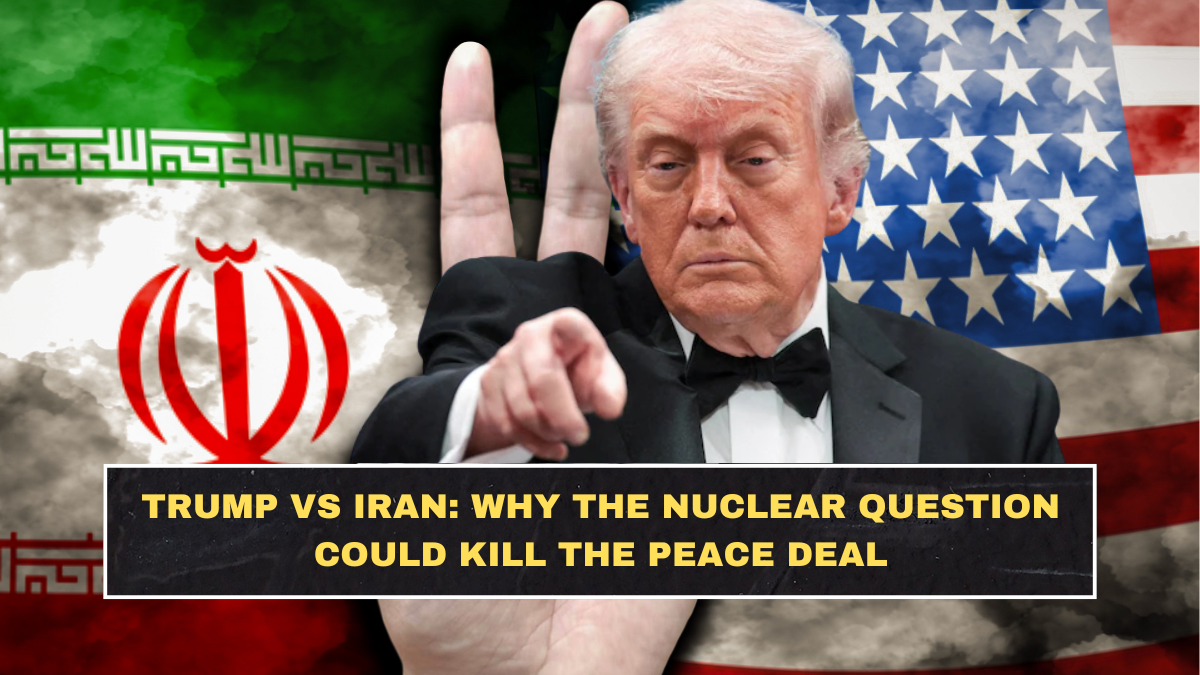
Iran’s latest proposal was supposed to create an opening for peace, but it may have created a fresh deadlock instead. The basic offer is simple: Tehran would reopen the Strait of Hormuz if the United States lifts its blockade and the war ends. That sounds like a major diplomatic breakthrough, especially when global oil markets, shipping routes, and regional security are under huge pressure.
But the problem is what Iran wants to leave out for now: its nuclear programme. Reuters reported that President Donald Trump is unhappy with Iran’s latest proposal because it would delay discussions on Tehran’s nuclear programme until after the war and shipping disputes are resolved. That is the key reason the deal may fail before it even reaches the serious negotiation stage.
What Is Iran Actually Asking For?
Iran appears to be asking for immediate pressure relief before nuclear talks begin. In simple terms, Tehran wants the US blockade lifted, the war ended, and maritime pressure reduced first. Only after that would Iran discuss the nuclear question. From Iran’s point of view, this makes sense because it does not want to negotiate while under military and economic pressure.
For Washington, that demand is hard to accept. The US sees Iran’s nuclear programme as the core reason tensions became so dangerous in the first place. AP reported that US Secretary of State Marco Rubio appeared to rule out postponing nuclear discussions, saying the nuclear issue cannot be pushed aside while other parts of the conflict are resolved first.
| Issue | Iran’s Position | US Position |
|---|---|---|
| Strait of Hormuz | Reopen if blockade ends | Reopening is not enough |
| US blockade | Must be lifted first | Used as pressure tool |
| War status | End fighting before nuclear talks | Nuclear issue must come first |
| Nuclear programme | Discuss later | Discuss immediately |
| Main risk | Iran loses leverage | Iran gains relief without limits |
Why Is The Nuclear Issue So Sensitive?
The nuclear issue is not just another topic in the deal. It is the centre of the entire US-Iran conflict. Washington’s fear is that Iran could use a pause in fighting and restored trade routes to rebuild strength while delaying real limits on its nuclear programme. That is why a deal that ignores nuclear talks may look good for oil markets but weak for US security strategy.
Trump also has a political problem here. If he accepts a deal that reopens Hormuz but leaves the nuclear question unresolved, critics could accuse him of giving Iran everything it wants upfront. In US politics, that would be extremely risky. Any agreement with Iran is already controversial, and a deal without clear nuclear restrictions would be attacked as soft, rushed, and incomplete.
Why Would Iran Want To Delay Nuclear Talks?
Iran’s logic is not difficult to understand. If Tehran enters nuclear talks while under blockade and military pressure, it negotiates from weakness. By reopening Hormuz in exchange for US concessions, Iran could reduce global pressure, restore some economic breathing room, and then enter nuclear talks from a stronger position. That is not generosity; it is strategy.
There is also a messaging benefit for Iran. If the US rejects the proposal, Tehran can argue that Washington is blocking peace and keeping the region unstable. This matters because many countries care less about the technical nuclear dispute and more about oil prices, shipping safety, and regional spillover. Iran knows the world economy is a pressure point, and it is using that pressure carefully.
Why Is Trump Unlikely To Accept The Deal As It Stands?
Trump may still want a dramatic peace deal, but this version gives him very little on the issue that matters most to Washington. Reuters reported that Iran’s proposal would set aside nuclear discussions until the war and Gulf shipping disputes are resolved, while Trump wants nuclear matters handled from the start. That difference is not small; it is the central disagreement.
The US also does not want Iran to control the definition of “reopening” the Strait of Hormuz. If ships can pass only under Iranian conditions, Washington may see that as Tehran turning an international waterway into a bargaining checkpoint. That would make any deal look unstable from the beginning, especially for Gulf states, shipping insurers, and energy buyers.
How Does The Strait Of Hormuz Make The Nuclear Deal Harder?
The Strait of Hormuz gives Iran leverage because so much global oil and gas trade depends on it. AP reported that the strait handles about one-fifth of the world’s traded oil and natural gas in peacetime. When Iran restricts movement and the US enforces a blockade, the crisis immediately becomes global instead of regional.
This is why the nuclear deal is harder now. The talks are no longer only about uranium enrichment, inspections, or sanctions. They are also about shipping lanes, oil markets, war guarantees, regional security, and US credibility. Once so many issues are tied together, every concession becomes more expensive and every delay becomes more dangerous.
What Could A Compromise Look Like?
A realistic compromise would need both sides to stop pretending they can get everything first. Iran may need to accept early nuclear discussions, even if they are limited or phased. The US may need to offer some narrow relief linked directly to Hormuz reopening, without lifting all pressure at once. That would give both sides something to show without allowing either side to claim full victory.
A phased deal could start with verified safe passage through Hormuz, followed by a short timeline for nuclear talks, monitored shipping guarantees, and limited sanctions or blockade adjustments. But this only works if both sides trust enforcement. Right now, trust is exactly what is missing.
What Happens If The Nuclear Question Kills The Deal?
If the deal collapses, oil markets could stay nervous, shipping traffic could remain disrupted, and the risk of accidental escalation could grow. The bigger danger is that both sides may blame each other publicly while quietly preparing for more pressure. Iran could tighten its control around Hormuz, while the US could expand military and economic pressure.
For ordinary people, this is not just a diplomatic headline. A failed deal can affect fuel prices, flight costs, supply chains, inflation, and global market confidence. The nuclear issue may sound technical, but the consequences are very real. If Washington and Tehran cannot separate immediate de-escalation from long-term nuclear limits, this peace proposal may collapse before it becomes a deal.
Conclusion
Iran’s proposal has one major weakness: it asks the US to reduce pressure now while delaying the nuclear issue until later. That is exactly why Trump may reject it. Washington does not want a temporary shipping fix that leaves the central security problem untouched. Iran wants relief before nuclear talks; the US wants nuclear talks before serious relief.
This is why the deal everyone wants may still fail. The world wants Hormuz reopened, oil markets calmed, and war risks reduced. But unless the nuclear question is placed inside the agreement from the beginning, Trump is unlikely to accept it. The uncomfortable truth is simple: peace may be possible, but not if both sides keep trying to protect their strongest bargaining chip first.
FAQs
Why is Trump unhappy with Iran’s latest proposal?
Trump is reportedly unhappy because Iran’s proposal delays discussions on its nuclear programme. The US wants nuclear issues addressed from the beginning, not after the war and shipping disputes are resolved.
What does Iran want from the US?
Iran wants the US to lift its blockade, end the war, and resolve maritime disputes before deeper nuclear talks begin. This would give Tehran pressure relief before negotiating on its most sensitive issue.
Why is the Strait of Hormuz important in this deal?
The Strait of Hormuz is a major global oil and gas shipping route. Any disruption there affects energy markets, shipping costs, inflation, and global economic confidence.
Can the US and Iran still reach a deal?
Yes, but only if both sides agree to a phased compromise. Iran would likely need to accept early nuclear talks, while the US may need to offer limited relief tied to verified shipping safety.