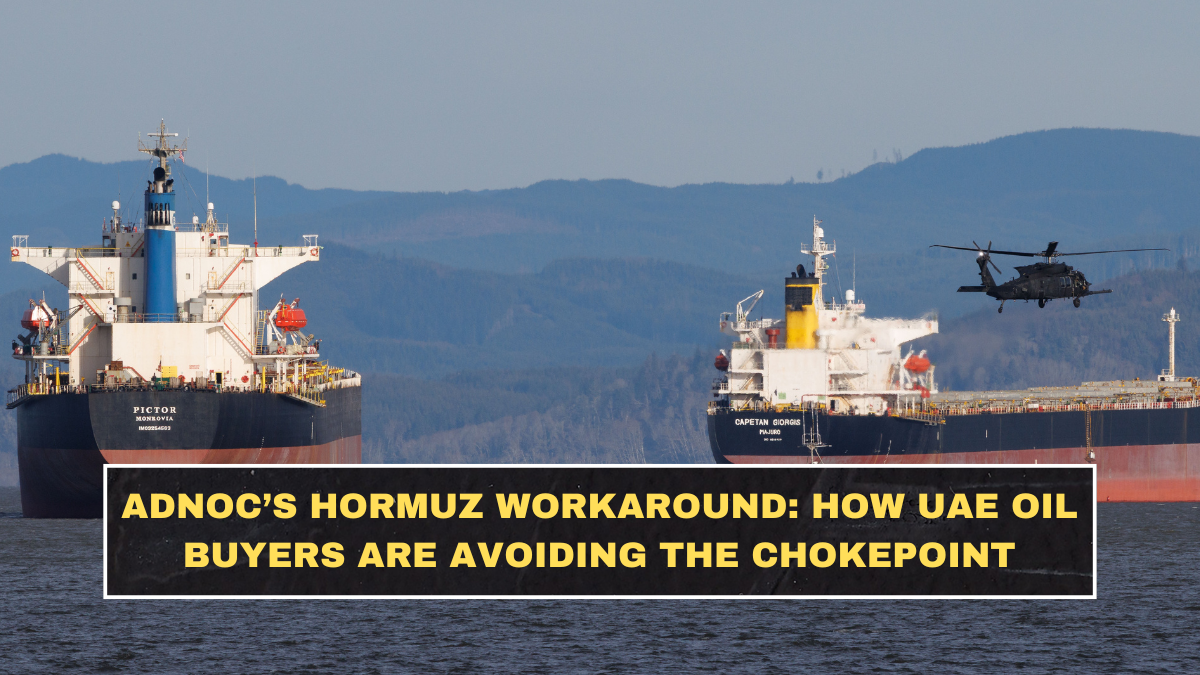
ADNOC’s Hormuz workaround matters because it shows how badly oil buyers want alternatives to one of the world’s most dangerous shipping chokepoints. Reuters reported that Abu Dhabi National Oil Company has told some clients they can choose to load Das and Upper Zakum crude outside the Arabian Gulf, instead of relying only on routes that require passage through the Strait of Hormuz.
This is not a small logistical adjustment. It is a sign that Gulf oil trade is being forced to adapt under pressure. When a major producer like ADNOC starts offering case-by-case loading options outside the Gulf, buyers pay attention because it may reduce shipping risk, insurance pressure and delivery uncertainty during a regional crisis.
What Exactly Is ADNOC Offering Buyers?
ADNOC has told some customers that cargoes of Das and Upper Zakum crude can be made available for loading outside the Gulf on a case-by-case basis. Reuters said the company traditionally loads these grades at Das Island and Zirku Island terminals, but the new option is designed to help ADNOC meet contractual obligations while avoiding Hormuz disruption.
The exact alternative locations were not publicly confirmed in ADNOC’s notice. However, sources told Reuters possible options include ship-to-ship transfers off Fujairah in the UAE or Sohar in Oman. That matters because both locations sit outside the most dangerous Gulf bottleneck, giving buyers a possible way to reduce exposure to Hormuz-related delays.
| ADNOC Workaround Detail | What It Means For Buyers? |
|---|---|
| Crude grades | Das and Upper Zakum crude |
| Normal loading points | Das Island and Zirku Island inside the Gulf |
| Alternative idea | Load outside the Arabian Gulf |
| Possible locations | Fujairah or Sohar through ship-to-ship transfer |
| Main benefit | Lower exposure to Hormuz shipping disruption |
| Main uncertainty | Extra costs and logistics are still unclear |
Why Is The Strait Of Hormuz So Risky For Oil Buyers?
The Strait of Hormuz is risky because it is a narrow route through which a huge share of Gulf oil normally moves. When conflict, blockade risk or naval tension hits the area, tankers face delays, higher insurance costs and possible rerouting. Buyers do not only worry about whether oil exists. They worry about whether it can safely reach them.
This is why ADNOC’s alternative loading option is important. If a buyer can collect cargo outside the Gulf, the shipment avoids the most dangerous part of the journey. That does not remove all risk, but it can make delivery more predictable. In crisis markets, predictability itself becomes valuable.
Why Are Fujairah And Sohar Important?
Fujairah and Sohar matter because they are positioned outside the Strait of Hormuz. Fujairah is especially important for the UAE because it is already a major oil storage and export hub on the Gulf of Oman. Reuters has reported that the Abu Dhabi Crude Oil Pipeline runs from Habshan to Fujairah and has capacity of around 1.5 million to 1.8 million barrels per day.
But this is not a magic solution. Reuters also reported earlier that ADNOC oil loading at Fujairah had faced disruption after drone attacks, showing that even alternative hubs can come under pressure during the conflict. So the workaround helps, but it does not make UAE exports completely risk-free.
Why Does This Matter For Asian Oil Buyers?
Asian buyers care because they depend heavily on Middle East crude. Countries such as India, China, Japan, South Korea and several Southeast Asian economies need reliable Gulf oil flows for refineries, transport and industry. If Hormuz becomes unreliable, buyers must either pay more, find alternative crude, use reserves or accept delivery delays.
ADNOC’s workaround gives some buyers another option. A cargo loaded outside the Gulf can reduce risk premiums and help refiners plan more confidently. But availability is limited, and not every buyer can automatically use the option. That is why this should be seen as a pressure valve, not a full replacement for normal Hormuz shipping.
Does This Mean The UAE Can Avoid Hormuz Completely?
No, and that assumption would be lazy. The UAE has better alternatives than many Gulf producers, but it cannot simply move unlimited oil outside Hormuz overnight. HSBC said the UAE’s alternative Abu Dhabi Crude Oil Pipeline is likely already operating near maximum capacity during the disruption. That limits how much extra oil can bypass the chokepoint.
This is the hard reality behind the headlines. Workarounds reduce pain, but they do not eliminate geography. The Strait of Hormuz remains too important to ignore. If disruption continues, even countries with alternative infrastructure will still face bottlenecks, higher costs and operational stress.
How Does UAE’s OPEC Exit Connect To This?
The timing is important because the UAE has also announced it will leave OPEC and OPEC+ from May 1, 2026. Reuters reported that the decision is a major blow to the oil producer group and could give the UAE more autonomy over future production policy.
Together, these two moves tell a clear story. The UAE wants more control over both production and export flexibility. Leaving OPEC may give Abu Dhabi more freedom on output, while alternative loading options help it manage shipping risk. This does not mean the UAE controls the whole market, but it does show a more independent energy strategy.
What Are The Biggest Problems With The Workaround?
The biggest problems are cost, capacity and complexity. Reuters said ADNOC’s notice did not clarify whether extra costs from alternative arrangements would be covered by ADNOC or by buyers. That is not a minor detail. Ship-to-ship transfers, rerouting, extra handling and insurance can all add costs.
There is also operational complexity. Moving cargo outside normal terminals requires coordination between tankers, storage, pipeline flows, port authorities, safety teams and buyers. In normal conditions, that is manageable. In a conflict environment, every extra step becomes a risk point. Buyers may like the option, but they will still examine cost and reliability closely.
Could This Change The Future Of Gulf Oil Exports?
Yes, it could accelerate a longer-term shift. Gulf producers may invest more in pipelines, ports and loading systems outside Hormuz because the current crisis has exposed how dangerous overdependence on one route can be. The UAE is already better positioned than many others because of Fujairah, but even that system has shown limits.
Other producers may watch ADNOC’s workaround closely. If buyers reward suppliers that can avoid chokepoints, future energy investment may move toward redundancy and route flexibility. In plain language, customers may start valuing “safe delivery” almost as much as the crude itself.
What Is The Bottom Line?
ADNOC’s Hormuz workaround is important because it gives some oil buyers a way to reduce exposure to the Strait of Hormuz during a major regional crisis. Loading Das and Upper Zakum crude outside the Gulf may help ADNOC meet contracts, calm buyers and protect the UAE’s reputation as a reliable supplier.
But this is not a complete escape from risk. Alternative loading is case-by-case, costs remain unclear, and routes like Fujairah have also faced disruption. The blunt truth is that ADNOC has a useful workaround, not a miracle solution. Hormuz remains the pressure point, and the world is being reminded how fragile oil logistics really are.
FAQs
What Is ADNOC’s Hormuz Workaround?
ADNOC’s workaround allows some clients to load Das and Upper Zakum crude outside the Arabian Gulf on a case-by-case basis, helping them reduce exposure to the Strait of Hormuz.
Which Crude Grades Are Included In The Workaround?
The reported grades are Das and Upper Zakum crude, which are traditionally loaded at Das Island and Zirku Island terminals inside the Gulf.
Where Could Buyers Load The Crude Instead?
Reuters reported that possible alternatives include ship-to-ship transfers off Fujairah in the UAE or Sohar in Oman, although ADNOC did not publicly confirm exact locations in the notice.
Does This Completely Avoid The Strait Of Hormuz Problem?
No. It reduces exposure for some cargoes, but capacity, logistics, costs and security risks still limit how much oil can bypass Hormuz.
Why Does This Matter For Global Oil Prices?
It matters because reliable export routes can reduce panic in oil markets. But if Hormuz disruption continues or worsens, workarounds may not be enough to prevent higher prices and supply stress.