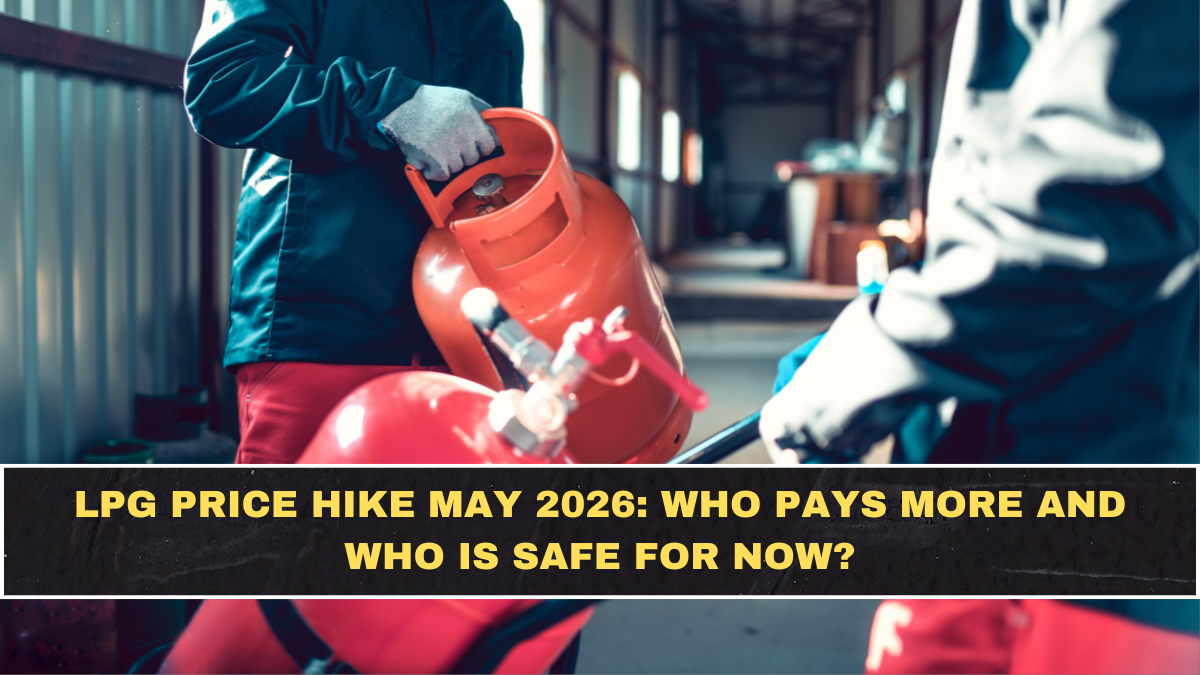
India saw a sharp LPG price change from May 1, 2026, but the impact is not equal for everyone. The biggest hike came in the 19 kg commercial LPG cylinder, which is mainly used by restaurants, hotels, dhabas, cloud kitchens, bakeries and small food businesses. Indian Oil increased the commercial LPG cylinder price by ₹993, taking the Delhi rate to ₹3,071.50.
The important relief is that domestic LPG prices were not changed in this revision. That means regular households using 14.2 kg domestic cylinders are safe from a direct price hike for now. But this does not mean consumers are fully protected, because commercial LPG is deeply connected with food prices, restaurant bills and daily eating-out costs.
Who Will Pay More After This LPG Hike?
The direct burden falls on commercial users because they buy the 19 kg LPG cylinder for business use. Restaurants, hotels, small eateries, caterers, tea stalls, sweet shops and food delivery kitchens will now have to pay much more for the same cooking fuel. This is especially painful because fuel is a recurring cost, not a one-time purchase.
A business using just 10 commercial cylinders in a month will face an extra cost of ₹9,930 after the hike. A mid-sized restaurant using 30 cylinders may face nearly ₹29,790 more in monthly fuel costs. That is why the hike can quickly become a pricing problem for food businesses, even if they try to absorb the shock initially.
| LPG Category | May 2026 Status | Reported Price / Change | Who Is Affected? |
|---|---|---|---|
| 19 kg commercial LPG cylinder | Price increased | ₹993 hike | Restaurants, hotels, vendors, cloud kitchens |
| Delhi commercial LPG rate | New rate active | ₹3,071.50 | Commercial users in Delhi |
| Domestic 14.2 kg LPG cylinder | Unchanged | ₹913 in Delhi | Household consumers safe for now |
| Main direct impact | Business cost rises | Immediate | Food and hospitality sector |
| Main indirect impact | Food prices may rise | Gradual | Customers ordering or eating out |
Who Is Safe From The LPG Hike For Now?
Household consumers are safe from the direct LPG price hike because domestic cylinder prices were kept unchanged. Reports said the domestic 14.2 kg LPG cylinder in Delhi continues at ₹913, while the commercial cylinder moved sharply higher. This is the key difference people need to understand before panicking about their home gas bill.
But “safe” only means safe from a direct cylinder bill increase. If a family eats out, orders food online, buys bakery items or depends on local food vendors, they may still feel the impact indirectly. When businesses pay more for cooking fuel, they often recover that cost through menu prices, delivery rates or reduced discounts.
Why Did Commercial LPG Prices Rise So Sharply?
The LPG hike has been linked to global energy market pressure and rising fuel costs. Reuters reported that Indian Oil raised prices for industrial LPG and aviation turbine fuel for foreign airlines, while keeping domestic cooking gas and domestic jet fuel unchanged. The report connected the price movement to high global oil prices and geopolitical tension affecting energy markets.
This matters because India imports a large share of its energy needs, so global oil and gas movements can affect local prices. When international prices rise sharply, oil marketing companies usually revise rates depending on product category, usage and market conditions. Commercial LPG often moves more directly with market rates than domestic LPG.
Why Are Restaurants And Small Businesses Hit First?
Restaurants and small food sellers are hit first because they cannot operate without cooking fuel. A household may use one domestic cylinder for weeks, but a busy food outlet can use several commercial cylinders in a short time. For them, LPG is not a background expense; it is one of the core costs of doing business.
The biggest problem is that many small eateries already work on thin margins. Rent, staff salary, raw materials, electricity, delivery commission and packaging costs are already high. When LPG suddenly becomes costlier, these businesses have limited choices: raise prices, reduce portions, cut offers or accept lower profits.
Will Customers See Higher Food Prices Immediately?
Not everywhere, and not instantly. Bigger restaurants may wait before changing menu prices because they have more pricing power and better cost buffers. Smaller vendors may react faster because even a few thousand rupees of extra monthly cost can disturb their margins.
Customers should watch for quiet price changes rather than only obvious menu hikes. Some businesses may increase the price of tea, snacks, thalis, rolls, biryani, sweets or bakery products. Others may keep prices unchanged but reduce portion sizes, remove discounts or increase delivery packaging charges.
Is This Only A Business Problem Or A Bigger Inflation Signal?
This is not just a business problem. It is an inflation signal because commercial LPG is linked with food services, hospitality and small business operations. When cooking fuel becomes costlier, the pressure can slowly move into food prices and daily consumer spending.
The hard truth is simple: even if your home LPG cylinder is unchanged, your lifestyle costs may still rise. If restaurant food, delivery meals, office lunches and snacks become more expensive, the consumer still pays. This is how fuel inflation quietly turns into food inflation without directly touching the household cylinder.
What Should Consumers And Businesses Watch Next?
Consumers should watch restaurant bills, food delivery prices and local snack rates over the next few weeks. A single hike may not change everything overnight, but repeated fuel increases can push businesses to revise pricing. The effect will be more visible in cities where eating out and delivery orders are common.
Businesses should track monthly cylinder usage and calculate the real increase instead of guessing. A vendor using 15 cylinders a month now faces ₹14,895 extra in LPG cost. Without proper pricing, that cost can quietly eat into profits and make the business weaker over time.
Conclusion
The May 2026 LPG price hike mainly affects commercial users, not household consumers directly. The 19 kg commercial LPG cylinder became ₹993 costlier, while domestic LPG prices stayed unchanged for now. That means families may not see a higher home gas bill immediately, but food businesses are already facing a serious cost shock.
The people who pay first are restaurants, cloud kitchens, hotels, dhabas, tea stalls, bakeries and caterers. The people who may pay next are customers, through higher restaurant bills, delivery prices or smaller portions. So the blunt reality is this: households are safe on paper, but not fully safe in daily spending.
FAQs
Did domestic LPG prices increase in May 2026?
No, domestic LPG prices were kept unchanged in the May 1, 2026 revision. The major hike was applied to the 19 kg commercial LPG cylinder used by businesses. In Delhi, reports said the domestic 14.2 kg cylinder stayed at ₹913, while the commercial cylinder rose to ₹3,071.50.
How much did the commercial LPG cylinder price increase?
The 19 kg commercial LPG cylinder price increased by ₹993 from May 1, 2026. Indian Oil raised the Delhi commercial LPG rate to ₹3,071.50. This is a sharp hike for businesses that depend on multiple cylinders every month.
Who is most affected by the LPG price hike?
Restaurants, hotels, cloud kitchens, dhabas, bakeries, caterers, tea stalls and small food vendors are the most affected. These businesses use commercial LPG regularly for cooking and production. If their fuel cost rises sharply, their total operating cost also increases.
Will restaurant and food delivery prices increase now?
Food prices may rise gradually if businesses decide they cannot absorb the higher LPG cost. Some may increase menu prices directly, while others may reduce discounts, change combo pricing or cut portions. The impact will depend on how much LPG each business uses and how strong its profit margin is.