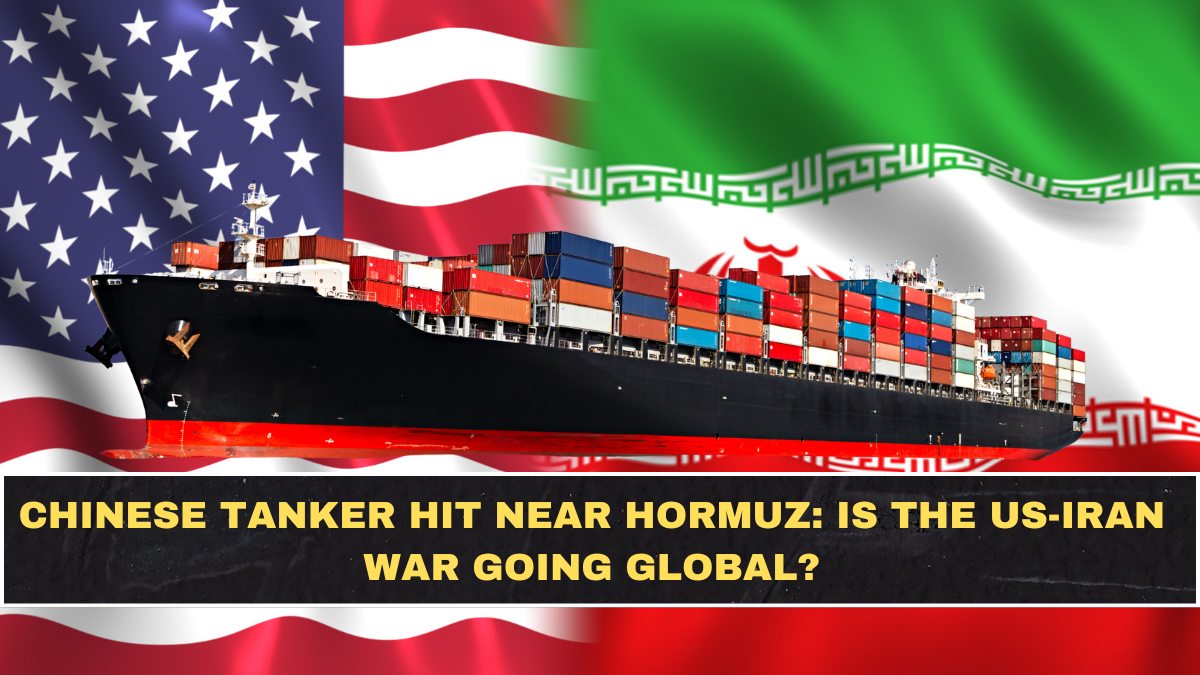
A Chinese-owned oil tanker being hit near the Strait of Hormuz has turned an already dangerous US-Iran crisis into a much bigger global concern. Until now, many countries were watching the conflict mainly through the lens of oil prices, shipping delays and military escalation. But when a China-linked vessel is reportedly attacked near one of the world’s most important sea routes, the story becomes far more sensitive.
Reuters reported that a Chinese-owned product tanker was attacked near Hormuz, calling it the first such reported incident involving a Chinese tanker in the current crisis. The vessel was identified in several reports as JV Innovation, and the attack came while Gulf shipping was already under heavy pressure. China has not treated this as a small incident, because its energy security and trade movement are directly linked to safe passage through the region.
What Do We Know So Far?
The most important detail is that responsibility is still not fully clear. ABC reported that the chief engineer of the Chinese-owned tanker said it was “still unclear” who fired on the vessel, while the ship remained operational and the crew stayed on board. This matters because blaming the wrong side too early can worsen a conflict that is already sitting on a knife-edge.
China’s Foreign Ministry said it was extremely concerned about the number of ships affected by tensions in the Strait of Hormuz, according to Al Jazeera’s live coverage. That statement shows Beijing is not only worried about one tanker, but about the wider risk to commercial shipping. When China, the US, Iran and Gulf countries are all pulled into the same crisis zone, the chances of diplomatic mistakes become much higher.
| Key Detail | Why It Matters |
|---|---|
| Chinese-owned tanker hit | Brings China directly into the shipping-risk debate |
| Strait of Hormuz location | Critical route for oil, gas and global trade |
| Responsibility unclear | Reduces certainty and increases diplomatic danger |
| Ship still operational | Limits immediate damage, but not strategic concern |
| China concerned | Signals pressure for safer shipping guarantees |
Is China Now Involved?
China is involved economically and diplomatically, but that does not automatically mean military involvement. This is where people often jump to lazy conclusions. A Chinese-owned tanker being hit does not mean China will enter the US-Iran conflict directly. It does mean Beijing will likely push harder for safe shipping, clearer accountability and protection of energy routes.
China depends heavily on Gulf energy and has deep trade interests across the region. If Hormuz becomes unsafe, China’s oil supply chains, shipping costs and diplomatic balancing act all come under pressure. Beijing also has relationships with Iran, Gulf countries and global markets, so it cannot ignore an attack involving a Chinese-linked vessel.
Why Is Hormuz So Dangerous?
The Strait of Hormuz is dangerous because it is narrow, crowded and strategically explosive. Oil tankers, LNG carriers, naval ships, drones, patrol boats and surveillance systems all operate in a small area where one wrong move can trigger a wider reaction. In such a space, even a limited attack can create panic across shipping and energy markets.
The US military has also said its naval forces came under Iranian missile, drone and fast-boat attacks in the Strait of Hormuz, while Iran and the US continue to blame each other for ceasefire violations. This means commercial vessels are moving through a region where military tension is not theoretical; it is active and unpredictable.
What Could Happen Next?
The next danger is not just another tanker attack. The bigger risk is that global shipping firms start treating Hormuz as too risky for normal movement. Even if ships continue passing, insurance costs, route planning, security measures and freight charges can rise quickly. That pressure can eventually reach oil prices, transport costs and consumer inflation.
Watch these warning signs closely:
- China issues a stronger diplomatic warning or demands investigation
- More tankers are hit near Hormuz, Fujairah, Oman or Gulf waters
- Shipping companies delay or reroute vessels due to war-risk costs
- Oil prices jump sharply after fresh security alerts
- The US or Iran publicly blames the other side for the Chinese tanker incident
Conclusion?
The Chinese tanker hit near Hormuz does not prove that the US-Iran war is going global, but it does prove the crisis is no longer neatly contained. A conflict around Hormuz automatically affects countries that depend on Gulf energy, and China is one of the biggest players in that equation. That is why this incident is much more serious than a normal maritime security report.
The uncomfortable truth is simple: Hormuz is not just Iran’s neighbourhood or America’s military problem. It is a global trade artery. If Chinese, Indian, European, Gulf or other commercial vessels keep getting dragged into the danger zone, the world may face not only a military crisis but also a shipping, oil and inflation crisis.
FAQs?
Was A Chinese Tanker Really Hit Near Hormuz?
Yes, Reuters and other outlets reported that a Chinese-owned oil/product tanker was attacked near the Strait of Hormuz. The vessel has been identified in reports as JV Innovation. However, available reports also say it is still unclear who fired on the tanker, so blaming any side without confirmation would be irresponsible.
Does This Mean China Will Join The US-Iran Conflict?
No, that would be a big assumption. China may increase diplomatic pressure and demand safer shipping conditions, but a direct military response is a different matter. For now, the incident mainly increases diplomatic tension and shipping-security concerns around Hormuz.
Why Is The Strait Of Hormuz So Important For China?
China depends heavily on imported energy, and Gulf shipping routes are crucial for its oil supply. If Hormuz becomes unsafe, China can face higher shipping costs, supply uncertainty and energy-market pressure. That is why Beijing is closely watching any attack involving commercial ships in the area.
Can This Affect Oil Prices In India?
Yes, it can indirectly affect India because Hormuz tension can push up global oil prices and shipping costs. India imports a large amount of crude oil, so any Gulf disruption can create pressure on inflation, the rupee and fuel expectations. The impact depends on how long the crisis lasts and whether shipping remains safe.