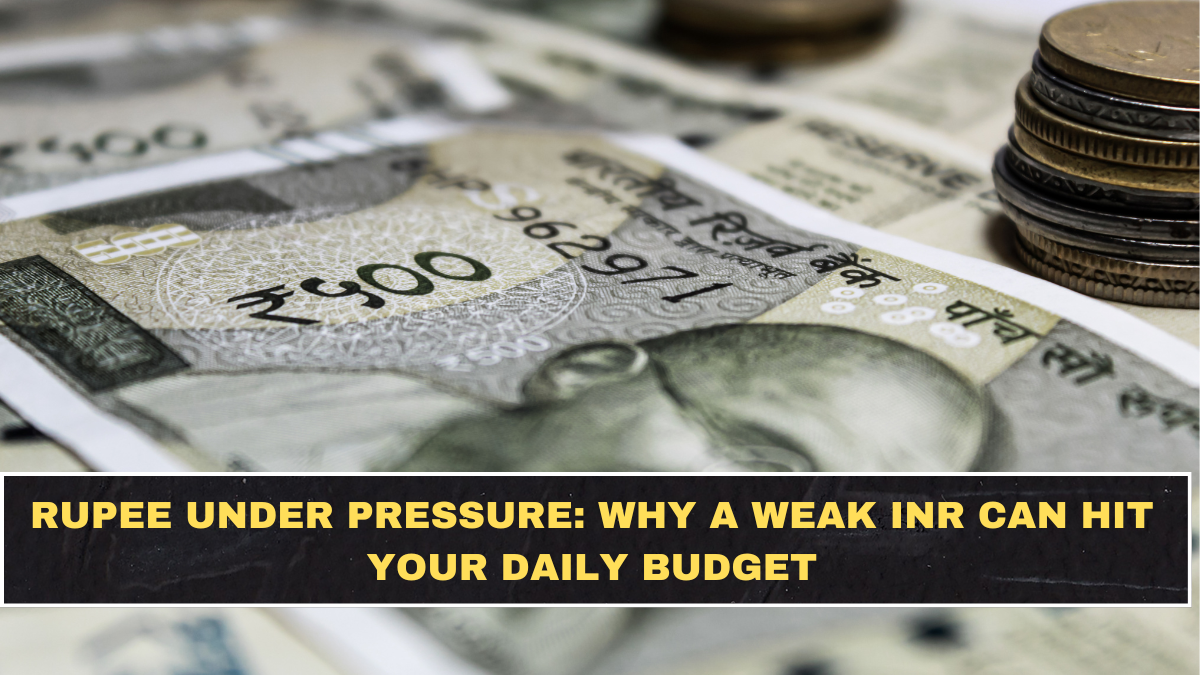
The Indian rupee is again making headlines because it has been moving under pressure against the US dollar in 2026. Reuters reported that the rupee has weakened around 5% this year, while analysts in a May 2026 poll expect it to stay broadly near ₹95 per dollar over the next year. That means this is not just a trader’s problem sitting inside forex terminals. It can quietly affect fuel, travel, imported goods, education abroad and even household inflation.
Why Is The Rupee Under Pressure Now?
The biggest pressure points are not mysterious. A stronger dollar, foreign investor outflows, high crude oil prices and global tensions have all made the rupee weaker. India imports a large portion of its oil requirement, so when crude becomes expensive, India needs more dollars to pay for energy. That creates extra demand for dollars and puts pressure on the rupee. Reuters also reported that cheaper oil helped the rupee rebound sharply on May 7, 2026, showing how closely the currency is linked to crude prices.
The uncomfortable truth is that the rupee is not weak only because of one bad news event. Importers are hedging aggressively because they fear more currency weakness, while exporters are holding back from selling dollars. Reuters reported that importers hedged nearly $58 billion in April 2026, compared with about $24 billion by exporters. This imbalance adds more pressure because one side is rushing to protect itself, while the other side is waiting for better rates.
What Is The 2026 Rupee Forecast?
Most serious forecasts do not show a sudden dramatic collapse, but they also do not show a strong rupee comeback. Reuters’ poll of 39 analysts conducted from May 4 to May 6, 2026, showed the rupee staying broadly steady around ₹95 per dollar over the next year. BMI also expects the rupee to trade around ₹95 per dollar by the end of 2026, mainly because geopolitical tension and energy imports are still weighing on the currency.
| Factor | Impact On Rupee | Why It Matters |
|---|---|---|
| Crude oil prices | Negative if oil rises | India needs more dollars for imports |
| Dollar strength | Negative | Makes emerging-market currencies weaker |
| FII outflows | Negative | Foreign investors sell Indian assets |
| RBI intervention | Supportive | Helps reduce extreme volatility |
| Exporter dollar sales | Supportive | Adds dollar supply in the market |
How Can A Weak Rupee Affect Common Indians?
A weak rupee does not hit everyone on the same day, but it slowly enters daily life through prices. Imported fuel, electronics, foreign education, international travel and raw materials become costlier when the rupee falls. Businesses may pass higher import costs to customers, which means the common person eventually pays more even if they never check the dollar rate.
Here is where people may feel the pressure first:
- Petrol, diesel and transport-linked costs can rise if crude oil stays expensive.
- Imported phones, laptops and gadgets may become costlier.
- Foreign education fees become heavier for Indian families.
- Overseas travel budgets can suddenly stretch.
- Companies dependent on imports may face margin pressure.
What Is RBI Doing To Defend The Rupee?
The Reserve Bank of India usually does not try to fix one exact rupee level forever. Its broader aim is to reduce extreme volatility and prevent disorderly market moves. Reuters reported that RBI intervention has been significant, with foreign reserves still around the $700 billion zone, though forward commitments also matter when judging the real firepower available.
RBI data showed India’s total foreign exchange reserves at about $700.95 billion as of April 10, 2026. That gives India a strong buffer, but it does not mean the rupee can be protected without limits. If oil, outflows and dollar strength continue together, even large reserves can come under pressure. This is why investors should not blindly assume RBI will always stop every fall.
Should Investors Panic Or Prepare?
Panic is useless, but ignoring the rupee is also foolish. A weaker rupee can benefit exporters, IT services and companies earning in dollars, but it can hurt import-heavy businesses and consumers. For investors, the better move is to check which companies benefit from a weak rupee and which ones suffer because their costs rise in dollar terms.
The smartest approach is simple: do not make currency fear your only investment logic. Watch oil prices, RBI action, FII flows and dollar movement together. If the rupee stays near ₹95, it becomes a manageable pressure point. If it moves sharply beyond expectations, then inflation and market sentiment can become bigger concerns.
Conclusion: Will A Weak Rupee Hurt India In 2026?
The rupee forecast for 2026 is not screaming disaster, but it is clearly warning Indians to stay alert. A currency near ₹95 per dollar means imported costs, overseas spending and fuel-linked inflation remain sensitive. The real risk is not just the number on the forex screen, but how long the pressure continues and how much of it gets passed to households.
For common Indians, the rupee matters because it decides how expensive the world becomes for India. For investors, it matters because currency weakness can change profits, margins and market mood. The rupee may not collapse overnight, but pretending it does not affect daily life is a serious mistake.
FAQs?
What Is The Rupee Forecast For 2026?
Current analyst expectations suggest the rupee may remain broadly around ₹95 per US dollar in 2026. Forecasts can change quickly because the rupee depends on oil prices, dollar strength, foreign investor flows and RBI action. Investors should track these factors instead of relying on one fixed prediction.
Why Does A Weak Rupee Increase Prices?
A weak rupee makes imports costlier because India has to spend more rupees to buy the same amount of dollars. Since India imports crude oil, electronics, machinery and many raw materials, higher import costs can slowly move into consumer prices. This is why currency weakness can affect household budgets.
Can RBI Stop The Rupee From Falling?
RBI can intervene in the forex market to reduce sharp volatility, but it cannot permanently fight every global pressure without cost. India has large forex reserves, which provide support, but oil prices, capital flows and dollar strength still matter. RBI’s role is to manage disorderly movement, not guarantee a fixed exchange rate.
Is A Weak Rupee Bad For Everyone?
No, a weak rupee is not bad for everyone. Exporters, IT companies and businesses earning in dollars may benefit because their foreign earnings convert into more rupees. However, importers, foreign travellers, students studying abroad and consumers buying imported goods usually feel more pressure.