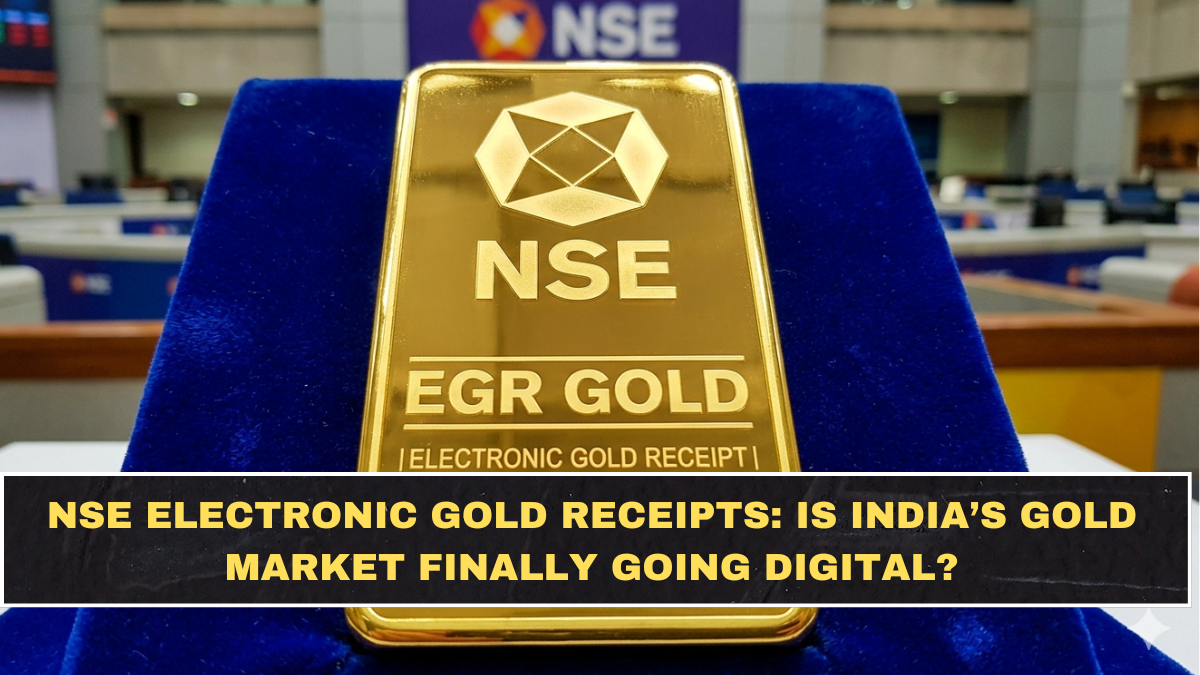
India’s gold market has taken a major digital step after the National Stock Exchange launched Electronic Gold Receipts as a new trading segment on May 4, 2026. NSE said the move is aimed at bringing more transparency, efficiency and formalisation to India’s traditional gold ecosystem. The launch also included a major milestone: NSE successfully dematerialised a 1 kg gold bar, showing how physical gold can now move into a regulated electronic format.
This matters because India loves gold, but much of the market still depends on physical buying, storage, purity checks and local pricing differences. EGRs are designed to connect physical gold with financial markets, allowing investors to trade gold ownership electronically. The idea is simple but powerful: gold can be bought, sold and held in demat-style form while being backed by actual physical gold stored in regulated vaults.
What Exactly Are Electronic Gold Receipts?
Electronic Gold Receipts are dematerialised securities that represent ownership of physical gold. According to NSE’s press release, the physical gold backing these receipts is stored in SEBI-accredited vaults and held electronically through depositories. Each EGR is backed by physical gold, which makes it different from loose digital gold products that may not always have the same regulatory comfort.
| Feature | What It Means For Investors |
|---|---|
| Product | Electronic receipt backed by physical gold |
| Storage | Gold kept in SEBI-accredited vaults |
| Trading | Bought and sold on NSE platform |
| Holding | Held electronically through depositories |
| Delivery | Can be surrendered for physical gold delivery |
The biggest benefit is standardisation. Instead of worrying about local jeweller pricing, purity disputes or storage risk at home, investors get a regulated exchange-traded format. But don’t romanticise it blindly. EGRs are not magic; they still carry gold price risk, possible liquidity limits and transaction-related costs that investors must understand before jumping in.
Why Is This Big For India’s Gold Market?
India’s gold market is culturally huge but structurally messy. Physical gold buying often involves making charges, purity doubts, cash-based transactions and price differences between cities. NSE’s EGR segment is expected to improve price discovery and increase trust among investors, jewellers, refiners, traders and institutions. Moneycontrol reported that NSE expects the launch to improve participation and transparency in the gold ecosystem.
This can also help India move closer to becoming a stronger price-setting market for gold instead of just being a large consumer. The Securities and Exchange Board of India had earlier indicated that India’s EGR framework may need improvement to revive the country’s gold price-setter ambition. NSE’s launch gives that ambition a fresh push, but actual success will depend on liquidity, adoption and investor confidence.
Why Should Investors Care Now?
For investors, EGRs offer a regulated way to take gold exposure without immediately holding jewellery, coins or bars. LiveMint reported that EGRs are backed by physical gold and investors can surrender them to take physical delivery of the corresponding quantity and quality of gold. That makes the product more flexible than simple paper exposure, but also more structured than casual digital gold.
Possible benefits include:
- Easier electronic trading of gold ownership
- Better transparency compared with informal physical buying
- Reduced storage and theft concerns at home
- Option to convert into physical gold delivery
- Regulated market framework through NSE and SEBI systems
The honest warning is this: do not buy EGRs just because they sound modern. Investors should compare them with gold ETFs, sovereign gold bonds, physical gold and gold mutual funds depending on their goal. If the aim is jewellery, EGRs may not be the first choice. If the aim is investment exposure to gold, they become more interesting.
Is This Better Than Digital Gold?
EGRs may offer stronger regulatory comfort than many digital gold products because they sit within an exchange and depository framework. SEBI had earlier warned that digital gold products were not regulated under its securities and commodity derivatives framework, while regulated products such as gold ETFs, EGRs and exchange-traded derivatives offer clearer investor protection.
That difference is important. Many people casually buy “digital gold” without understanding who stores it, how it is audited and what happens if the platform fails. EGRs are trying to solve that trust problem through exchange trading, vault accreditation and demat holding. Still, investors must check brokerage access, trading volumes, delivery rules and charges before deciding.
Conclusion: Is Gold Finally Entering Its Demat Era?
NSE’s launch of Electronic Gold Receipts is a serious step toward modernising India’s gold market. It brings physical gold into a regulated electronic trading system, improves transparency and may reduce some of the problems linked with informal gold buying. The successful dematerialisation of a 1 kg gold bar makes the launch more than just a policy announcement; it shows the system can actually work.
But the real test starts now. If jewellers, institutions, brokers and retail investors actively participate, EGRs could become a major gold-investment route in India. If liquidity stays weak, it may remain a good idea with limited impact. Gold may be entering its demat era, but investors should enter with clarity, not hype.
FAQs
What Are NSE Electronic Gold Receipts?
NSE Electronic Gold Receipts are dematerialised securities that represent ownership of physical gold stored in SEBI-accredited vaults. They allow investors to trade gold electronically through the exchange framework.
When Did NSE Launch EGR Trading?
NSE launched Electronic Gold Receipts as a new trading segment on May 4, 2026. The exchange also successfully dematerialised a 1 kg gold bar as part of the launch milestone.
Can Investors Take Physical Delivery From EGRs?
Yes, reports say investors can surrender EGRs and take physical delivery of the corresponding quantity and quality of gold. Delivery rules, charges and minimum quantities should be checked before investing.
Are EGRs Safer Than Digital Gold?
EGRs may offer stronger regulatory comfort because they are exchange-traded and backed by physical gold stored in SEBI-accredited vaults. Many digital gold products do not fall under the same SEBI securities framework, so investors should not treat both as identical.