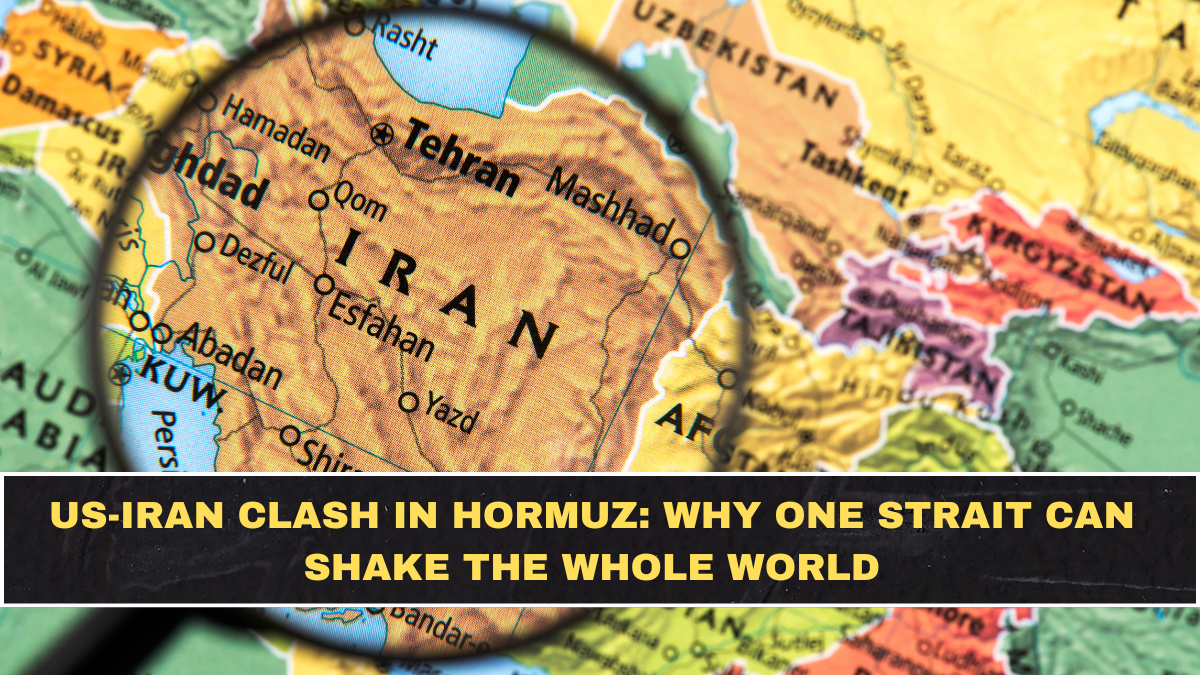
The US-Iran Hormuz clash has again proved why one narrow sea route can shake the entire world. The Strait of Hormuz is not just a regional waterway; it is one of the most sensitive energy routes on Earth. When firing begins near this route, markets do not wait for long explanations. Oil traders, shipping companies, governments and consumers start calculating the damage almost immediately.
Fresh reports say US and Iranian forces exchanged fire near the Strait of Hormuz even as both sides claimed the ceasefire was still technically alive. The US said its forces responded after American destroyers came under attack, while Iran accused Washington of violating the ceasefire first. That confusion itself is dangerous because in a military hotspot, one unclear move can become a wider conflict very quickly.
What Happened Near Hormuz?
According to reports, three US Navy destroyers were transiting the Strait of Hormuz when they came under missile, drone and small-boat attacks. US Central Command said American forces carried out self-defence strikes on Iranian military targets, including missile and drone launch sites. The US also claimed that no American assets were hit during the exchange.
Iran has presented a very different version, accusing the US of targeting vessels and civilian areas near the waterway. This is exactly why the situation is so tense: both sides are blaming each other while insisting that the ceasefire has not fully collapsed. President Donald Trump also said the ceasefire remained in effect, but the latest exchange has made that claim look fragile.
Why Does One Strait Matter So Much?
The Strait of Hormuz matters because it connects Gulf energy exports to the rest of the world. A large share of global oil and LNG movement depends on this route, which makes it a pressure point for energy security. If ships slow down, reroute, pause, or face higher insurance costs, the effect can travel far beyond the Middle East.
That is why even limited fighting near Hormuz can push oil prices higher and disturb financial markets. Recent reports said crude prices jumped after the clash, showing how fast the market reacts to any threat in this area. For countries like India, which depend heavily on imported energy, this is not just a foreign-policy story; it can become a fuel, inflation and household-budget story too.
| Key Factor | Why It Matters |
|---|---|
| Strait of Hormuz | Critical route for oil and LNG shipping |
| US-Iran firing | Raises risk of wider conflict |
| Ceasefire confusion | Both sides claim control, but trust is weak |
| Oil price reaction | Fuel and inflation pressure can rise globally |
| Shipping risk | Insurance, delays and rerouting costs may increase |
Who Gets Hit First?
The first impact usually falls on shipping companies, oil traders and countries dependent on Gulf energy. Tankers passing through the region may face delays, extra inspections, higher insurance premiums and security risks. Even if ships are not directly attacked, uncertainty alone can make transport expensive.
The second impact reaches ordinary people through fuel prices, airline costs, imported goods and inflation. This is why a clash thousands of kilometres away can still affect petrol pumps, electricity costs and transport bills in India. The uncomfortable truth is simple: global conflict does not stay global for long; it eventually enters local budgets.
What Should The World Watch Next?
The biggest thing to watch is whether both sides continue calling this a controlled exchange or move into open escalation. A ceasefire that survives only on paper is still dangerous. If more ships are attacked, if Gulf countries are pulled deeper, or if oil traffic faces fresh restrictions, the crisis can become much bigger.
Watch these warning signs closely:
- More attacks on tankers, ports, or naval vessels near Hormuz
- Oil prices moving sharply above recent levels
- UAE, Saudi Arabia, or other Gulf states reporting direct attacks
- US or Iran rejecting ceasefire talks publicly
- Shipping firms suspending or rerouting Gulf movement
Conclusion?
The US-Iran clash near Hormuz is dangerous because it sits at the intersection of war, oil, shipping and global inflation. Even if both sides continue claiming that the ceasefire is alive, the latest firing shows how easily peace can weaken in a high-pressure military zone. The Strait of Hormuz is small on the map, but its impact is massive.
For India and the wider world, the real question is not just whether the US and Iran fight again. The bigger question is whether ships can keep moving safely through one of the world’s most important energy routes. If Hormuz becomes unstable, the shock will not remain in the Gulf; it can reach markets, fuel stations and homes across the world.
FAQs?
Why Is The Strait Of Hormuz So Important?
The Strait of Hormuz is important because it is one of the world’s most critical routes for oil and LNG shipping. Any disruption in this area can affect energy supply, global trade and fuel prices. That is why even limited military tension near Hormuz gets immediate attention from governments and markets.
Did The US And Iran Break The Ceasefire?
Both sides are blaming each other, which makes the situation complicated. The US says it responded to Iranian attacks on American destroyers, while Iran says the US violated the ceasefire first. For now, reports say both sides still claim the ceasefire technically exists, but it is clearly under serious pressure.
Can This Clash Affect India?
Yes, India can be affected because it imports a major share of its energy needs. If oil prices rise due to Hormuz tension, India may face pressure on fuel prices, import bills, inflation and the rupee. The impact may not always be immediate, but energy-market shocks can slowly reach consumers.
Is This The Start Of A Bigger War?
It is too early to say that this is the start of a bigger war, but the risk has definitely increased. When naval forces, drones, missiles and oil routes are involved, even a limited clash can escalate quickly. The next few days will be important in deciding whether this remains controlled or becomes more serious.