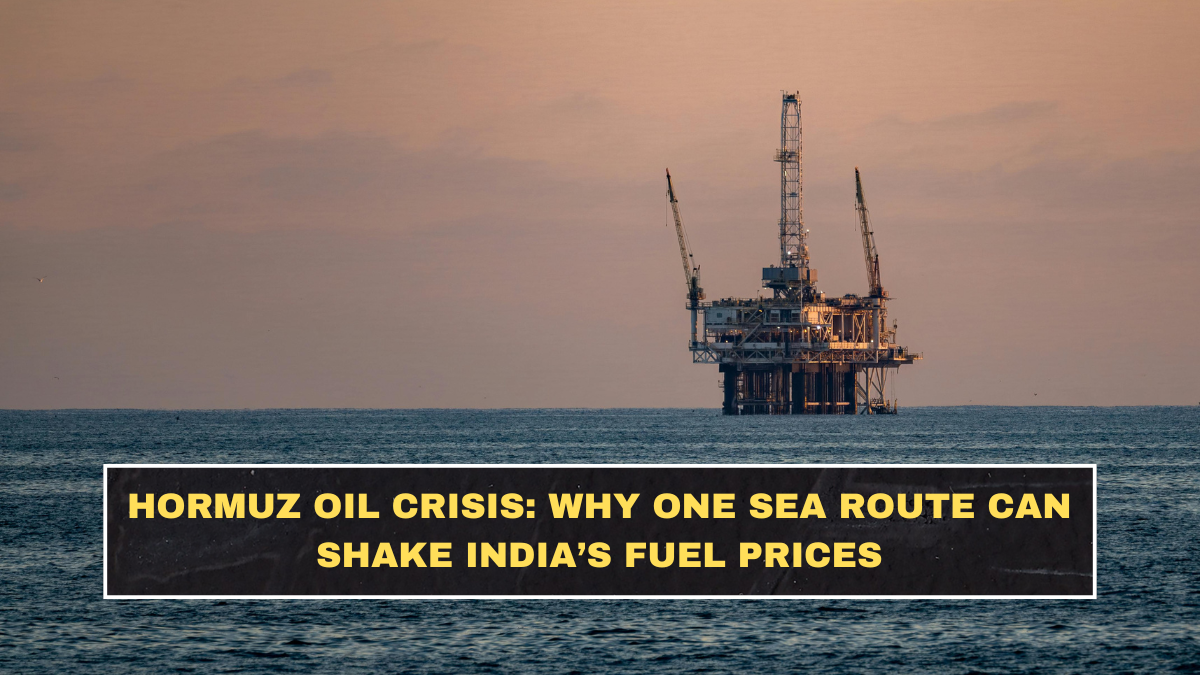
The Strait of Hormuz is back at the centre of global panic because oil prices have surged sharply amid deepening US-Iran tensions and fears of a long disruption in Gulf energy flows. Reuters reported on April 30, 2026, that global oil prices jumped to a four-year high of more than $122 per barrel as markets worried about a prolonged Middle East supply disruption. Other reports said Brent crude briefly moved above $126, showing how quickly traders priced in the risk.
This is not a small regional issue. Hormuz is one of the world’s most important energy chokepoints, and any disruption there immediately affects shipping, oil supply, fuel prices, inflation and financial markets. For India, the risk is even bigger because the country imports most of its crude oil requirement, so a global oil shock can quickly become a domestic economic problem.
Why Is The Strait Of Hormuz So Important For Oil?
The Strait of Hormuz is a narrow sea passage between Iran and Oman, but its importance is massive. It connects the Persian Gulf to the Arabian Sea and the wider global market. Oil from major Gulf producers moves through this route, making it one of the most watched energy corridors in the world.
The US Energy Information Administration has described Hormuz as a critical oil transit chokepoint. It estimated that flows through Hormuz in 2024 and early 2025 made up more than one-quarter of global seaborne oil trade and about one-fifth of global oil and petroleum product consumption. The same source also said about 89% of crude oil and condensate moving through Hormuz in the first half of 2025 went to Asian markets, including India.
| Factor | Why It Matters |
|---|---|
| Location | Links the Persian Gulf with global shipping routes |
| Oil importance | Handles a major share of seaborne oil trade |
| Asian exposure | Most crude flows through Hormuz go to Asian buyers |
| India risk | India depends heavily on imported crude |
| Market reaction | Even fear of disruption can raise prices |
| Consumer impact | Petrol, diesel, LPG and inflation can come under pressure |
How Can A Hormuz Crisis Hit India Directly?
India is vulnerable because crude oil is not just another import. It is the base input for petrol, diesel, aviation fuel, petrochemicals, transport and many industrial costs. When crude becomes expensive, it does not stay limited to fuel pumps. It can slowly move into food transport, manufacturing, airline tickets, logistics and overall inflation.
The first impact usually comes through India’s import bill. If oil stays expensive for weeks, India must spend more dollars to buy the same amount of crude. That can pressure the rupee, widen the trade deficit and make imported goods costlier. Reuters reported that Indian shares fell and the rupee weakened sharply on April 30, 2026, as oil surged and investors worried about India’s crude-import exposure.
Will Petrol And Diesel Prices Rise Immediately?
Not always. Petrol and diesel prices in India do not move every hour with global crude prices. Government taxes, oil marketing company decisions, election timing, rupee movement and inventory costs all affect pump prices. That is why Indian consumers may not see an instant increase even when Brent crude jumps sharply.
But pretending there is no risk would be foolish. If crude remains high for a longer period, pressure builds somewhere in the system. Either fuel prices rise, oil companies absorb losses, government revenue gets affected, or inflation gets pushed through other channels. A short spike can be managed. A long Hormuz crisis is a much bigger problem.
Why Are Markets Reacting So Sharply?
Markets hate uncertainty more than bad news. A normal supply disruption can be calculated, but a military or geopolitical crisis around Hormuz is harder to price. Traders do not know whether tankers will keep moving, insurance costs will explode, shipping routes will change, or Gulf exports will face bigger delays.
That uncertainty is why oil prices can jump even before actual shortages appear at petrol pumps. AP reported that Brent surged above $120 amid uncertainty over the reopening of the Strait of Hormuz and wider US-Iran tensions. When investors fear a prolonged energy shock, they sell riskier assets, buy safer assets, and punish countries seen as vulnerable to oil imports.
What Could Become Costlier For Indians?
The most obvious pressure point is transport fuel, but the impact can go beyond petrol and diesel. Diesel powers trucks, buses, farm equipment and supply chains. If diesel becomes costlier, goods movement becomes costlier. That can affect food, FMCG products, construction materials and even online delivery costs.
Air travel can also become expensive because aviation turbine fuel is closely linked to crude prices. Businesses using logistics, plastics, chemicals or energy-intensive manufacturing may face margin pressure. In simple words, a Hormuz crisis can make life costlier even for someone who does not own a car or bike.
Can India Protect Itself From This Shock?
India has some buffers, but it cannot fully escape a major oil shock. Strategic reserves, diversified suppliers, discounted crude purchases, currency management and fuel tax adjustments can reduce the impact. But if global crude remains above $120 for a long time, no import-dependent country can pretend everything is normal.
The smarter approach is not panic but preparation. Policymakers need to watch inflation, the rupee, fiscal pressure and fuel pricing carefully. Consumers should also be realistic. If this crisis continues, household budgets may feel the effect indirectly through travel, transport, food prices and general living costs.
Conclusion?
The Hormuz oil crisis matters because it proves how one narrow sea route can shake the global economy. The Strait of Hormuz is not just a Middle East shipping lane; it is a lifeline for energy flows into Asia. When it comes under pressure, India feels the heat through crude prices, the rupee, stock markets and inflation risk.
The real danger is not one day of high oil prices. The danger is a prolonged disruption that keeps crude expensive for weeks or months. If that happens, Indian drivers, businesses, investors and households may all feel the cost of a crisis happening thousands of kilometres away.
FAQs
Why Is The Strait Of Hormuz Important?
The Strait of Hormuz is important because a major share of global seaborne oil and petroleum product trade passes through it. It connects the Persian Gulf with global markets, making it a critical route for oil exports from Gulf producers.
How Does The Hormuz Crisis Affect India?
India imports most of its crude oil, so higher global oil prices increase the country’s import bill. This can pressure the rupee, raise inflation risk, affect markets and eventually create pressure on petrol, diesel and transport-related costs.
Will Petrol And Diesel Prices Rise Because Of Hormuz?
Petrol and diesel prices may not rise immediately because Indian fuel pricing depends on taxes, government decisions, oil company pricing and currency movement. However, if crude oil stays high for a long period, pressure on fuel prices becomes harder to avoid.
Why Did Oil Prices Jump Above $120?
Oil prices jumped because traders feared a longer disruption in Middle East oil supplies amid US-Iran tensions and uncertainty around Hormuz. Markets react quickly to supply-risk fears, especially when a major global energy route is involved.