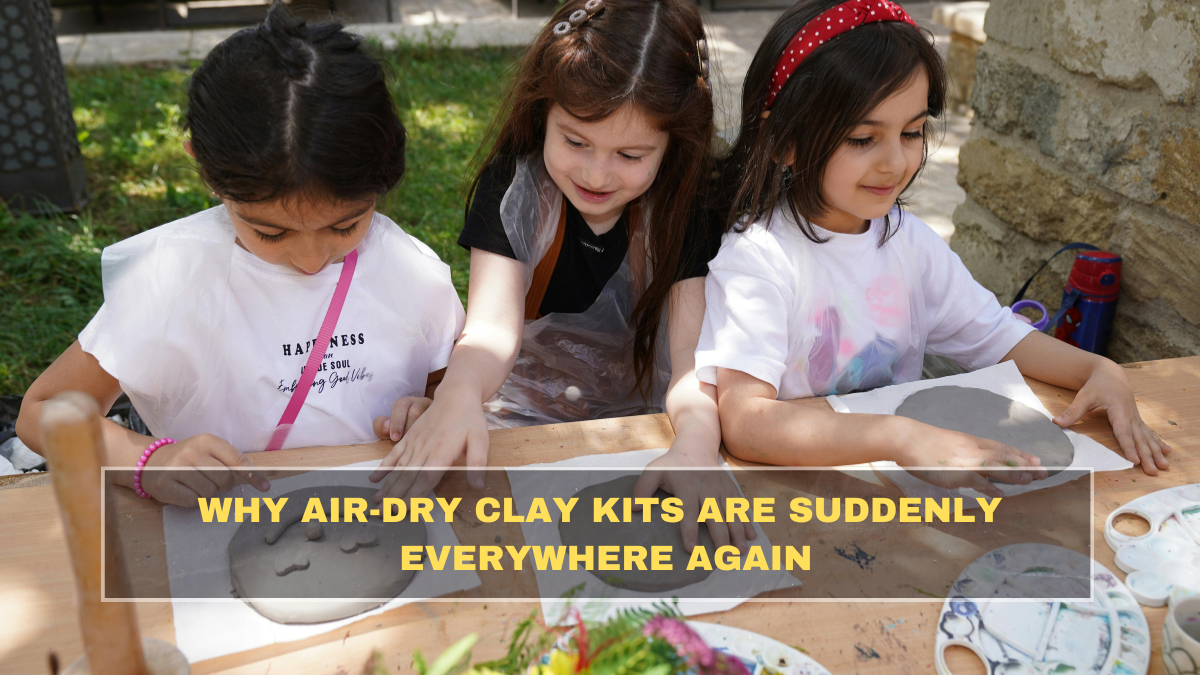
Air-dry clay kits are back because they solve three modern problems at once: people want a hobby, they want less screen time, and they do not want a hobby complicated enough to feel like homework. That is why these kits are showing up again across hobby content, gift guides, and online marketplaces. The appeal is brutally simple. You can make something with your hands, you do not need a kiln, and you can start badly without wasting a fortune. That matters more than craft snobs want to admit.
There is also a bigger market signal behind this. The global pottery ceramics market was valued at about $11.83 billion in 2024 and is projected to reach $17.27 billion by 2033, showing steady demand for ceramic and pottery-related products. Grand View Research also notes rising consumer preference for handcrafted and artisanal pottery, along with stronger interest in decorative home items. That does not prove every adult is suddenly becoming a potter, but it does show why pottery-adjacent hobbies are easier to sell right now.
Why are adults suddenly interested in air-dry clay kits again?
Because many adults do not actually want mastery. They want relief. Air-dry clay fits that better than “serious” hobbies because it is forgiving, tactile, and low-pressure. Retailers are leaning into that emotional angle too. Michaels said in late 2025 that more people were turning to handmade gifts to save money and create more meaningful connections, and its customer survey found that 51% were DIYing gifts as a way to reduce financial stress. That is not specifically about clay, but it explains why simple craft kits are getting more attention again.
Another reason is that air-dry clay sits in the sweet spot between useful and aesthetic. It can produce trays, candle holders, ornaments, planters, frames, and little sculptural pieces that look handmade in a good way. Adults like hobbies more when they lead to something they can gift, display, or post. That is the honest truth behind most “creative wellness” trends. People want emotional payoff, but they also want a visible result.
What makes air-dry clay different from real pottery?
The biggest difference is convenience. Traditional pottery usually needs a wheel, glazing knowledge, and kiln firing. Air-dry clay needs far less equipment and far less patience. You shape it, let it dry, then sand, paint, or seal it. That lower barrier is exactly why beginners keep choosing it. The hobby feels accessible instead of intimidating.
But let’s not romanticize it. Air-dry clay is not a perfect substitute for ceramic pottery. It is usually less durable, less water-resistant, and less refined in the final finish unless sealed properly. So the better way to frame it is this: air-dry clay is not “cheap pottery.” It is its own casual craft category. People who pretend otherwise set beginners up for disappointment.
What should beginners actually look for in a clay kit?
Most beginners waste money on kits with too many tools and not enough usable material. The smarter choice is a kit with decent clay quality, one or two shaping tools, a rolling tool, paint or finishing options, and clear instructions. After that, the main thing that matters is the type of project you want to make. A person making jewelry dishes needs something different from a person making wall hangings or miniature decor.
Here is a simple breakdown of what usually matters most:
| What to compare | Good beginner option | Why it matters | Common mistake |
|---|---|---|---|
| Clay amount | 500 g to 1 kg | Enough for several small projects | Buying tiny kits that run out fast |
| Tools | 3 to 6 basic tools | Enough for shaping without clutter | Paying extra for useless filler tools |
| Project type | Trays, ornaments, holders | Easier first wins | Starting with complex sculpture |
| Finish supplies | Paint, varnish, sealer | Helps the result look cleaner | Ignoring sealing and ruining the piece |
| Drying guidance | Clear timing instructions | Reduces cracks and frustration | Touching or painting too early |
That table matters because the beginner market is full of pretty packaging and weak substance. A good kit makes starting easier. A bad kit makes people think they are bad at crafting when really the materials were garbage.
What are the easiest things to make with air-dry clay first?
Jewelry trays, tealight holders, coasters, pinch pots, fridge magnets, wall charms, and simple vases for dried flowers are usually the safest first projects. These work because they do not require precise symmetry, and slight imperfections often make them look better. That is another reason adults like the hobby. It rewards “good enough” instead of punishing it.
Online marketplace behavior also supports this decorative angle. Etsy listings and seller descriptions regularly show air-dry clay being used for ornaments, miniatures, brooches, wall decor, and texture-stamped items rather than heavy-duty functional ware. That is a clue beginners should pay attention to. The medium works best when you stop asking it to behave like factory ceramic.
Are air-dry clay kits worth buying, or are they just another short-lived hobby trend?
They are worth it for the right person and a waste of money for the wrong one. If you want a low-cost, low-barrier, screen-free hobby that gives quick visible results, they make sense. If you are expecting professional ceramics, food-safe ware, or a lifelong artisan identity from a weekend kit, you are fooling yourself. The value depends on expectations, not hype.
There is also a broader consumer context here. The global toys and games market reached an estimated $357.59 billion in 2025, and Grand View Research says consumers aged 15 and above accounted for 48.56% of revenue. That supports a wider trend toward paid leisure and structured indoor entertainment, including hobby kits and hands-on activities for older consumers. In plain English, adults are spending on things that keep them occupied at home, and craft kits fit that behavior.
How can adults make this hobby actually stick?
Start smaller than your ego wants. Do not begin with a giant Pinterest vase or an abstract face sculpture you saw in a reel. Begin with one project you can finish in one sitting and dry overnight. The reason many adults quit hobbies is not lack of talent. It is bad pacing. They choose something too ambitious, get annoyed, and decide the hobby is not for them.
It also helps to treat the first few projects as practice pieces, not “final products.” That mindset matters because air-dry clay gets easier once you understand drying time, thickness, smoothing, and sealing. The people who enjoy it long term are usually the ones who stop trying to impress everyone on day one.
Conclusion
Air-dry clay kits are everywhere again because they are easy to start, hard to overthink, and surprisingly good at delivering a sense of progress. They fit the current mood perfectly: people want creative hobbies that are affordable, calming, and useful without becoming a major commitment. The trend is real, but the marketing around it can still be stupid. Buy a simple kit, make small things first, and keep your expectations realistic. That is how this hobby stays fun instead of turning into another abandoned impulse purchase.
FAQs
Are air-dry clay kits good for complete beginners?
Yes, especially compared with traditional pottery. They need less equipment, lower upfront spending, and less technical skill to get started.
Can air-dry clay be used for mugs or plates?
Usually not for regular food or liquid use. It is better for decorative or lightly functional items unless the product specifically states otherwise and is sealed appropriately.
How long does air-dry clay usually take to dry?
It depends on thickness and room conditions, but many projects need around 24 to 72 hours to dry fully. Rushing this step often causes cracks or weak results.
What is the best first project for adults?
Small trays, coasters, ornaments, and candle holders are usually the easiest. They are simple, useful, and forgiving enough for beginners.