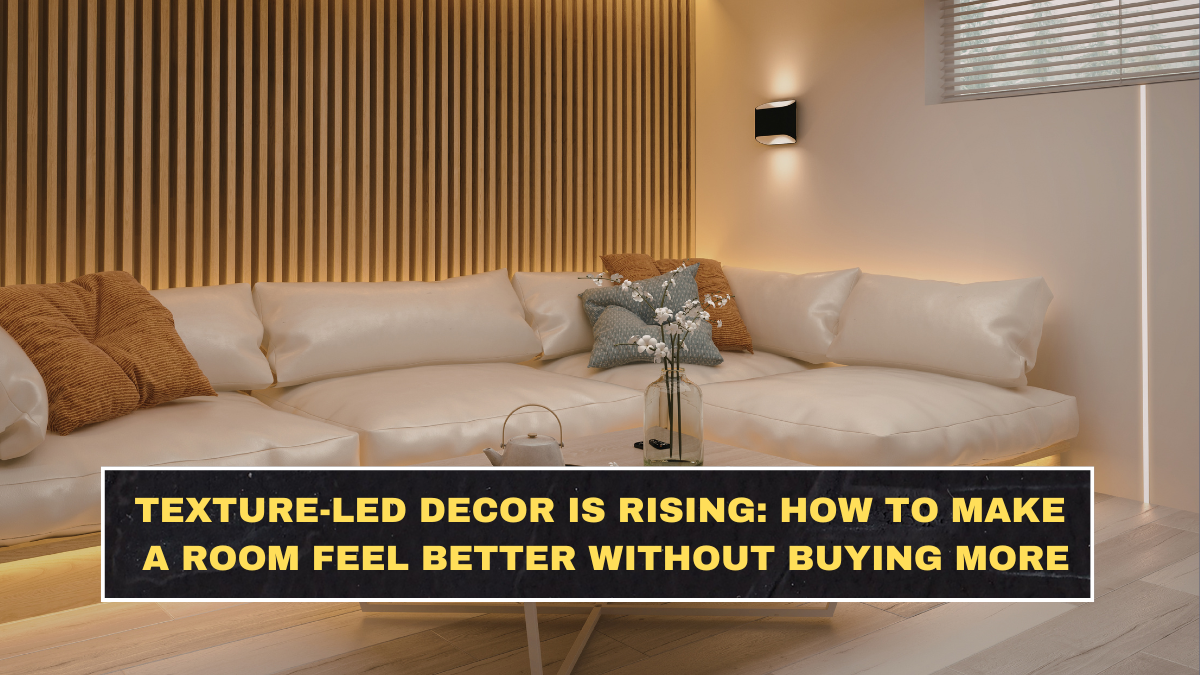
A lot of modern rooms look finished in photos but feel lifeless in real life. That is the problem texture-led decor is solving. Instead of depending on more furniture, louder colors, or expensive renovations, this trend focuses on surfaces and materials that make a room feel warmer, softer, and more human. Designers are increasingly talking about layered textures such as boucle, grasscloth, plaster, zellige tile, fluting, linen, leather, and handcrafted finishes because these details add depth without visual chaos. Houzz’s 2025 U.S. Fall Design Trends Report described layered textures as “taking over” and called them “the new neutral” for creating warmth and subtle dimension.
This shift is not random. It reflects a broader move away from sterile minimalism toward interiors that feel personal and restorative. Houzz’s 2025 and 2026 trend coverage repeatedly points to cozy palettes, calm bedrooms, natural materials, handmade finishes, and layered interiors as the direction homeowners and designers are actively choosing.
Why are people suddenly caring more about texture in home decor?
Because flat design got boring. Smooth white walls, plain beige upholstery, and overly polished surfaces can make a room look neat but emotionally empty. Texture brings back depth without forcing people into bright colors or clutter. That is why it works across different styles, from warm minimalism to modern vintage to quiet luxury. Even when color stays soft, texture gives the eye something to notice and the body something to respond to.
There is also a comfort factor. The most-saved bedrooms on Houzz in 2025 showed strong demand for tactile layers, natural materials, and quiet details that make a space feel inviting and restorative. That tells you something important: people are not just decorating for appearances anymore. They want rooms that actually help them slow down, rest, and stay comfortable.
What does texture-led decor actually mean?
It means a room feels richer because of what is layered into it, not because it is packed with more stuff. Texture can come from fabric, wood grain, woven materials, stone, ceramic glazing, plaster walls, ribbed furniture, stitched detailing, or aged metal finishes. The point is not to throw ten rough surfaces into one room and call it design. The point is to create variation so a room feels alive.
Houzz trend reporting gives useful examples of what is showing up repeatedly: boucle, grasscloth, plaster, zellige tile, fluting, handcrafted details, warm woods, velvet, leather, and linen. These elements are being used to add subtle dimension and a lived-in quality instead of relying only on paint color or decorative objects.
Which textures make the biggest difference without a full makeover?
Some textures change the feel of a room faster than others. Soft textiles tend to be the easiest entry point because they are affordable and flexible. Linen curtains, textured throws, woven rugs, and nubby cushions can soften a room immediately. After that, furniture finishes and wall treatments usually have the biggest visual impact, especially when they add contrast to smooth flooring or flat painted walls.
Here is a simple breakdown:
| Texture element | What it adds to a room | Cost difficulty | Best place to start |
|---|---|---|---|
| Linen or woven curtains | Softness and movement | Low to medium | Living room or bedroom |
| Boucle or textured cushions | Warmth and comfort | Low | Sofa, bed, reading chair |
| Natural fiber rug | Grounding and visual depth | Medium | Living room, dining room |
| Fluted or ribbed furniture | Shape and shadow | Medium | Sideboard, console, nightstand |
| Plaster or limewash effect | Organic depth on walls | Medium to high | Accent wall or entry |
| Handmade tile or ceramics | Imperfection and character | Medium to high | Kitchen, bath, shelves |
That table matters because most people waste money in the wrong order. They buy more decor objects when the real problem is that every major surface in the room feels flat.
How can texture make a room feel better without buying more?
By forcing you to use what you already own more intelligently. A room often needs rearranging, not replacing. For example, a leather chair looks colder when isolated but richer when placed near a woven basket, a linen curtain, and a wood side table. A plain bed looks forgettable until bedding, a throw, and a textured headboard or bench create layers around it. Texture works through contrast.
This is why the trend is stronger than a simple shopping fad. It can be applied through styling, not just spending. You can fold a throw instead of storing it away, bring ceramics out of cabinets, swap glossy accessories for matte ones, or mix smooth cotton with chunkier fabrics. Houzz’s reports on bedrooms, bathrooms, and whole-home design all point to the same principle: layered natural materials and handcrafted details make spaces feel more inviting and more complete.
What are the biggest mistakes people make with tactile interiors?
The first mistake is confusing texture with mess. Texture should add depth, not visual noise. If every item has a loud pattern, fringe, curve, or rough finish, the room starts looking confused rather than cozy. The second mistake is ignoring balance. A room full of rough, dry, matte finishes can feel heavy unless there is something smoother to offset it, such as glass, polished metal, or clean-lined upholstery.
The third mistake is chasing trend materials without thinking about real life. Boucle looks good, but it is not always ideal for homes with shedding pets or heavy use. Handmade tile looks beautiful, but some finishes are harder to clean. So yes, texture matters, but function still matters more. Blindly copying trend photos is how people end up with rooms that are stylish for three weeks and annoying for three years.
Which home styles benefit most from texture-led decor?
Warm minimalism benefits the most because it needs texture to avoid looking empty. Relaxed contemporary spaces also gain a lot from tactile layering because it adds softness without losing a clean look. Vintage-modern interiors naturally handle texture well because older wood, worn finishes, and handmade objects already carry visual weight. Even quiet luxury relies heavily on subtle texture, since the entire look falls apart if every surface is flat and shiny.
Houzz’s 2025 and 2026 design coverage supports this direction clearly. The recurring themes are warm materials, layered interiors, handcrafted details, and softer spaces with more personality. That means texture is no longer just an accessory. It is becoming one of the main tools people use to make modern rooms feel less cold.
Can this trend last, or is it just another decor phase?
It has a better chance of lasting than most trend names because it responds to a long-term problem. People want homes that feel calming, personal, and comfortable. Texture helps deliver that across budgets and styles. Unlike a very specific color or novelty shape, layered texture does not age quickly when used well. It behaves more like a design principle than a temporary craze.
Conclusion
Texture-led decor is rising because people are done with rooms that look clean but feel dead. The strongest interiors now use texture as a form of emotional design. They feel better because they are layered, soft, grounded, and slightly imperfect. The smart move is not buying random trendy pieces. It is identifying where your room feels too flat and fixing that with contrast, warmth, and materials that actually add depth.
FAQs
How do I add texture to a room cheaply?
Start with cushions, throws, curtains, rugs, and ceramics. These usually create the fastest difference without needing renovation-level spending.
Is texture more important than color now?
In many modern interiors, yes. A neutral room with strong texture often feels better than a colorful room with flat surfaces.
Can small rooms handle lots of texture?
Yes, but it has to be controlled. Use a few layered materials rather than many competing patterns or bulky accessories.
What is the easiest texture trend to try first?
Linen, woven materials, and matte ceramics are usually the safest starting points. They work in most homes and do not feel too trend-dependent.
Click here to know more