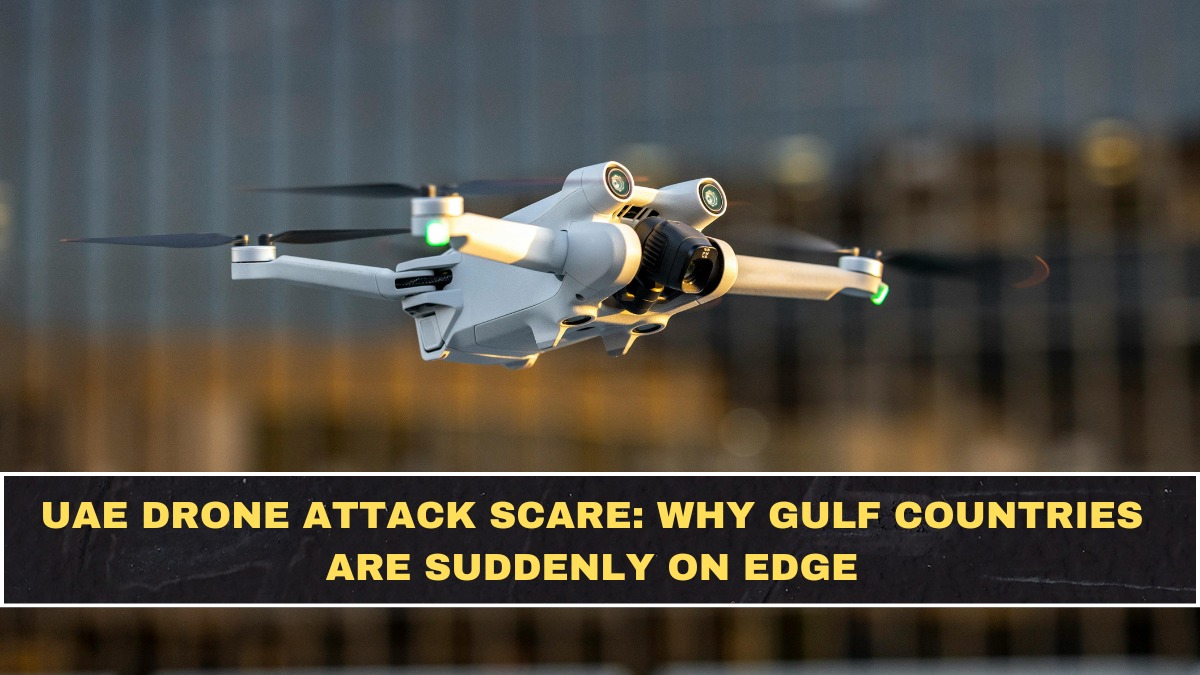
The UAE drone and missile attack scare has made the Middle East crisis much more serious because it shows that the conflict is not limited to Iran, the US, or the Strait of Hormuz. When a Gulf country like the UAE reports active air-defence interceptions, the entire region starts watching closely. The UAE is a major trade, aviation, energy and investment hub, so any security shock there carries global consequences.
According to Reuters, the UAE said its air defences were dealing with missile and drone attacks that it said originated from Iran, while Tehran denied carrying out recent attacks on the UAE. The UAE’s foreign ministry called earlier attacks a serious escalation and said the country reserved its legitimate right to respond. That combination of attack claims, denial and warning is exactly what makes the situation dangerous.
What Actually Happened?
Reports said UAE air-defence systems were intercepting missile and drone threats, with sounds of interceptions heard in different areas. The country’s defence ministry reportedly said its systems were actively engaging ballistic missiles, cruise missiles and UAV threats. This does not automatically mean every projectile hit its target, but it does mean the threat level was serious enough for active defence action.
The timing matters even more because this happened while the US and Iran were already trading fire near the Strait of Hormuz. Reuters reported that US and Iranian forces clashed in the Gulf even as President Donald Trump said the ceasefire still remained in effect. So the UAE scare is not an isolated headline; it is part of a wider regional chain reaction.
| Flashpoint | Why It Matters |
|---|---|
| UAE air defence alerts | Shows Gulf cities may face direct security threats |
| Iran denial | Keeps responsibility disputed and diplomacy complicated |
| Hormuz tension | Raises oil, shipping and trade risks |
| US-Iran ceasefire pressure | Makes escalation more likely despite peace claims |
| Energy markets | Gulf instability can affect global fuel prices quickly |
Why Are Gulf Countries Worried?
Gulf countries are worried because modern conflicts do not need full-scale invasion to create massive damage. Drones, missiles, cyberattacks, port disruptions and tanker threats can all disturb daily life and business confidence. For countries that depend on aviation, ports, tourism, energy exports and foreign investment, even temporary security panic can become expensive.
The UAE is especially sensitive because it is seen as a stable business gateway in the Middle East. Dubai, Abu Dhabi and Fujairah are not just local cities; they are connected to global shipping, finance, oil logistics and travel networks. If investors or shipping firms start pricing in higher risk, the effect can spread beyond military calculations into markets and household costs.
What Makes This Bigger Than A Regional Fight?
This is bigger than a regional fight because the UAE sits close to some of the world’s most important energy routes. Fujairah, for example, is a major oil-related hub outside the Strait of Hormuz, which makes it strategically important during any Gulf crisis. If such locations become threatened, energy traders immediately start calculating supply and transport risks.
Reuters also reported that the UAE told Iran its defence partnerships were a sovereign matter after Tehran criticized Abu Dhabi’s cooperation with the US. That statement shows the deeper issue: Iran is not only reacting to attacks, but also warning countries it believes are helping its enemies. This is how regional alliances can turn into direct pressure points.
What Should People Watch Next?
The next phase depends on whether the UAE treats this as a contained defence incident or moves toward stronger diplomatic, legal or military action. The Wall Street Journal reported that the UAE planned to establish a national committee to document what it called Iranian aggression, based on state news agency WAM. That signals the UAE may build a formal case rather than treat the attacks as random events.
Key things to watch now:
- More interceptions: repeated drone or missile alerts would raise panic across Gulf cities.
- Iran’s response: stronger denials or threats could worsen diplomatic tension.
- Oil facilities: any strike near ports or energy zones can move markets fast.
- US involvement: deeper American military support could provoke fresh Iranian warnings.
- Air travel impact: regional airspace concerns can affect airlines and passenger confidence.
Conclusion?
The UAE drone attack scare matters because it shows how fast the Middle East crisis can spread from sea routes to Gulf cities. Even if most threats are intercepted, the psychological and economic impact can be huge. The UAE is not an ordinary battlefield location; it is a business, travel and energy hub watched by the entire world.
The blunt reality is this: if missiles and drones keep entering the Gulf security picture, the crisis will not remain a US-Iran issue. It can affect oil prices, shipping insurance, air travel, investor confidence and regional stability. For global markets, one intercepted drone can still be enough to create fear.
FAQs?
Did Iran Attack The UAE?
The UAE said missile and drone threats originated from Iran, but Iran has denied carrying out recent attacks on the UAE. That means responsibility is disputed in public reporting. What is clear is that UAE air-defence systems were reportedly active, and the country treated the situation as a serious security escalation.
Why Is The UAE Important In This Crisis?
The UAE matters because it is a major Gulf business, aviation, shipping and energy hub. Any security threat there can affect trade confidence, oil logistics, tourism and regional diplomacy. That is why drone and missile alerts in the UAE attract global attention very quickly.
Can This Affect Oil Prices?
Yes, it can affect oil prices if the attacks increase fears around Gulf energy routes or oil infrastructure. Markets react not only to actual supply cuts but also to possible disruption. If shipping, ports or energy facilities look unsafe, traders may push prices higher.
Is The UAE Safe For Travellers Right Now?
Travellers should avoid panic but should stay updated through official advisories and airline alerts. A reported air-defence incident does not automatically mean airports or cities are unsafe. However, in a tense regional situation, travel plans should be checked regularly before departure.