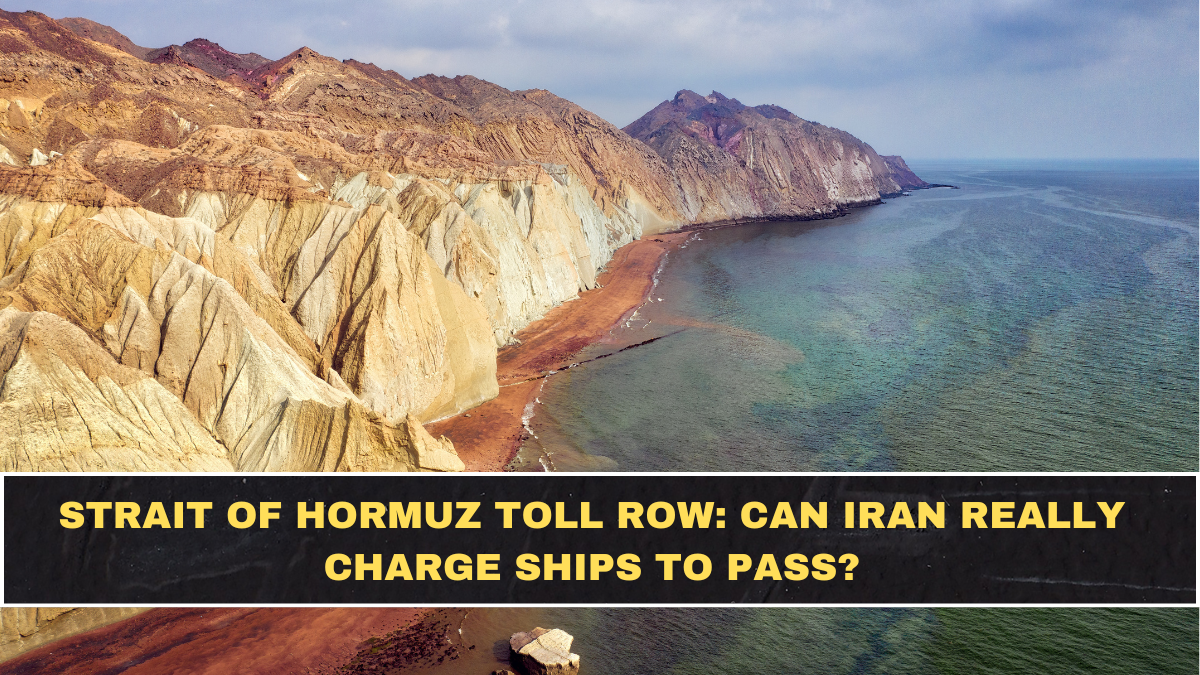
The Strait of Hormuz toll row has become a serious global issue because Iran’s reported move targets one of the world’s most important energy routes. This is not an ordinary shipping dispute where a country quietly raises port charges. This is about whether ships carrying oil, gas and commercial cargo can be asked to pay for passage through a strategic strait used by multiple countries.
Reuters reported earlier that Iran wanted any permanent peace deal to allow Tehran to demand fees from ships passing through Hormuz, with the amount depending on the ship type, cargo and other conditions. That is why shipping companies, oil markets and governments are watching the issue closely. If such a system becomes normal, it can change how global trade treats sensitive maritime routes.
Can Iran Legally Charge Ships?
Legally, the answer is highly disputed, and this is where the story becomes messy. Under international maritime norms, major straits used for global navigation are generally protected by the principle of transit passage. That means ships should be able to pass through without unnecessary interference, especially when the route connects major international waters.
Reports citing legal experts say unilateral tolls on Hormuz would be difficult to justify because ships have a right to transit through such international straits. Iran may argue that it has security and territorial-water concerns, but most shipping nations would see forced tolls as a direct challenge to freedom of navigation. That is why this row is not just about money; it is about who controls the rules of the sea.
| Issue | Why It Matters |
|---|---|
| Transit passage | Ships are generally expected to move freely through international straits |
| Iranian toll claim | Could increase shipping cost and create legal conflict |
| Oil tankers | Any delay can affect global crude prices |
| LNG movement | Gas-importing countries may face supply pressure |
| Sanctions risk | Shippers may face pressure if they comply with disputed demands |
Why Are Shipping Firms Nervous?
Shipping companies are nervous because even uncertainty can become expensive. A vessel does not need to be attacked for costs to rise. War-risk insurance, crew safety planning, route delays, fuel expense and legal risk can all increase when a major sea route becomes politically unstable.
Japanese shipping giant Mitsui O.S.K. Lines said its vessels did not pay proposed Iranian transit fees while passing through Hormuz and said it would follow international navigation laws. The company’s statement matters because it shows that large shipping firms do not want to create a precedent by paying disputed passage fees.
Why Can Oil Prices React Fast?
Oil prices react fast because Hormuz is not a symbolic route; it is an actual energy chokepoint. Around one-fifth of the world’s seaborne oil and LNG traffic is linked to this route, according to Reuters’ reporting on the shipping dispute. If traders feel that tankers may slow down or become targets, prices can move even before any real shortage happens.
For India, this is not some faraway Gulf issue. India imports a major part of its crude oil requirement, so pressure on Gulf shipping can affect fuel expectations, inflation fears and the rupee. Even if domestic petrol and diesel prices do not change immediately, the economic pressure starts building in import bills, airline fuel, freight and market sentiment.
What Makes This Different From Canal Fees?
Some people compare this situation with canal fees, but that comparison is weak. The Suez Canal and Panama Canal have formal systems, controlled routes and established fee structures. Ships expect to pay there because those are managed canal passages with specific infrastructure and rules.
Hormuz is different because it is a natural international strait, not a canal built and operated like a toll road. That is the key reason the Iranian fee idea is controversial. If countries start charging ships in strategic straits simply because traffic passes near their coast, global shipping rules could become unstable very quickly.
Key risks include:
- Higher freight and insurance costs for tankers
- Legal conflict between Iran and shipping nations
- Possible US sanctions pressure on companies paying fees
- Delays in oil and LNG movement through the Gulf
- A dangerous precedent for other maritime chokepoints
Conclusion?
The Strait of Hormuz toll row is dangerous because it combines law, oil, shipping and military tension in one place. Iran may try to frame the fee as a security or control measure, but most shipping powers are unlikely to accept it as normal. If companies begin paying, the precedent could be bigger than the money itself.
The real question is not only whether Iran can demand a fee. The bigger question is whether the world allows one country to turn a critical international strait into a pressure tool. If that happens, the shock will not stay limited to Hormuz; it can reach fuel markets, trade routes and household costs across the world.
FAQs?
Can Iran Really Charge A Toll In The Strait Of Hormuz?
Iran can try to demand fees, but whether those fees are legally valid is strongly disputed. International maritime norms generally support free transit through key straits used for global navigation. That is why many shipping companies and governments are likely to resist such payments.
Why Is The Strait Of Hormuz So Important?
The Strait of Hormuz is important because a large share of global oil and LNG shipping passes through it. Any disruption can affect fuel prices, freight costs and energy security. This is why even a toll demand or security warning can disturb markets quickly.
Will This Increase Petrol And Diesel Prices In India?
It can create pressure, especially if oil prices rise due to shipping tension. India depends heavily on imported crude, so higher global prices can affect import bills and inflation. However, pump prices also depend on taxes, government policy and oil-company pricing decisions.
Why Are Shipping Companies Refusing To Pay?
Shipping companies fear that paying disputed fees could create a dangerous precedent. They also have to consider international law, sanctions risk and pressure from governments. If one company pays, others may face similar demands in the future, making global shipping more expensive and uncertain.