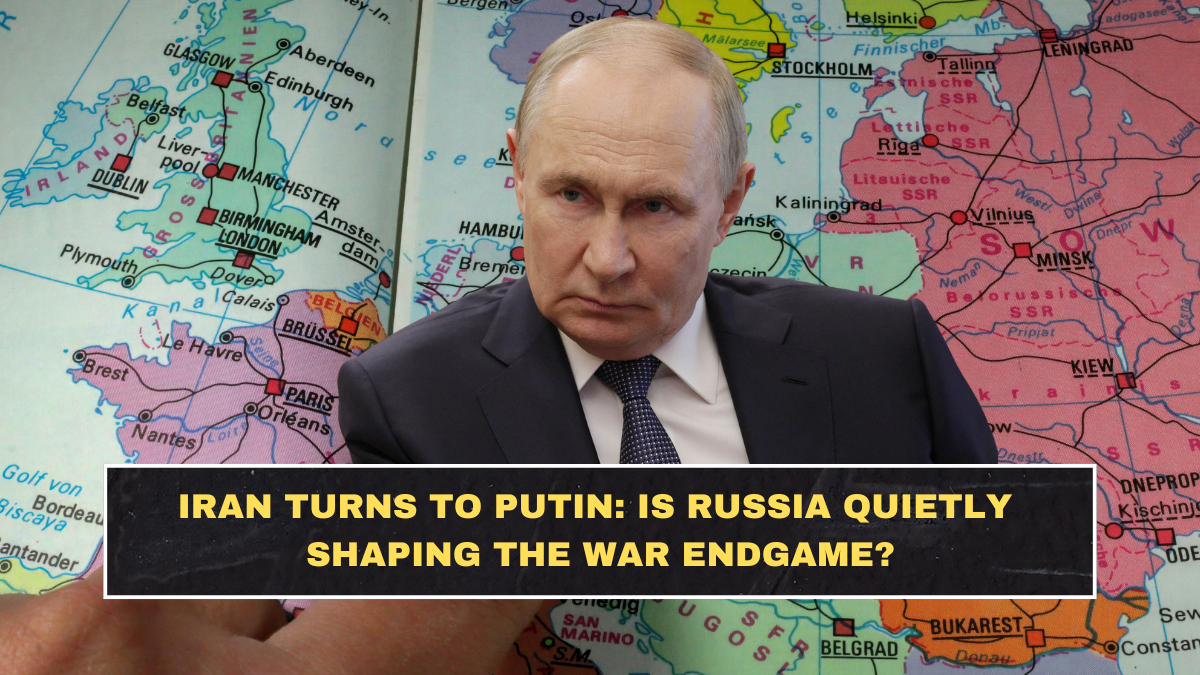
Iran’s foreign minister Abbas Araghchi met Russian President Vladimir Putin at a sensitive moment, when US-Iran talks appear stuck and the Strait of Hormuz crisis is still shaking global markets. The timing is not accidental. Tehran is looking for diplomatic backing, strategic reassurance, and possibly a stronger negotiating position against Washington.
Reuters reported that Putin praised Iran’s resistance to US and Israeli pressure during talks with Araghchi in St. Petersburg, while also saying Russia wanted peace and was ready to help restore regional stability. That message allows Moscow to appear like a mediator, but it also signals that Russia is not neutral in the same way Western governments would want.
What Does Russia Really Want From The Iran Crisis?
Russia wants influence. That is the simplest answer. If Moscow can position itself as a power broker between Iran, the US, and regional players, it gains diplomatic weight at a time when it is also managing pressure over Ukraine. For Putin, the Iran crisis is not only a Middle East issue; it is another chance to show that the US cannot settle major conflicts without Russia.
The Washington Post reported that Putin promised to do “everything” possible to help bring peace, while also trying not to damage Moscow’s own interests with Washington as Russia continues to seek favourable outcomes in Ukraine diplomacy. That makes Russia’s role complicated: it wants to help Iran, but it also does not want to burn every possible channel with the US.
| Player | What They Want | Main Risk |
|---|---|---|
| Iran | Russian support and pressure relief | Becoming too dependent on Moscow |
| Russia | More global influence and leverage | Overplaying its hand against the US |
| United States | Nuclear commitments and regional control | Russia helping Iran delay pressure |
| Gulf states | Safe shipping and lower oil risk | Hormuz remaining unstable |
| Oil markets | Clear de-escalation | Diplomacy becoming another bargaining game |
Why Is Moscow Important To Tehran?
Moscow matters because Iran needs powerful friends when it is under military, economic, and diplomatic pressure. Russia can offer political cover at the UN, military cooperation, nuclear-sector support, and diplomatic messaging that challenges the Western narrative. Even if Russia does not directly enter the conflict, its backing gives Iran more confidence.
The Kremlin’s own readout confirmed that Putin met Araghchi and discussed bilateral cooperation and regional issues. Official Kremlin messaging matters because it shows Moscow wants the meeting seen as serious, not symbolic. In global diplomacy, public optics are part of the pressure game, and Russia made sure this meeting was visible.
Is Russia Acting As A Mediator Or Iran’s Ally?
This is where the situation gets uncomfortable. Russia is presenting itself as a possible mediator, but its language toward Iran sounds much closer to support than neutrality. Putin praised the Iranian people’s courage and resilience, while Russian officials criticised US and Israeli actions. That makes it hard for Washington to treat Moscow as an honest broker.
Al Jazeera reported that Putin praised Iranian “courage” during Araghchi’s visit, while Pakistan and Oman remained involved in backchannel efforts to prevent a return to open US-Israel war on Iran. That shows multiple diplomatic tracks are active, but Russia’s track is different because Moscow is not just a messenger; it is a strategic partner with its own anti-Western interests.
Could Russia Help Iran Delay A Nuclear Deal?
Yes, and that is exactly why Washington will be suspicious. Iran’s proposal reportedly separates the Strait of Hormuz issue from nuclear negotiations, asking for immediate relief first and nuclear talks later. If Russia backs that framing, Tehran gets support for delaying the issue the US cares about most.
This does not mean Russia wants an uncontrolled war. A full regional explosion could damage Russian interests too, especially if oil markets become chaotic or the US expands military activity near Russia’s partners. But Moscow may prefer a frozen crisis where Iran survives, the US remains distracted, and Russia stays relevant. That is not peace. That is leverage dressed as diplomacy.
How Does The Russia-Iran Partnership Change The War Endgame?
The Russia-Iran relationship makes the endgame harder because it adds another power center to the talks. A simple US-Iran negotiation is already difficult. Add Russia, Israel, Gulf energy interests, China’s energy concerns, and European inflation fears, and the conflict becomes much harder to settle cleanly.
The deeper issue is that Iran may feel less pressure to compromise if it believes Russia will protect it diplomatically. At the same time, the US may become less willing to accept any deal that looks like it was shaped by Moscow. This is how outside powers can complicate peace: not always by blocking talks directly, but by making each side believe it can get better terms later.
Why Should Oil Markets Care About Putin’s Meeting?
Oil markets care because diplomacy affects shipping risk. If Russia helps move Iran toward a workable compromise, markets may calm. But if Russia encourages Tehran to hold firm, the Strait of Hormuz crisis could drag on longer. That means oil prices, shipping insurance, fuel costs, and global inflation risks stay under pressure.
Reuters has reported that shipping through Hormuz remains heavily reduced, with traffic far below normal because no clear US-Iran deal is in place. That is why Putin’s meeting is not just political theatre. Anything that changes Iran’s negotiating position can affect the world’s most important energy chokepoint.
What Is The Biggest Risk In Russia’s Role?
The biggest risk is that Russia turns mediation into strategic bargaining. Moscow may publicly call for peace while privately using the crisis to gain leverage over the US. That could slow negotiations, harden Iran’s position, and make any final agreement more complicated.
There is also a dangerous perception problem. If the US believes Russia is using Iran to pressure Washington, Trump may reject proposals more quickly. If Iran believes Russia will always back it, Tehran may delay concessions. Both assumptions are risky. Wars often become harder to end when outside powers convince local actors that time is on their side.
Conclusion
Iran’s turn toward Putin is not a small diplomatic side story. It is a signal that Tehran wants support beyond regional backchannels and direct US pressure. Russia can help reduce tensions if it genuinely pushes for a workable deal, but it can also complicate the endgame if it uses Iran as another card in its wider confrontation with the West.
The blunt truth is this: Moscow is not entering this crisis out of charity. Russia wants influence, Iran wants leverage, and the US wants nuclear concessions. That makes Putin’s role powerful but dangerous. If Russia helps create a realistic compromise, the crisis may cool. If it helps Iran stall, the war endgame becomes messier, longer, and more expensive for everyone.
FAQs
Why did Iran’s foreign minister meet Vladimir Putin?
Iran’s foreign minister met Putin to seek diplomatic support during stalled US-Iran talks and the wider Strait of Hormuz crisis. The meeting also showed that Tehran wants Russia involved as a strategic partner, not just a distant observer.
Is Russia supporting Iran in the conflict?
Russia has publicly expressed support for Iran and criticised US and Israeli pressure, while also saying it wants peace. That makes Moscow’s role complicated because it is trying to look like a mediator while clearly maintaining close ties with Tehran.
Can Russia help end the US-Iran crisis?
Russia can help if it pushes Iran toward a practical compromise and supports backchannel diplomacy. However, it can also make the crisis worse if it encourages Tehran to delay nuclear concessions or use Hormuz as leverage.
Why does this meeting matter for oil prices?
The meeting matters because Iran’s negotiating position affects the Strait of Hormuz, one of the world’s most important energy routes. If diplomacy stalls, oil markets may continue pricing in shipping disruption and regional war risk.