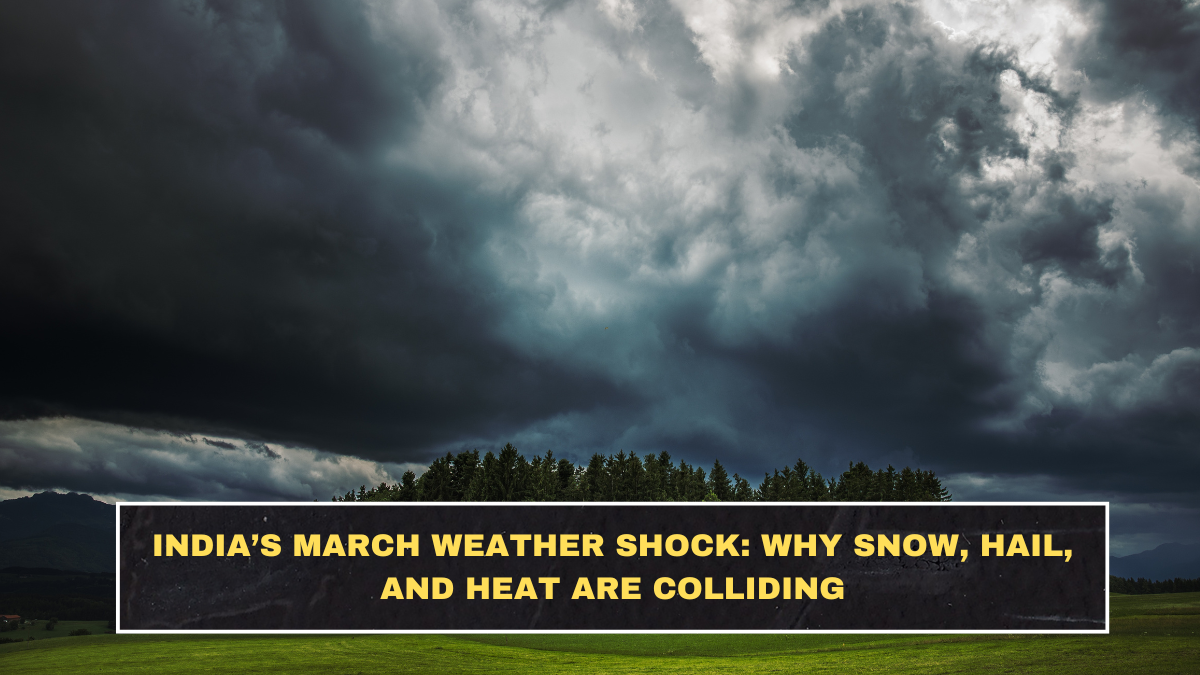
March is typically a transition month in India — winter fades, and summer begins. But this year, the pattern looks disrupted. We are seeing snowfall in northern regions like Kashmir, hailstorms in southern states like Karnataka, and rising heat in central India at the same time.
This is unusual because weather patterns usually follow a gradual shift. When multiple extremes appear simultaneously, it signals instability in atmospheric conditions.
The key driver behind this situation is the interaction of western disturbances, local convection systems, and temperature variations across regions.
Why Does This Weather Pattern Matter for Everyday Life?
This is not just a weather story — it affects multiple sectors.
Unusual weather impacts:
- Agriculture (crop damage due to hail or rain)
- Daily life (travel disruptions, safety risks)
- Health (sudden temperature changes)
Data shows that unseasonal weather events can lead to crop losses and price fluctuations, which directly affect consumers.
So even if you’re not tracking weather daily, it still impacts your life indirectly.
What Are the Key Weather Events Happening Right Now?
Here’s a simplified overview:
| Region | Weather Event | Impact |
|---|---|---|
| Kashmir (North) | Snowfall | Travel and temperature drop |
| Karnataka (South) | Hailstorms | Crop and property damage |
| Central India | Rising Heat | Early summer conditions |
| North-West India | Rain & Thunderstorms | Temporary cooling |
These events happening together create the “weather shock” effect.
What’s Happening Right Now (Data-Based Insight)?
Meteorological patterns indicate:
- Western disturbances are more active than usual
- Temperature fluctuations are higher than seasonal averages
- Rainfall distribution is uneven across regions
Additionally:
- March rainfall in some areas has exceeded normal levels
- Hailstorm frequency has increased in certain states
- Heat conditions are building earlier in central regions
This combination leads to unpredictable conditions.
What Is Causing These Extreme Variations?
The main factors include:
- Interaction between cold northern winds and warm southern air
- Moisture build-up due to western disturbances
- Localized storm formation
When these systems overlap, they create sudden and extreme weather changes.
What Should You Do to Stay Safe and Prepared?
Most people ignore weather warnings until it’s too late.
Instead:
- Check daily forecasts if you have travel or outdoor plans
- Avoid open areas during thunderstorms
- Protect crops or property if you are in affected regions
- Stay hydrated as temperatures rise
Simple precautions reduce risk significantly.
What Are the Common Mistakes People Make?
People often underestimate weather risks.
Common mistakes include:
- Ignoring alerts and warnings
- Traveling during unstable weather
- Not preparing for sudden temperature changes
Weather is unpredictable — but your response shouldn’t be.
What Should You Watch Next?
In the coming days:
- Continued weather fluctuations are expected
- Heatwave conditions may develop in some regions
- More localized storms may occur
Monitoring updates is important, especially during seasonal transitions.
Reality Check: Is This a Sign of Climate Change?
Partly — but not entirely.
While individual events cannot be directly blamed on climate change, increasing frequency and intensity of such anomalies is often linked to long-term climate patterns.
What you’re seeing is a mix of short-term weather systems and broader climate trends.
Conclusion: What Does This Weather Shock Really Mean?
India’s March weather is showing how unpredictable conditions can become when multiple systems interact. It’s a reminder that weather is not always linear — and planning based on assumptions can fail.
Staying informed and prepared is no longer optional. It’s necessary.
FAQs
Why is weather unusual in March 2026?
Due to overlapping weather systems like western disturbances and temperature variations.
Which regions are affected the most?
Kashmir (snow), Karnataka (hail), and central India (heat).
Is this dangerous?
It can be, especially during storms and sudden temperature changes.
Should I be concerned about crop damage?
Yes, unseasonal weather can affect agriculture.
Is this related to climate change?
Partly, but it is also influenced by short-term weather patterns.
Click here to know more.