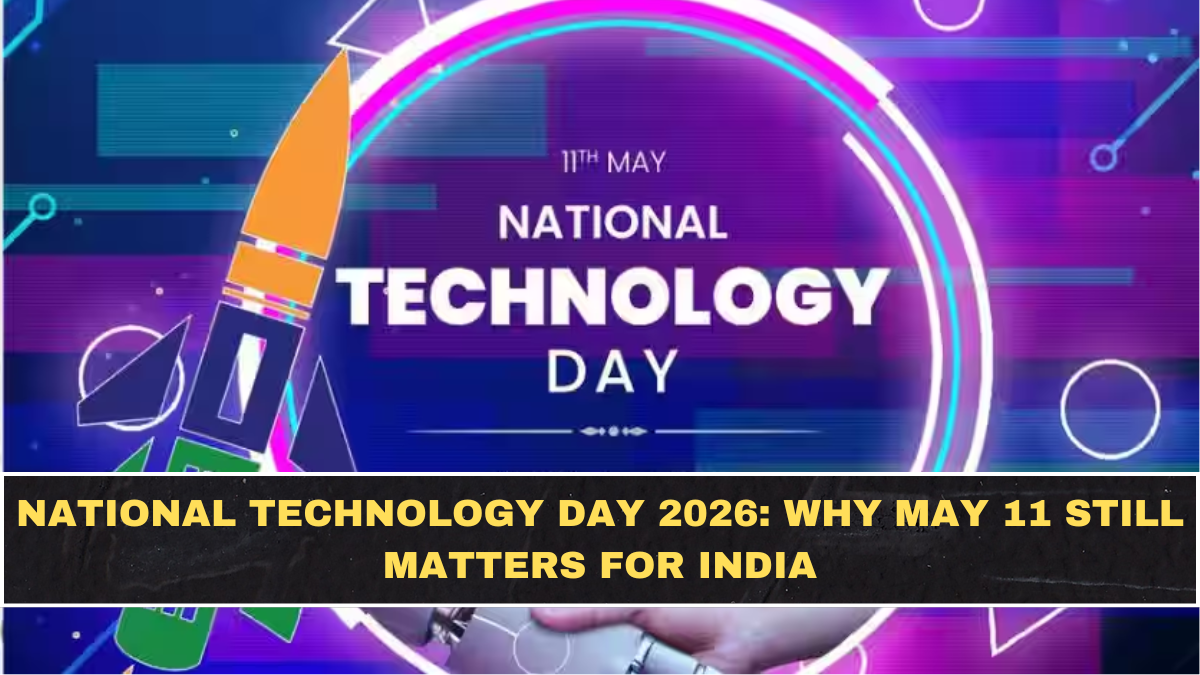
National Technology Day 2026 is not just another date on India’s calendar. It marks the day when India showed the world that scientific ambition, defence capability and national confidence could come together in one powerful moment. Every year, May 11 is observed to honour India’s technological achievements, especially the 1998 Pokhran-II nuclear tests under Operation Shakti.
The bigger point is simple: May 11 is about self-reliance. It reminds India that technology is not only about apps, gadgets or startups, but also about national security, space research, defence systems, healthcare innovation and industrial progress. In 2026, the day feels even more relevant because global power now depends heavily on who controls advanced technology.
Why Is May 11 So Important?
May 11 became historic because India conducted successful nuclear tests at Pokhran in Rajasthan in 1998. These tests, known as Operation Shakti, changed India’s global image and proved that the country had strong scientific and strategic capability. Later, then Prime Minister Atal Bihari Vajpayee declared May 11 as National Technology Day to recognise this achievement.
But the day is not limited to nuclear technology alone. It also celebrates Indian scientists, engineers, entrepreneurs, researchers and innovators who build solutions for the country. From defence to digital payments, from space missions to vaccines, the idea behind National Technology Day is to recognise technology that actually solves Indian problems at Indian scale.
| Key Detail | Why It Matters |
|---|---|
| Date | May 11 every year |
| Main historical event | Pokhran-II nuclear tests in 1998 |
| Codename | Operation Shakti |
| Declared by | Atal Bihari Vajpayee |
| Broader meaning | Science, innovation, defence and self-reliance |
What Did Pokhran-II Change Forever?
Pokhran-II was not just a defence event; it was a geopolitical statement. India showed that it could develop and test complex strategic technology despite global pressure and restrictions. The tests helped India strengthen its nuclear deterrence and gave the country a stronger voice in global security discussions.
The real legacy is confidence. After Pokhran-II, India’s scientific ecosystem gained public attention in a different way. People began seeing scientists not only as laboratory figures, but as nation-builders. That psychological shift matters because a country that respects science is more likely to invest in research, innovation and future technologies.
Why Does National Technology Day Matter In 2026?
In 2026, technology is directly linked to power. Artificial intelligence, semiconductors, cybersecurity, clean energy, space technology and defence manufacturing are now central to national growth. Countries are not competing only through armies or economies anymore; they are competing through innovation ecosystems.
For India, this makes National Technology Day more than a celebration. It becomes a reminder that dependence on foreign technology can be risky. Whether it is chips, drones, defence systems, medical devices or green energy, India’s future strength will depend on how much it can design, build and scale on its own.
Which Areas Should India Focus On Now?
India has already made progress in several technology-driven sectors, but the uncomfortable truth is that celebration alone is not enough. If India wants to become a serious technology power, it needs deeper investment in research, manufacturing and skilled talent. Big announcements are useful, but execution is what separates real power from public relations.
Key focus areas now include:
- Defence technology and indigenous weapons systems
- Semiconductor manufacturing and chip design
- Artificial intelligence for healthcare, farming and governance
- Clean energy, battery storage and green hydrogen
- Space technology and commercial satellite services
- Cybersecurity and data protection infrastructure
Is India Doing Enough In Science And Innovation?
India has strong talent, but it still needs to fix gaps in research funding, university-industry collaboration and high-end manufacturing. Too many bright students still chase safe jobs instead of research careers because the system often rewards marks more than original thinking. That is a blind spot India cannot afford anymore.
National Technology Day should push a tougher question: are we only celebrating past achievements, or are we building the next Pokhran-level breakthrough? India’s next big leap may not come from one dramatic test in the desert. It may come from labs, startups, defence corridors, space companies and young innovators solving problems at scale.
Conclusion?
National Technology Day 2026 matters because May 11 represents India’s scientific courage and strategic confidence. Pokhran-II gave the country a powerful place in modern history, but the real challenge is what India does next. The future will belong to countries that can innovate, protect their technology and turn research into real-world strength.
For India, the message is clear: technology is no longer optional. It is national security, economic power and social progress combined. May 11 should not be treated as just a tribute to the past, but as a warning that the next global race will be won by countries that build, not just buy.
FAQs?
Why Is National Technology Day Celebrated On May 11?
National Technology Day is celebrated on May 11 because India conducted successful nuclear tests at Pokhran on this day in 1998 under Operation Shakti. The day was later declared as National Technology Day to honour Indian science, technology and innovation.
What Was Operation Shakti?
Operation Shakti was the codename for India’s Pokhran-II nuclear tests conducted in May 1998. These tests demonstrated India’s nuclear capability and became a major moment in the country’s defence and scientific history.
Who Declared National Technology Day In India?
National Technology Day was declared by former Prime Minister Atal Bihari Vajpayee after the 1998 Pokhran-II tests. The day is now observed every year to recognise India’s technological achievements and innovators.
Why Is National Technology Day Still Relevant In 2026?
It is relevant because technology now shapes defence, economy, healthcare, education, energy and global influence. In 2026, India’s future depends heavily on self-reliance in advanced technology and stronger investment in innovation.