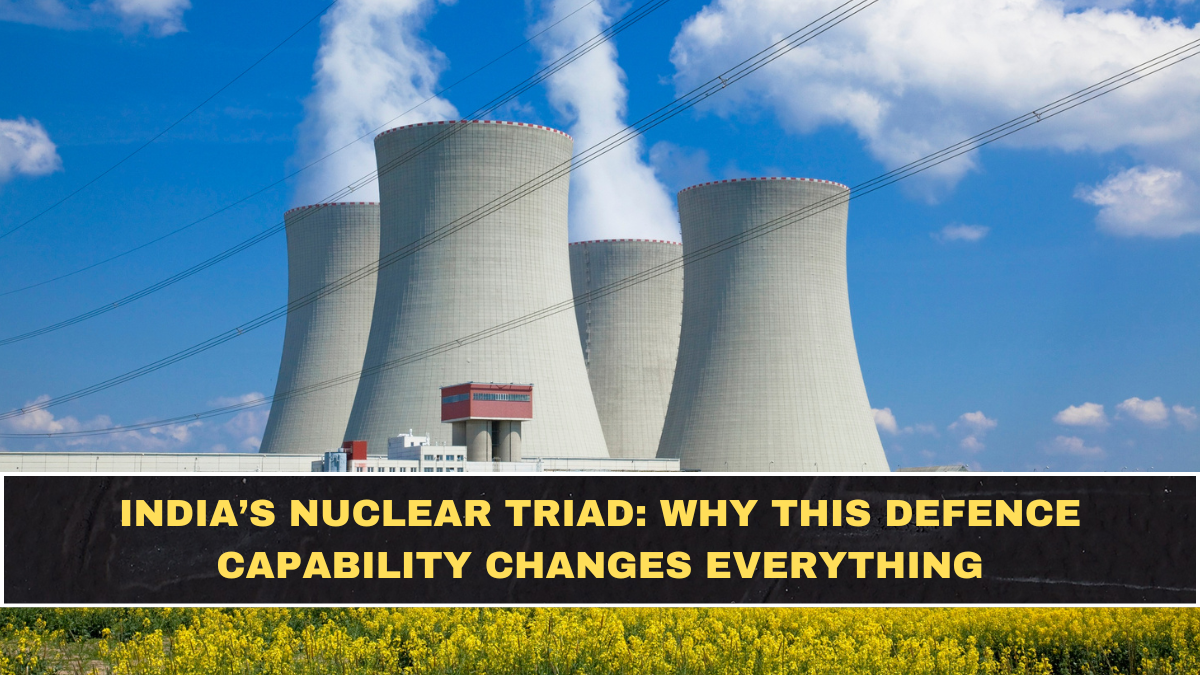
India’s nuclear triad is one of the most serious defence capabilities a country can have. It means India can deliver nuclear weapons from three platforms: land-based missiles, aircraft and sea-based submarines. This matters because deterrence is not only about having weapons; it is about making sure an enemy knows India can respond even after a major attack.
In simple words, the nuclear triad makes India’s defence posture more survivable and credible. India officially follows a doctrine of credible minimum deterrence and a no-first-use posture, meaning nuclear weapons are meant to prevent nuclear aggression, not start it. That balance is why the triad is so important in modern geopolitics.
What Is A Nuclear Triad?
A nuclear triad is a three-layer nuclear delivery system. The first layer is land-based missiles, the second is aircraft, and the third is submarine-launched missiles. Each platform has a different role, and together they make it harder for any enemy to destroy a country’s nuclear response capability in one strike.
The sea-based leg is especially important because nuclear submarines can remain hidden underwater. That gives a country what defence experts call second-strike capability. This means even if an enemy attacks first, India can still respond, which makes nuclear blackmail or coercion much riskier.
| Triad Component | Main Platform | Why It Matters |
|---|---|---|
| Land | Ballistic missiles | Fast response and strong range |
| Air | Fighter/strategic aircraft | Flexible delivery option |
| Sea | Nuclear submarines | Hidden and survivable second strike |
| Doctrine | No-first-use posture | Defensive nuclear signalling |
| Goal | Credible minimum deterrence | Prevent attack through assured response |
Why Does It Scare Rivals?
The nuclear triad changes the calculation for any rival because it reduces the chance of a successful first strike. If nuclear assets exist only on land, they can be tracked more easily. If they exist in the air only, they depend heavily on airbases and operational readiness. But when sea-based submarines are involved, the deterrence becomes far harder to neutralise.
This is not about aggression; it is about making war less attractive. A country with a credible triad sends a blunt message: even if you hit first, you cannot be sure of escaping retaliation. That uncertainty is what makes deterrence work, especially in a tense region surrounded by nuclear and military competition.
How Strong Is India’s Sea Leg?
India’s sea-based deterrence has gained more attention because ballistic missile submarines are central to a survivable nuclear force. Recent defence reporting has highlighted India’s growing Arihant-class submarine capability, including the commissioning of INS Aridhaman in April 2026. This development has been described as a major milestone for India’s undersea nuclear deterrent.
The reason this matters is simple: submarines can stay concealed and continue patrols, making them harder to detect than fixed land assets. For India, this improves second-strike credibility and strengthens the overall nuclear triad. But here is the hard truth: building submarines is not enough; India also needs endurance, missile range, crew training and secure command systems.
Why Is It Important For Geopolitics?
India sits in a difficult strategic neighbourhood. China has a larger military-industrial base, Pakistan has nuclear weapons, and the Indo-Pacific is becoming more militarised. In this environment, India’s nuclear triad is not just a defence symbol; it is a geopolitical insurance policy.
A strong triad gives India more room in diplomacy because it reduces vulnerability. Countries negotiate differently when they know their core security is protected. It also supports India’s image as a responsible nuclear power that wants deterrence, not reckless escalation.
What Are The Big Benefits?
India’s nuclear triad gives the country several strategic advantages, but the most important one is survivability. Nuclear deterrence fails if the enemy believes it can destroy your capability before you respond. A triad reduces that risk by spreading response options across land, air and sea.
Key benefits include:
- Stronger second-strike capability
- Better protection against nuclear coercion
- More credible deterrence in regional tensions
- Greater strategic independence in foreign policy
- Stronger defence technology ecosystem
- Better balance against larger military powers
What Are The Hidden Challenges?
The biggest mistake is thinking that a triad is automatically perfect once all three legs exist. It is not. A nuclear triad needs constant modernisation, secure communication, submarine patrol discipline, missile reliability and political control. Weakness in any of these areas can reduce credibility.
India also has to manage cost and escalation risk. Defence modernisation is expensive, and nuclear signalling must remain controlled. The goal should not be loud chest-thumping. The goal should be quiet capability, disciplined strategy and enough strength to prevent war before it begins.
Conclusion: Why Does It Change Everything?
India’s nuclear triad changes everything because it makes deterrence more credible, survivable and strategically serious. Land, air and sea-based delivery systems together create a defence structure that is harder to destroy and harder to ignore. In a dangerous world, that matters more than dramatic speeches.
But India should not treat the triad as a finished achievement. The real test is continuous improvement in technology, command systems, submarine capability and responsible doctrine. Nuclear power is not a trophy; it is a burden that demands discipline, secrecy and long-term seriousness.
FAQs?
What Is India’s Nuclear Triad?
India’s nuclear triad means the country can deliver nuclear weapons through land-based missiles, aircraft and sea-based submarines. This gives India multiple response options and makes its deterrence more credible.
Why Is The Sea-Based Leg Important?
The sea-based leg is important because nuclear submarines can remain hidden underwater. This improves second-strike capability, meaning India can still respond even if its land or air assets are targeted first.
Does India Follow No-First-Use?
Yes, India officially maintains a no-first-use nuclear posture along with credible minimum deterrence. This means India presents its nuclear weapons mainly as a deterrent against nuclear attack, not as a first-strike tool.
Why Does The Nuclear Triad Matter In 2026?
It matters in 2026 because regional security competition is becoming sharper, especially around China, Pakistan and the Indo-Pacific. A credible triad gives India stronger deterrence and more strategic confidence in global affairs.