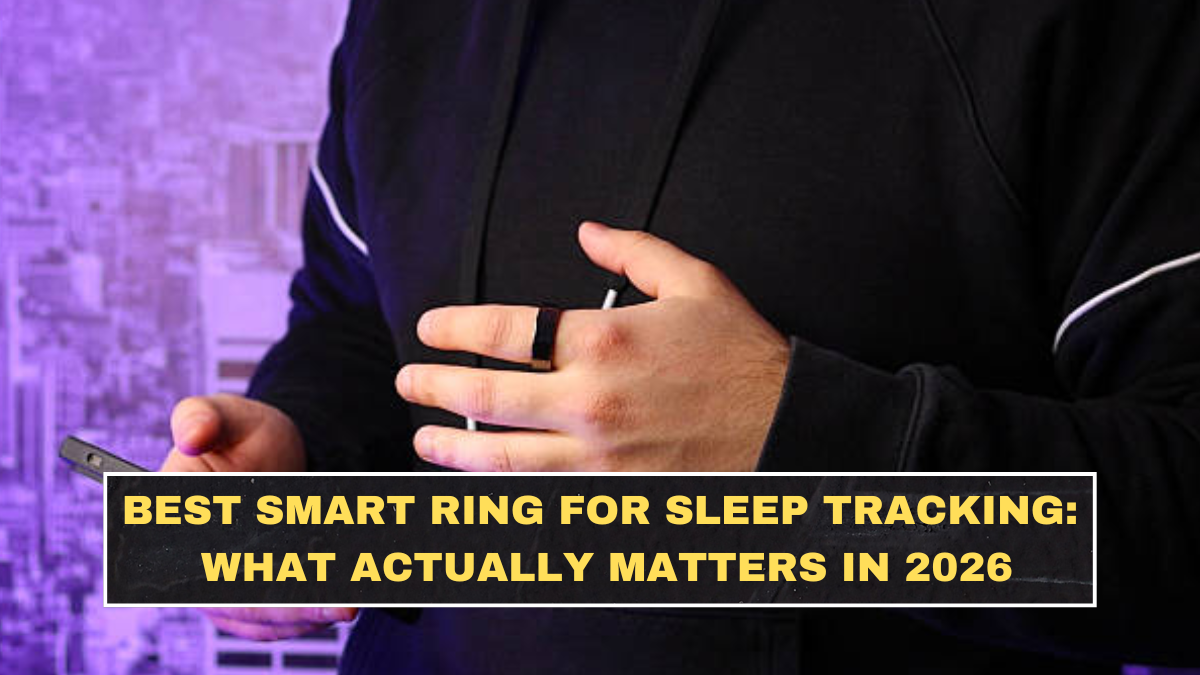
Sleep tracking is one of the biggest reasons people buy smart rings in the first place. That makes sense because a ring is usually easier to wear overnight than a smartwatch. It is lighter, less distracting, and does not put a glowing screen on your wrist while you sleep. The category is still smaller than smartwatches, but it is growing fast. IDC estimated smart ring sales at about 880,000 units in 2023 and expects that number to reach 3.2 million by 2028, largely because people want lower-friction health tracking that fits into daily life more naturally.
What should matter most in a smart ring for sleep tracking?
Most buyers chase the wrong thing first. They look at hype, design, or one flashy app screenshot. That is backwards. For sleep tracking, the most important factors are comfort, battery life, sleep metric depth, consistency of wear, and whether the device actually helps you notice useful patterns. A ring you forget to wear, a ring that needs constant charging, or a ring that gives pretty dashboards without helping you understand bedtime, recovery, and sleep quality is not a great sleep tool. Research on smart rings also supports this general idea, because strong overnight wear compliance is one reason ring-style devices are useful in long-term monitoring.
Is Oura still the best smart ring for sleep tracking?
Right now, Oura remains the strongest benchmark if sleep tracking is your main priority. That is not because it is magic. It is because Oura has the deepest sleep reputation, broad research visibility, and a mature app experience built around readiness, recovery, and sleep trends. Oura says Ring 4 offers 5 to 8 days of battery life, which is a major convenience advantage over most smartwatches. More importantly, a 2025 meta-analysis found Oura comparable to medical-grade sleep studies for commonly measured sleep parameters, while still not being a replacement for clinical diagnosis. That is the kind of balanced evidence that matters more than influencer praise.
Is Samsung Galaxy Ring a serious option for sleep tracking?
Yes, but you should be realistic about where it stands. Samsung’s Galaxy Ring is a serious option, especially for people already using Samsung Health and a Galaxy phone. Samsung says the ring tracks sleep stages, sleep patterns, nighttime movement, skin temperature, heart rate, and HRV during sleep, with battery life of up to 7 days. That is a strong feature list on paper and very practical for daily use. The catch is that Samsung is newer to the smart ring category than Oura, so buyers looking for the most proven sleep-tracking reputation may still lean toward Oura first. Samsung looks strong for ecosystem convenience. Oura still looks stronger for sleep-first credibility.
Do studies show that smart rings are actually good at sleep tracking?
Yes, but not in the lazy way people talk about online. Smart rings are good enough for trend tracking, sleep timing, and general sleep pattern monitoring, but they are not the same as a lab sleep study. A 2025 systematic review reported very high heart-rate and heart-rate-variability accuracy for smart rings, and sleep detection sensitivity around 93 percent to 96 percent. Another 2025 paper comparing wearable finger rings for sleep-stage detection found that Oura and SleepOn performed similarly, while another major 2023 study found Oura Ring 3 showed improved sleep-stage detection accuracy compared with earlier generations. The pattern is clear: ring-based sleep tracking is useful and improving, but still best treated as a consumer health tool, not a diagnosis machine.
Which features matter more than marketing claims?
This is where most buyers fool themselves. “Best” does not mean “most features.” It means the ring that makes accurate-enough tracking easiest to sustain. For sleep, these are the features that matter most:
| Feature | Why it matters for sleep tracking | What to look for |
|---|---|---|
| Comfort | Poor comfort reduces overnight wear | Slim fit, smooth interior, light weight |
| Battery life | Frequent charging leads to missed sleep data | At least 5 days is ideal |
| Sleep metrics | More depth helps spot patterns | Sleep stages, HR, HRV, temperature trends |
| App quality | Raw numbers alone are not enough | Clear trends, recovery insights, bedtime guidance |
| Ecosystem fit | Better integration reduces friction | Works well with your phone and health apps |
| Research track record | Stronger evidence reduces guesswork | Published validation or peer-reviewed comparisons |
If your goal is simply to know when you slept, many rings can do that. If your goal is to understand recovery, bedtime consistency, and how stress or habits affect sleep, app quality matters just as much as the hardware.
Who should buy Oura, and who should consider Samsung instead?
Choose Oura if sleep is your top reason for buying a ring and you want the most established sleep-focused option. It makes more sense for users who care about long-term sleep patterns, readiness, and recovery scores more than ecosystem convenience. Choose Samsung Galaxy Ring if you already live inside Samsung’s ecosystem and want sleep tracking plus convenient integration with Samsung Health. That is the blunt answer. The mistake would be pretending both are equal for every buyer. They are not. One is sleep-first. The other is ecosystem-first with strong sleep features.
Can the best smart ring for sleep tracking be different for different people?
Absolutely, and this is the part people hate because it kills the fantasy of one perfect gadget. If you want the safest current recommendation for sleep tracking specifically, Oura is still the strongest overall pick because of its research visibility, mature sleep experience, and battery life. If you want a strong alternative that fits naturally into a Samsung setup, Galaxy Ring is a credible second option. But if you hate subscription-style ecosystems, hate wearing rings, or expect medical-level answers from a consumer device, then even the best smart ring may disappoint you.
Conclusion?
The best smart ring for sleep tracking in 2026 is still the one that balances comfort, useful sleep metrics, app clarity, and enough battery life to stay on your finger night after night. Right now, Oura remains the strongest overall choice for sleep-first buyers, while Samsung Galaxy Ring makes the most sense for people who value Samsung integration and still want serious overnight tracking. The real buying mistake is chasing hype instead of asking one simple question: will this device actually stay on my hand every night and give me data I can use?
FAQs
Is a smart ring better than a smartwatch for sleep tracking?
For many people, yes, mainly because rings are usually more comfortable to wear overnight and need less frequent charging. That improves consistency, which improves the value of sleep tracking.
Is Oura the most accurate smart ring for sleep tracking?
Current evidence and research visibility suggest Oura remains one of the strongest options for consumer sleep tracking, but it is still not a substitute for a clinical sleep study.
Does Samsung Galaxy Ring track enough sleep data for most users?
Yes. Samsung says it tracks sleep stages, sleep patterns, movement, skin temperature, heart rate, and HRV during sleep, which is enough for most mainstream users.
What matters more, accuracy or comfort?
Both matter, but comfort is what keeps you wearing the ring. A highly capable ring that feels annoying at night will produce worse real-world results than a comfortable one you actually use every night.
Click here to know more