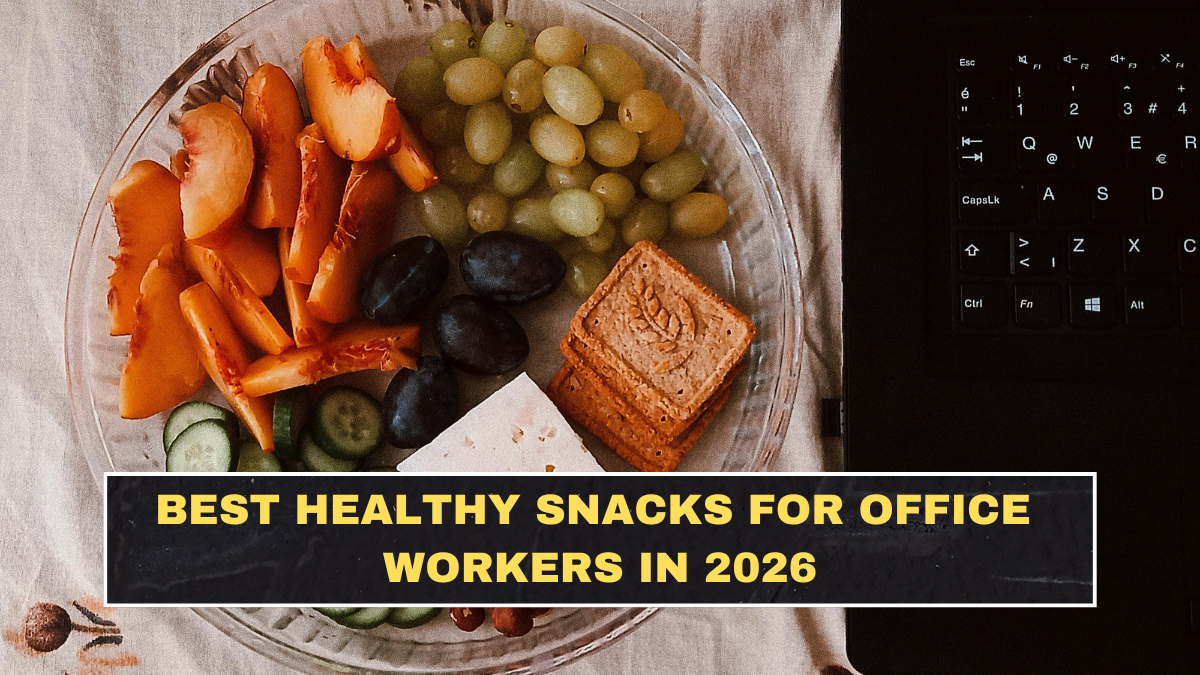
Office snacking is not the problem. Bad office snacking is. Most workers do not fail because they need a snack at 11 a.m. or 4 p.m. They fail because the snack is whatever is easiest, sweetest, or sitting in the break room. Cleveland Clinic says healthy work snacks can help keep you full and support energy, while CDC nutrition guidance keeps the basics simple: healthier eating patterns emphasize fruits, vegetables, whole grains, low-fat dairy, and lean protein, while limiting added sugar, saturated fat, and sodium. That is the real frame here. A good office snack should be convenient, filling, and hard to regret later.
Why do office workers need better snacks?
Because most workdays are built in a way that invites mindless eating. Long meetings, desk work, stress, and easy access to vending-machine food make people snack for convenience more than nutrition. IFIC’s 2024 snacking survey found that nearly 9 in 10 Americans call what they eat between meals a snack, and 2 in 3 say their snacks are more likely to be spontaneous than planned. That is the real issue. If your snack is spontaneous, it usually ends up being whatever requires the least effort, not what keeps you satisfied.
What makes a snack actually healthy for work?
A healthy office snack usually does one of three things well: it provides protein, adds fiber, or gives enough volume to hold you over without a sugar crash. CDC guidance points toward fruit, vegetables, whole grains, low-fat dairy, and lean protein, and Cleveland Clinic’s work-snacking advice highlights foods like fruit, nuts, crackers, and other simple planned options. Research on satiety also supports the idea that snacks with more protein and fiber tend to be more filling than weaker snack choices built mostly around refined carbs or sugar.
| Snack idea | Why it works | Best office use |
|---|---|---|
| Greek yogurt | High protein and easy to portion | Mid-morning or afternoon desk snack |
| Fruit plus nuts | Fiber plus healthy fats | Fast grab-and-go option |
| Roasted chickpeas or edamame | Crunchy, higher-protein alternative to chips | Snack drawer staple |
| Cottage cheese cup | Filling with real protein | Stronger option for long afternoons |
| Whole-grain crackers with hummus | More balanced than plain crackers alone | Better for hunger between meetings |
| Air-popped popcorn | High volume and better than fried snacks | Good for mindless munching risk |
| Protein-rich snack bar | Convenient backup option | Emergency snack for rushed days |
Which snacks are best for staying full at work?
The best snacks for fullness are usually the ones with protein and some fiber. Greek yogurt is one of the strongest office options because it is easy, portable, and more filling than sugary snack packs. Nuts also work well in sensible portions because they add fats, protein, and crunch. Cleveland Clinic’s work snack guidance specifically mentions fruit and nuts as practical choices, and research reviews on snacking and satiety consistently point toward protein-rich and whole-food snacks like nuts and yogurt as stronger options for appetite control.
Another smart option is pairing foods instead of eating one weak item by itself. An apple alone may not hold you for long, but an apple with peanut butter or a few nuts works better. Crackers alone are weak. Crackers with hummus or cheese are stronger. Office snacking improves when people stop treating snacks like random filler and start treating them like mini-meals with a purpose.
Are packaged office snacks always bad?
No, but a lot of them are overrated. A packaged snack is fine if it is doing a useful job. Protein bars, roasted snacks, yogurt cups, and portioned nut packs can all make sense. The problem is that many “healthy” snacks are just sugar with better branding. IFIC’s snacking resources note that healthy snacking looks different for different people, but nutrients, energy, convenience, and balance still matter. So the smarter move is not to fear packaged snacks. It is to read them honestly and ask whether they are actually satisfying or just easy to eat too quickly.
Which office snacks are better than chips and candy?
Roasted chickpeas, edamame, nuts, popcorn, Greek yogurt, fruit, and hummus-based snack packs all beat candy and chips most of the time because they bring either protein, fiber, or more useful fullness. Cleveland Clinic’s work snack guidance emphasizes planning ahead with fruit, nuts, and whole-grain options, while CDC’s food service and healthy eating guidance supports choosing foods lower in added sugar and richer in nutrient-dense ingredients. That does not mean chips are illegal. It means they are usually weak fuel for people trying to stay focused through a real workday.
What snacks work best for busy office workers?
The best office snacks are the ones that survive real life. That means minimal prep, easy storage, and no dramatic cleanup. Greek yogurt cups, nuts, roasted chickpeas, fruit, popcorn, protein bars, and shelf-stable whole-grain crackers are all practical because they fit into normal work routines. BDA’s healthy snack guidance also stresses that snacks can contribute useful nutrients like protein and fiber when chosen well and kept portion-conscious. So the right office snack is not the most perfect one. It is the one you will still have available when the bakery box shows up in the break room.
What mistakes ruin healthy office snacking?
The biggest mistake is letting every snack be unplanned. IFIC found that most snacks are spontaneous, and that alone explains a lot of poor choices. Another mistake is choosing snacks that are too small or too sugary, which just creates another hunger wave soon after. The third mistake is pretending hunger is always the issue when sometimes boredom or stress is the real trigger. Cleveland Clinic’s mindful-eating-at-work advice makes this point clearly: bringing your own better snacks matters because office temptation is constant.
Conclusion?
The best healthy snacks for office workers in 2026 are not exotic. They are simple foods that do their job: Greek yogurt, fruit with nuts, roasted chickpeas, hummus with crackers, cottage cheese, popcorn, and decent protein bars. The goal is not to snack less in some heroic way. The goal is to snack better so your energy, focus, and hunger stay under control during the workday. Office snacking is going to happen anyway. You might as well stop doing it badly.
FAQs
What is the healthiest office snack?
There is no single perfect answer, but Greek yogurt, fruit with nuts, hummus with whole-grain crackers, and roasted chickpeas are among the strongest options because they combine convenience with better satiety.
Are protein snacks better for office workers?
Often yes, because protein-rich snacks tend to be more filling than weaker snack options. Research on satiety supports protein as one of the stronger snack qualities for managing hunger.
What snacks should office workers avoid?
Sugary snacks and highly processed options that leave you hungry again quickly are usually the weakest choices, especially when they bring little protein or fiber.
Is popcorn a healthy office snack?
It can be. Air-popped or lightly seasoned popcorn is a better high-volume option than many fried snacks, especially when portioned sensibly.
Why do healthy office snacks matter so much?
Because workday snacks affect energy, focus, and whether hunger turns into random overeating later. Planning better snacks reduces the chance of grabbing whatever junk is easiest.