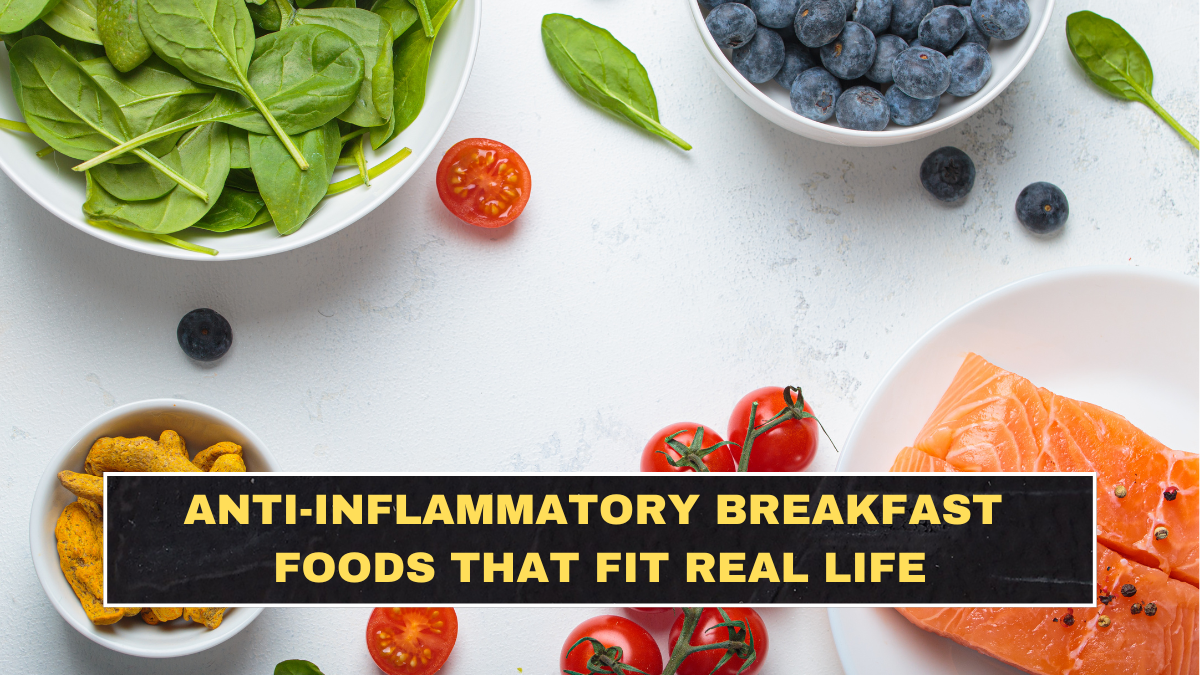
Breakfast is one of the easiest meals to fix when daily eating starts slipping. The problem is that “anti-inflammatory breakfast” advice is often full of fake superfood drama and not much practical value. A more evidence-based approach looks a lot simpler: build breakfast around whole, minimally processed foods like fruit, vegetables, whole grains, legumes, nuts, seeds, fish, and healthy oils. Harvard Health’s 2026 anti-inflammation guide and Cleveland Clinic’s anti-inflammatory diet guidance both point in that same direction, which is basically a Mediterranean-style pattern rather than one miracle ingredient.
What makes a breakfast anti-inflammatory?
An anti-inflammatory breakfast usually does three things well. It replaces ultra-processed, heavily sugared foods with whole foods, it includes fiber and healthy fats, and it often adds ingredients linked with lower inflammatory burden in broader dietary patterns. Harvard Health says to focus on whole, unprocessed foods with no added sugar, including fruits, vegetables, whole grains, legumes, fish, nuts, seeds, and healthy oils. The broader Mediterranean diet literature also emphasizes fruits, vegetables, whole grains, legumes, nuts, seeds, and olive oil as the core pattern most associated with anti-inflammatory benefits.
| Breakfast food | Why it fits an anti-inflammatory pattern | Easy real-life use |
|---|---|---|
| Oats | Whole grain with fiber and helpful plant compounds | Oatmeal, overnight oats, oat bowl |
| Berries | Rich in polyphenols and anthocyanins | Add to yogurt, oats, smoothies |
| Greek yogurt | Offers protein and fermented dairy support | Yogurt bowl, smoothie base |
| Walnuts and seeds | Provide healthy fats and plant nutrients | Topping for oats or yogurt |
| Extra-virgin olive oil | Linked with anti-inflammatory Mediterranean eating | Savory eggs or veggie toast |
| Leafy greens | Add fiber, carotenoids, and polyphenols | Omelet, smoothie, breakfast wrap |
| Salmon | Omega-3-rich protein option | Breakfast toast or egg plate |
Why are oats one of the best anti-inflammatory breakfast foods?
Oats keep showing up in anti-inflammatory food lists because they are cheap, easy, and actually useful. Harvard’s guide includes whole grains in its anti-inflammation pattern, and recent food-based inflammation research also identifies whole-grain bread and breakfast cereals among anti-inflammatory food groups. EatingWell’s recent anti-inflammatory grocery roundup specifically included oats because of their phenolic compounds and overall whole-grain value. That makes oats one of the rare breakfast staples that is both evidence-friendly and realistic for normal people.
Why do berries, nuts, and seeds make so much sense?
Because they improve breakfast fast without making it complicated. Verywell Health’s 2026 overview highlights berries, nuts, and seeds as anti-inflammatory additions because of compounds like anthocyanins, ellagic acid, and omega-3-rich fats such as ALA in walnuts. Harvard’s anti-inflammatory diet review also includes berries, nuts, and seeds among commonly cited helpful foods. In practical terms, that means a plain breakfast can get much better by adding berries and a handful of walnuts or chia seeds instead of sugar-heavy toppings.
Is yogurt actually a good anti-inflammatory breakfast food?
Yes, especially when it is plain or low in added sugar. Harvard’s guide allows a little low-fat dairy in an anti-inflammatory pattern, and newer Mediterranean-style research also includes fermented milk products like yogurt as practical supportive foods. EatingWell’s 2026 article also called out plain strained Greek-style yogurt because probiotics may support gut health, which matters because inflammation and gut health are closely linked in dietary discussions. The catch is obvious: sweetened dessert-style yogurt is not the same thing as plain yogurt with fruit and nuts.
What about eggs and savory breakfasts?
Eggs themselves are not the whole story, but savory breakfasts often work well because they make it easier to include vegetables, olive oil, beans, or fish. Harvard’s quick-start guide emphasizes vegetables, legumes, fish, and healthy oils, and some newer food lists also note that eggs can fit within a balanced anti-inflammatory eating pattern when the overall meal quality is strong. So an omelet with spinach, tomatoes, olive oil, and a side of beans makes more sense than acting as if eggs alone are some anti-inflammatory miracle. The pattern matters more than the single ingredient.
Can a breakfast include salmon or olive oil without being weird?
Yes, and pretending otherwise is mostly cultural habit. Verywell Health’s 2026 list highlights fatty fish and extra-virgin olive oil as strong anti-inflammatory foods because of omega-3 fats and polyphenols like oleocanthal. Harvard and Mediterranean diet sources say the same thing more broadly. In real-life terms, that can mean salmon on whole-grain toast, eggs cooked with olive oil, or a breakfast plate built more like a light Mediterranean meal than a sugary cereal breakfast. It is only “weird” if you are trapped by processed breakfast marketing.
Which breakfast foods are weaker than people think?
Anything that is heavily processed and full of added sugar is weaker than people want to admit. Harvard’s 2026 guide specifically says to favor whole, unprocessed foods with no added sugar. That means many breakfast pastries, sugary cereals, flavored coffee drinks, and protein bars loaded with sweeteners do not really fit the goal, even if they look healthy on the label. The bigger blind spot is that people obsess over adding turmeric or chia while ignoring the obvious damage of a highly processed breakfast base. That is backward thinking.
What is the easiest way to build an anti-inflammatory breakfast?
Keep it boring and repeatable. Start with one base such as oats, yogurt, eggs, or whole-grain toast. Then add one fruit or vegetable, one healthy fat, and one more nutrient-dense topping or protein source. For example, oats with berries and walnuts, plain yogurt with fruit and seeds, or eggs with spinach cooked in olive oil all fit the basic pattern. That approach matches Harvard’s whole-food guidance and the Mediterranean-style evidence better than chasing random trendy ingredients.
Conclusion?
The best anti-inflammatory breakfast foods are not exotic. They are foods people can actually keep eating: oats, berries, yogurt, nuts, seeds, leafy greens, olive oil, legumes, and sometimes fatty fish in a practical breakfast setup. The evidence keeps pointing toward the same thing: a whole-food, Mediterranean-style pattern beats highly processed breakfast habits. So the real fix is not buying one magic ingredient. It is building a breakfast that is less sugary, less processed, and more nutrient-dense in a way you can repeat without getting tired of your own routine.
FAQs
Are oats anti-inflammatory breakfast foods?
Yes. Oats fit anti-inflammatory eating because they are whole grains and contain useful fiber and plant compounds.
Is yogurt good for inflammation?
Plain yogurt can fit well into an anti-inflammatory breakfast, especially when paired with fruit and nuts instead of added sugar.
What fruits work best in an anti-inflammatory breakfast?
Berries are one of the strongest options because they are rich in polyphenols and anthocyanins.
Are eggs anti-inflammatory?
Eggs can fit into an anti-inflammatory breakfast when the overall meal is balanced with vegetables, healthy fats, and minimally processed foods.
What breakfast foods should be limited?
Sugary cereals, pastries, and other heavily processed breakfast foods are weaker choices because anti-inflammatory guidance favors whole, minimally processed foods without added sugar.