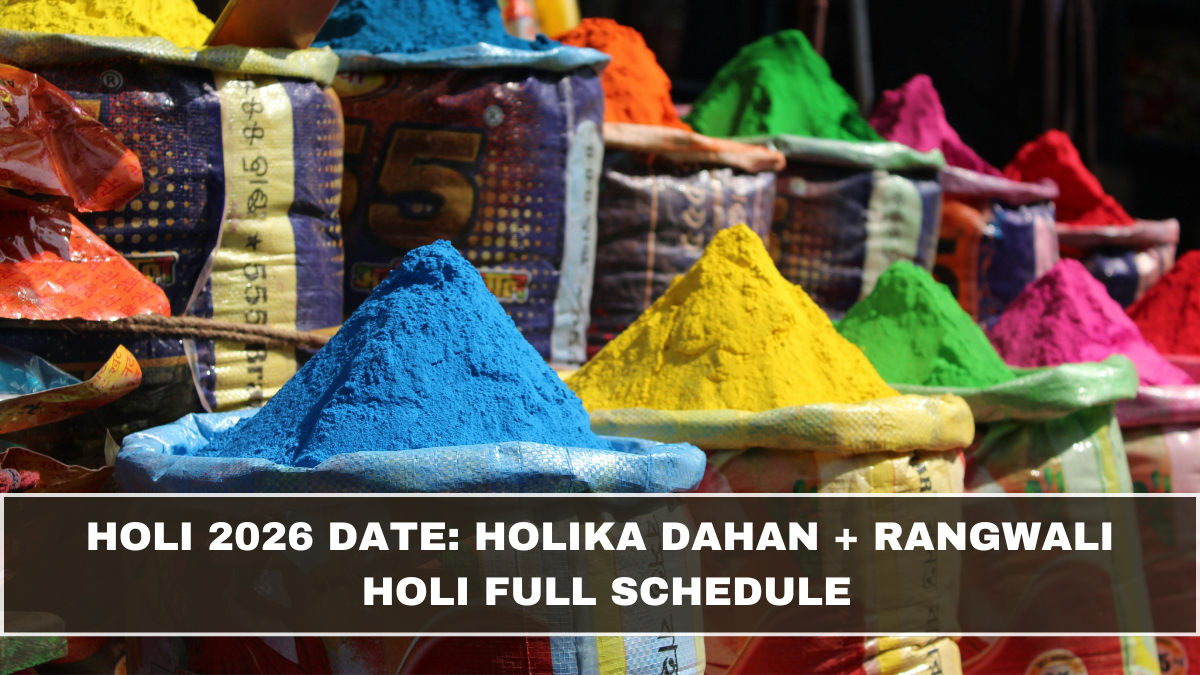
Holi is one of India’s most widely celebrated festivals, known for its vibrant colors, cultural traditions, and strong community participation. The festival is observed over two main days — Holika Dahan and Rangwali Holi. The exact dates each year are determined according to the Hindu lunar calendar, specifically the full moon (Purnima) of the Phalguna month.
Understanding the day-wise schedule helps clarify when each ritual takes place and why the timing changes every year.
Holi 2026 Festival Structure
Holi celebrations follow a two-day structure across most parts of India.
The first day is Holika Dahan, which takes place in the evening after sunset on the full moon day of the Phalguna month. This ritual involves lighting a sacred bonfire and performing traditional prayers that symbolize the victory of good over evil.
The second day is Rangwali Holi, also known as Dhulandi or the festival of colors. On this day, people celebrate by applying colors, sharing sweets, and participating in community gatherings. This celebration usually takes place the morning after Holika Dahan.
The dates vary every year because they are based on lunar phases rather than the Gregorian calendar.
How Holi Dates Are Determined
Holi timing depends on the Hindu Panchang, which calculates festival dates using lunar cycles. The festival is linked to the Phalguna Purnima, the full moon phase marking the end of winter and the arrival of spring.
Holika Dahan is performed when the full moon tithi is active and the inauspicious Bhadra period is not present during the evening hours. Rangwali Holi is celebrated on the following day.
Because lunar cycles shift annually, Holi dates differ each year, which is why checking the official Panchang is important.
Difference Between Holika Dahan and Rangwali Holi
Holika Dahan focuses on spiritual and religious rituals. Communities gather around a bonfire, offer prayers, and perform traditional ceremonies that symbolize the destruction of negativity.
Rangwali Holi represents the festive aspect of the celebration. People play with colored powders, water, and music while visiting family and friends. It emphasizes joy, unity, and social bonding.
Both days together form the complete Holi festival experience.
Cultural and Religious Significance of Holi
Holi holds deep cultural and spiritual importance in Hindu traditions. The festival celebrates the victory of devotion and righteousness, inspired by the legend of Prahlad and Holika.
It also marks seasonal change, symbolizing the transition from winter to spring and the renewal of life. In many regions, the festival promotes forgiveness, unity, and strengthening of relationships.
Over time, Holi has evolved into a global cultural celebration while maintaining its traditional roots in India.
Regional Variations in Holi Celebrations
Holi is celebrated differently across India, with each region adding its own traditions.
In North India, large community gatherings and color celebrations are common. In some parts of Uttar Pradesh, traditional forms such as Lathmar Holi are observed. West Bengal celebrates Dol Jatra with devotional processions, while Maharashtra and Gujarat emphasize community festivities.
Despite regional differences, the core structure of Holika Dahan followed by Rangwali Holi remains consistent.
Why Holi Remains One of India’s Biggest Festivals
Holi continues to hold immense cultural importance because it combines spiritual rituals with social celebration. The festival encourages positivity, forgiveness, and community harmony.
It also strengthens cultural identity and brings people together regardless of social background, making it one of the most inclusive festivals in India.
Conclusion
Holi 2026 will follow the traditional two-day structure of Holika Dahan and Rangwali Holi, determined by the Phalguna full moon according to the Hindu lunar calendar. Understanding the day-wise schedule, cultural meaning, and traditional practices helps in celebrating the festival with clarity and respect for its significance. Holi remains a symbol of joy, renewal, and the triumph of good over evil.
FAQs
When is Holi celebrated in 2026?
Holi in 2026 will be observed according to the Phalguna full moon in the Hindu lunar calendar, with Holika Dahan in the evening and Rangwali Holi the following day.
Why does the Holi date change every year?
The festival follows lunar calendar calculations based on the full moon phase, which shifts annually in the Gregorian calendar.
What is the difference between Holika Dahan and Rangwali Holi?
Holika Dahan involves religious rituals and a sacred bonfire, while Rangwali Holi is the celebration of colors and social festivities.
How many days is Holi celebrated?
Holi is mainly celebrated over two days, though preparations and regional events may extend the festivities.
Is Holi celebrated the same way across India?
No, different regions follow unique traditions, but the core structure of Holika Dahan and Rangwali Holi remains the same.