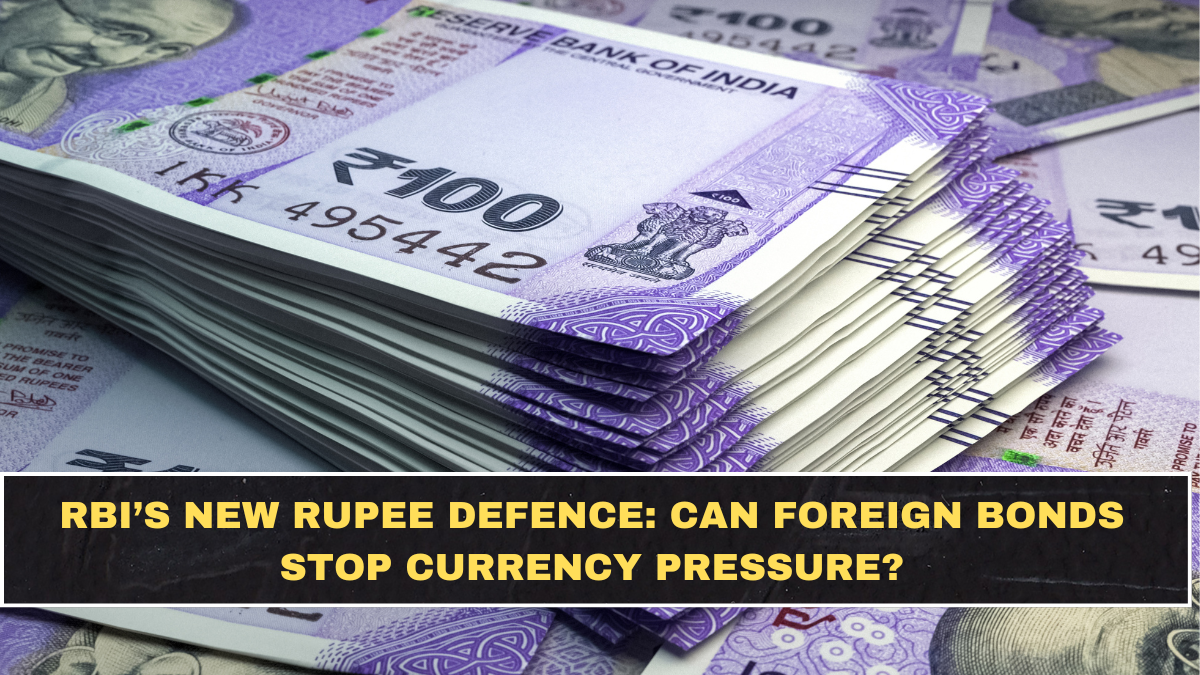
The Reserve Bank of India is reportedly considering allowing state-run banks to issue foreign-currency bonds to attract dollar inflows and support the rupee. The proposal is still at an early stage and may involve bonds with around five-year maturities, according to reports. This matters because the rupee has been under heavy pressure, and ordinary intervention alone may not be enough if dollar demand stays high.
The idea is simple: if public-sector banks raise foreign currency from overseas investors, more dollars can enter the system and help stabilise the currency. NDTV Profit also reported that the central bank considered offering foreign-exchange swaps to participating lenders to help manage currency risk. That means RBI is not just thinking about borrowing dollars; it is also thinking about how banks would protect themselves from exchange-rate swings.

Why Is The Rupee Under So Much Pressure?
The rupee has recently faced heavy selling pressure, with Reuters reporting that it fell over 5% year-to-date and touched a record low of 95.4325 before recovering slightly. One major pressure point is the imbalance between importers and exporters: importers are rushing to hedge dollar payments, while exporters are holding back from selling dollars because they expect more rupee weakness.
| Pressure Point | What Is Happening? | Why It Hurts The Rupee? |
|---|---|---|
| Importer hedging | Importers hedged nearly $58 billion in April | Raises dollar demand |
| Exporter reluctance | Exporters hedged only about $24 billion in April | Reduces dollar supply |
| Oil pressure | Iran-related tensions lifted crude concerns | India imports large oil volumes |
| Equity outflows | 2026 withdrawals reached about $20.6 billion | Foreign money leaving hurts sentiment |
| Bond inflows cooling | Govt bond inflows slowed to about $1.1 billion in 2026 | Less support from foreign investors |
Reuters reported that from January to April 2026, importers hedged $236.6 billion compared with exporters’ $111.7 billion. That gap is not small; it shows market participants are behaving as if the rupee could weaken further. When everyone rushes for dollar protection at the same time, currency pressure becomes self-reinforcing.
How Would Foreign-Currency Bonds Help?
Foreign-currency bonds could help by pulling overseas capital into India through state-run banks. If successful, these bonds would increase dollar availability, improve confidence and reduce pressure on the rupee. Reuters reported that India is exploring steps to mobilise dollar inflows as the rupee slides, with measures aimed at bolstering foreign-exchange reserves and steadying the currency.
Possible benefits include:
- Bringing fresh dollar inflows into the banking system
- Reducing panic around rupee depreciation
- Supporting foreign-exchange reserves indirectly
- Giving RBI another tool beyond spot intervention
- Signalling that policymakers are ready to act
But here is the catch: foreign bonds are not free money. They create repayment obligations in foreign currency, and if the rupee weakens further, servicing those bonds can become costlier. So this move can calm markets, but it also carries currency and rollover risks if used carelessly.
Has RBI Already Taken Other Steps?
Yes, RBI has already tightened parts of the foreign-exchange market. Reuters reported that the rupee rebounded sharply in late March after the central bank capped banks’ forex positions, forcing traders to cut arbitrage positions and triggering onshore dollar selling. This shows RBI is willing to use regulatory tools, not only direct dollar sales, to reduce speculative pressure.
Economic Times also reported that RBI introduced restrictions on banks’ net open foreign-exchange positions in late March, and market participants expect more steps to attract dollar inflows. Possible measures being discussed include attracting NRI dollar deposits, which are often seen as a stable way to improve foreign-currency availability during pressure periods.
Can This Actually Stop Rupee Weakness?
It can help, but it cannot magically fix the rupee if the underlying pressure remains strong. Foreign-currency bonds may improve dollar supply and market confidence, but the rupee is also affected by oil prices, foreign investor flows, trade deficit concerns, global risk appetite and expectations around US interest rates. A bond plan is a support tool, not a cure.
The blunt truth is that RBI can smooth volatility, but it cannot permanently fight fundamentals alone. If oil stays expensive, exporters keep waiting, importers keep hedging and foreign investors keep pulling money out, the rupee may remain under pressure. Moneycontrol reported that the rupee opened stronger at 95.04 on May 6 after Brent crude cooled, showing how quickly external factors can influence the currency.
Conclusion: Is This A Smart Rupee Defence?
RBI’s foreign-currency bond idea looks like a serious attempt to bring more dollar inflows into India at a tense moment for the rupee. It could support confidence, help state-run banks access overseas capital and give policymakers another route to reduce currency stress. But calling it a guaranteed rupee rescue would be dishonest.
The real test will be pricing, demand, maturity structure and risk management. If the bonds attract strong investor interest without creating future repayment stress, the move could work as a useful stabiliser. If it becomes a desperate signal to markets, it may create more nervousness than confidence. RBI needs precision here, not drama.
FAQs?
What Is RBI Planning With Foreign-Currency Bonds?
RBI is reportedly considering allowing state-run banks to issue foreign-currency bonds to attract overseas capital and support the rupee. The proposal is still in early stages and may involve bonds with around five-year maturities.
Why Is The Rupee Under Pressure?
The rupee is under pressure because of heavy importer dollar hedging, exporter reluctance to sell dollars, foreign investor outflows and concerns around oil prices. Reuters reported that the rupee touched a record low of 95.4325 before recovering slightly.
Will Foreign Bonds Stop The Rupee From Falling?
They may help stabilise the rupee by bringing in dollar inflows, but they cannot guarantee a permanent recovery. Currency movement also depends on oil prices, trade flows, investor sentiment and global dollar strength.
What Other Steps Could RBI Take?
RBI has already tightened banks’ forex position limits and may consider steps to attract more dollar inflows, including NRI deposits. Reports suggest policymakers are watching the currency closely and may act further if pressure continues.