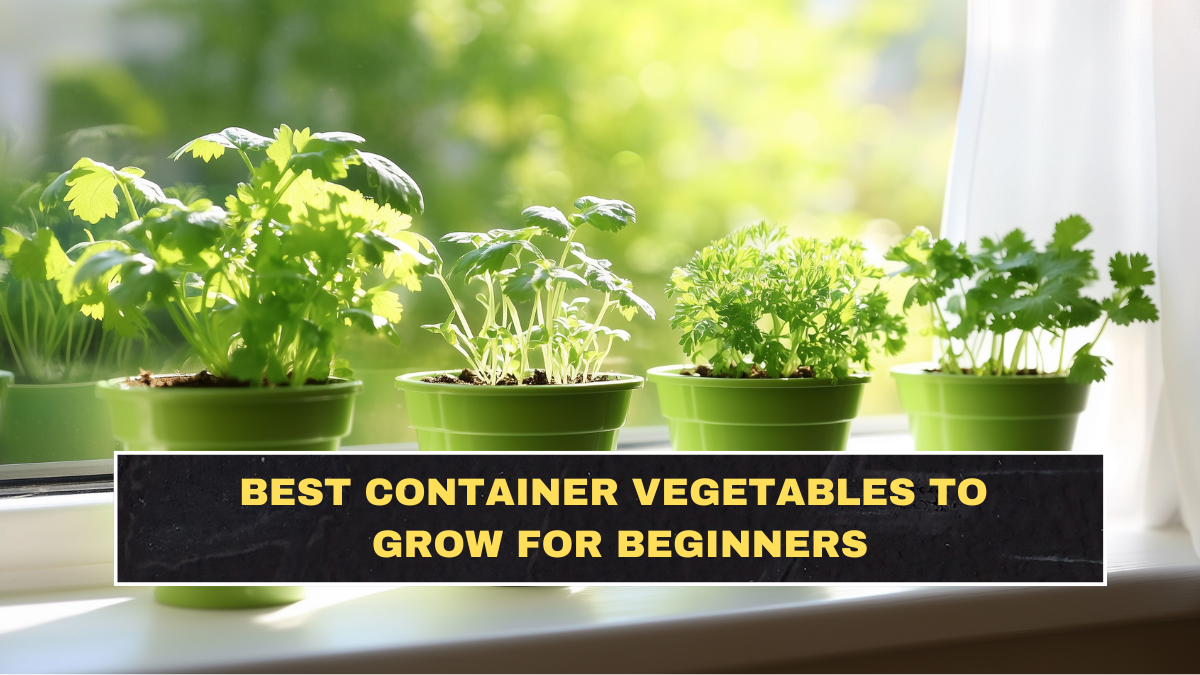
Container vegetables keep attracting beginners because they remove the biggest excuse people use: lack of space. You do not need a full yard to grow food, but you do need some common sense. A lot of new gardeners waste time trying to force oversized crops into tiny pots, then act like container gardening is the problem. It is not. The real issue is bad crop choice and bad container sizing. University of Maryland Extension notes that many vegetables work well in containers, including salad greens, peppers, tomatoes, beans, chard, beets, radishes, squash, and cucumbers, and it specifically recommends compact, bush, or dwarf varieties for small-space growing.
Which container vegetables are easiest for beginners?
The easiest container vegetables are the ones that give quick results, tolerate beginner mistakes, and do not demand extreme root space. Leaf lettuce is one of the strongest choices because it grows quickly, can be harvested repeatedly, and works in small containers. Radishes are another reliable beginner crop because they mature fast and do not need deep containers. For people who want a crop that feels more rewarding over time, cherry tomatoes and peppers are strong options, but they need larger containers and more consistent care than greens. Wisconsin Extension notes that leafy greens such as lettuce, kale, spinach, and arugula work especially well in containers because they are easy to seed, harvest often, and replant through the season.
The mistake beginners make is starting with crops that are technically possible but not beginner-friendly. Maryland Extension says some crops are more challenging in containers, including melons, corn, potatoes, and sweet potatoes. That does not mean they cannot be done. It means they are a poor first choice if your goal is success rather than gardening bragging rights. Start with vegetables that are forgiving, productive, and suited to smaller growing areas.
What vegetables give the best results for the least effort?
For pure beginner value, the best container vegetables usually include leaf lettuce, radishes, peppers, cherry tomatoes, bush beans, and Swiss chard. Maryland Extension lists leaf lettuce at a minimum of about half a gallon, radishes at about one pint, bush beans at about 2 gallons, peppers at about 5 gallons, cherry tomatoes at about 2 gallons, and standard tomatoes at about 5 gallons. That matters because beginners often underestimate how much root room affects results. A tomato crammed into a decorative pot might survive, but it will not perform well.
Here is the simplest breakdown:
| Vegetable | Why it works for beginners | Minimum container size | Harvest advantage |
|---|---|---|---|
| Leaf lettuce | Fast, forgiving, repeat harvests | ½ gallon | Cut outer leaves again and again |
| Radishes | Quick results, low space needs | 1 pint | Often ready in a few weeks |
| Bush beans | Compact and productive | 2 gallons | Good yield in a small footprint |
| Cherry tomatoes | High reward, compact varieties available | 2 gallons | Ongoing harvest in season |
| Peppers | Strong container performer | 5 gallons | Steady production once established |
| Swiss chard | Repeated leaf harvests | 2 gallons | Long useful picking window |
This table is not about fantasy gardening. It is about matching effort to payoff. Fast crops like lettuce and radishes build confidence. Larger crops like peppers and tomatoes give longer-season rewards once you are ready to manage bigger pots.
Why do lettuce and radishes make the smartest first crops?
Because they teach the right lessons without punishing inexperience too hard. Lettuce grows quickly, works in shallow containers, and can be harvested in stages instead of all at once. Radishes are even more direct. They mature fast, need little room, and give visible feedback that keeps new gardeners interested. Wisconsin Extension and Oregon State both point to greens and radishes as strong container candidates, especially in smaller spaces. That combination of speed and simplicity is exactly what beginners need.
There is another reason these crops matter: they fit succession planting. Penn State notes that faster-maturing crops like lettuce and radishes can fill space around slower crops such as tomatoes and peppers. In practical terms, that means a beginner can get quick harvests while waiting for long-season plants to catch up. That is a smarter use of containers than waiting months for one single payoff.
How do tomatoes and peppers fit into a beginner container garden?
Tomatoes and peppers are popular because they feel worthwhile, but they are not magic. They simply perform well when the container size is honest. Maryland Extension says standard tomatoes and peppers need at least a 5-gallon container, while cherry tomatoes can work in around 2 gallons, though larger containers usually support larger plants and better production. The same source also stresses matching container size to plant size and avoiding root restriction.
That is why cherry tomatoes are often the better beginner tomato choice. They fit the container-garden model more naturally, and compact or patio varieties are widely recommended by extension sources. Peppers are also a strong beginner option because they adapt well to containers and do not sprawl the way some other crops do. Missouri Extension includes tomatoes and peppers among vegetables that adapt well to container gardening and again recommends compact, bushy, and dwarf plants.
What setup mistakes ruin container vegetables for beginners?
The biggest mistake is using containers that are too small. The second is using the wrong growing medium. Maryland Extension warns against using regular garden soil in containers because it is too dense, can hold too much water, and may contain weed seeds or pathogens. Potting mix exists for a reason. Ignore that, and you create problems before the plants even start.
Another common mistake is picking crops based on excitement instead of practicality. New gardeners want cucumbers, squash, giant tomatoes, and random novelty vegetables all at once. Then they discover those plants need more space, more water, and more support. Beginners should start small, which Maryland explicitly recommends, and focus on a few dependable crops first. That is not boring advice. It is the reason some people harvest food while others just collect dead pots.
How should beginners choose the best container vegetables?
Choose based on three things: how much sun you have, how much container volume you can realistically manage, and what you actually eat. Maryland’s planning guidance says to grow vegetables your household likes and identifies bush beans, tomatoes, cucumbers, peppers, lettuce, summer squash, and leafy greens as some of the easiest crops to manage. That advice is more useful than trend-driven plant lists because it forces you to think about real use, not fantasy harvests.
A beginner container garden does not need to be impressive. It needs to work. A few pots of lettuce, radishes, peppers, and a cherry tomato will teach you more than a messy collection of oversized plants struggling in bad containers. Start with crops that match your space, your patience, and your actual meals.
Conclusion
The best container vegetables for beginners are not the biggest or the most exciting. They are the ones that deliver results without demanding expert-level care. Leaf lettuce, radishes, bush beans, peppers, Swiss chard, and cherry tomatoes are strong starting points because extension guidance consistently supports them as practical choices for container growing. If you size the containers correctly, use proper potting mix, and avoid the urge to overcomplicate everything, container gardening becomes much easier and much more productive.
FAQs
Which vegetable is best for a first container garden?
Leaf lettuce is one of the best first choices because it grows quickly, works in smaller containers, and can be harvested repeatedly instead of all at once.
Can tomatoes really grow well in pots?
Yes, but only when the container is large enough. Maryland Extension recommends about 2 gallons for cherry tomatoes and around 5 gallons for standard tomatoes, with larger containers often improving performance.
Are radishes good for beginners?
Yes. Radishes are one of the easiest beginner crops because they are fast, compact, and do not require much container space.
What vegetables should beginners avoid first?
More demanding container crops such as melons, corn, potatoes, and sweet potatoes are usually a weaker first choice because they need more space or are harder to manage well in containers.
Click here to know more