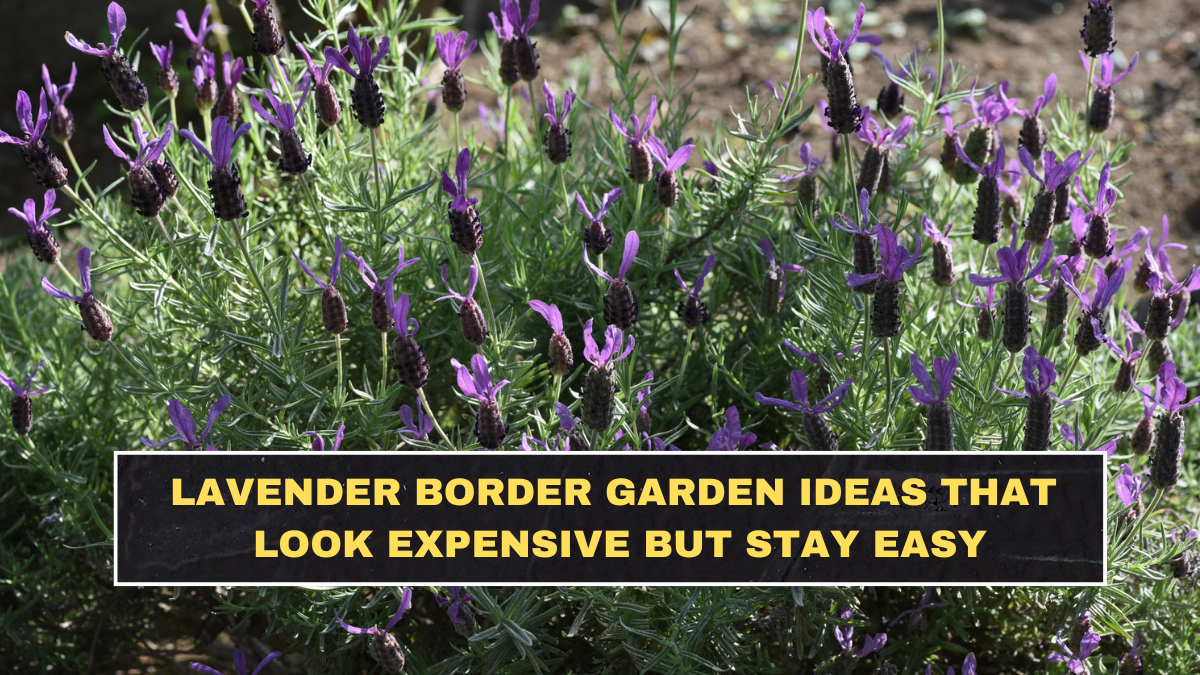
Lavender borders keep getting attention because they solve two problems at once. They make a garden look more deliberate, and they usually do not create the same workload as thirsty, floppy border plants. That matters more than people admit. A border that looks lush for two weeks and then collapses into deadheading, mildew, and constant reshaping is not elegant. It is just high-maintenance pretending to be beautiful. Lavender works when you want structure, scent, and a cleaner visual line without turning the garden into a job. Lavender generally performs best in full sun and sharply drained soil, and it is widely used in borders, edging, and low hedges for exactly that reason.
Why do lavender borders look more expensive than they really are?
They look expensive because they create repetition, and repetition is what makes gardens feel designed instead of random. One of the biggest mistakes in home landscaping is planting too many unrelated things in small numbers. That usually reads as clutter, not style. A lavender border, by contrast, creates rhythm. The silver-green foliage stays useful even when the plant is not in peak bloom, and the flower spikes bring a narrow, intentional shape that works in both formal and cottage-style gardens. The Royal Horticultural Society specifically notes that lavender looks great in flower borders and can be used as a low hedge or edging plant, which is exactly why it gives that tidy, upscale effect without requiring luxury-level spending.
The other reason lavender borders work is restraint. A simple run of one plant type often looks better than a mixed border stuffed with impulse buys. People think “more variety” means “better design,” but that is usually nonsense. Strong borders often rely on fewer plants, better spacing, and clearer shape. Lavender is especially good for this because it already brings fragrance, texture, and color, so it does not need much help from louder companions. That is why even a narrow strip along a path, patio edge, or front border can feel finished with relatively little planting.
What conditions does lavender need to stay healthy?
This is where most people ruin it. Lavender does not fail because it is difficult. It fails because people put a Mediterranean-style plant into damp, heavy, badly drained soil and then act surprised when it declines. Illinois Extension says lavender is demanding of two things above all: full sun and extremely well-drained soil. It also warns that wet or poorly drained soil, especially in winter, shortens plant life, and that crowding and poor air circulation contribute to decline. The RHS gives essentially the same guidance, noting that lavender will not thrive in shady, damp, or waterlogged conditions and prefers dry or moderately fertile, fast-draining soil.
That means the smartest lavender border ideas often start with fixing the site rather than buying plants. Raised beds, gravelly soil improvements, sloped areas, and sunny edges near paths or walls are all more sensible choices than forcing lavender into heavy clay that stays wet. If the site is wrong, the border will never look expensive. It will look half-dead. That is not a design issue. It is a basic plant-matching failure.
How should you space a lavender border so it stays neat?
Crowding is one of the fastest ways to make a lavender border look worse over time. People want that full, lush look immediately, so they plant too tightly. Then airflow drops, foliage stays damp longer, and the border becomes woody, patchy, or disease-prone. Iowa State guidance recommends spacing lavender plants about 12 to 18 inches apart in full sun with good air circulation and well-drained soil. Illinois Extension also emphasizes not crowding the plants and allowing enough room for foliage to dry properly.
A better strategy is to accept that young borders look a little sparse at first. That patience pays off. Once the plants fill out, you get a clearer repeated shape instead of a jammed, overgrown strip. Here is a practical spacing guide:
| Border style | Best use | Suggested spacing | Why it works |
|---|---|---|---|
| Tight edging look | Pathways and narrow front borders | 12 inches | Fills in faster for a defined line |
| Standard border | Most home garden borders | 15–18 inches | Better airflow and easier upkeep |
| Mixed companion border | Lavender with roses or grasses | 18 inches or more | Prevents crowding and moisture problems |
The point is simple: do not design the border for week two. Design it for year two. That is what separates a smart garden from an impatient one.
Which lavender border ideas are easiest to copy?
The easiest version is a straight border along a path or driveway. It works because the geometry does most of the visual work for you. Another easy option is a soft cottage-style border, where lavender repeats in groups and is paired with a few looser plants around it. A third strong idea is using lavender as a front edging layer in front of taller shrubs or ornamental grasses. That gives the border a clean front line while the background plants carry height and seasonal contrast. The RHS specifically notes that lavender can function as low hedging or edging, which makes it one of the simplest plants for this exact role.
If you want the border to stay easy, stop trying to make lavender do everything. It is not a swamp plant, not a shade filler, and not a crowding plant. Use it where its natural form already suits the space. Borders beside sunny walkways, steps, patios, and dry front beds are usually smarter than stuffing it into random mixed beds that stay moist. The best-looking lavender borders are often the ones with the fewest unnecessary companions.
How do you keep lavender borders looking tidy every year?
Pruning matters, but bad pruning ruins more lavender than no pruning. The RHS advises deadheading after flowering and trimming foliage in spring while avoiding cuts into old wood, and North Carolina Extension recommends pruning after frost danger passes to encourage a bushier, more compact shape. In plain terms, that means regular light shaping is useful, but hacking deep into woody stems is not.
The maintenance routine should stay simple: keep the site dry, avoid crowding, trim sensibly, and do not overfeed. Lavender is one of those plants that often performs better with a little neglect than with fussing. People kill it with kindness because they treat it like a thirsty bedding plant. It is not. A border that stays dry, sunny, and open usually looks better than one that gets pampered badly.
Conclusion
Lavender border garden ideas work because they combine structure, fragrance, and a polished look without demanding constant effort. The real secret is not some designer trick. It is giving lavender what it actually needs: sun, drainage, airflow, and sane spacing. Do that, and even a simple border can look far more expensive than it is. Ignore those basics, and no amount of styling will save it.
FAQs
Is lavender good for front border edging?
Yes. Lavender is widely recommended for low hedges and edging because it keeps a defined shape, adds fragrance, and works especially well in sunny, well-drained sites.
How far apart should lavender plants be in a border?
A practical guideline is about 12 to 18 inches apart, depending on the effect you want and the mature size of the variety. Wider spacing usually improves airflow and reduces problems over time.
Why does lavender often die in home gardens?
The most common reasons are poor drainage, too much shade, wet winter soil, and overcrowding. Lavender usually declines in damp or waterlogged conditions much faster than in dry ones.
Can lavender borders stay low maintenance?
Yes, if the site is right. In full sun with fast-draining soil and sensible pruning, lavender borders can stay relatively easy compared with fussier flowering borders.
Click here to know more