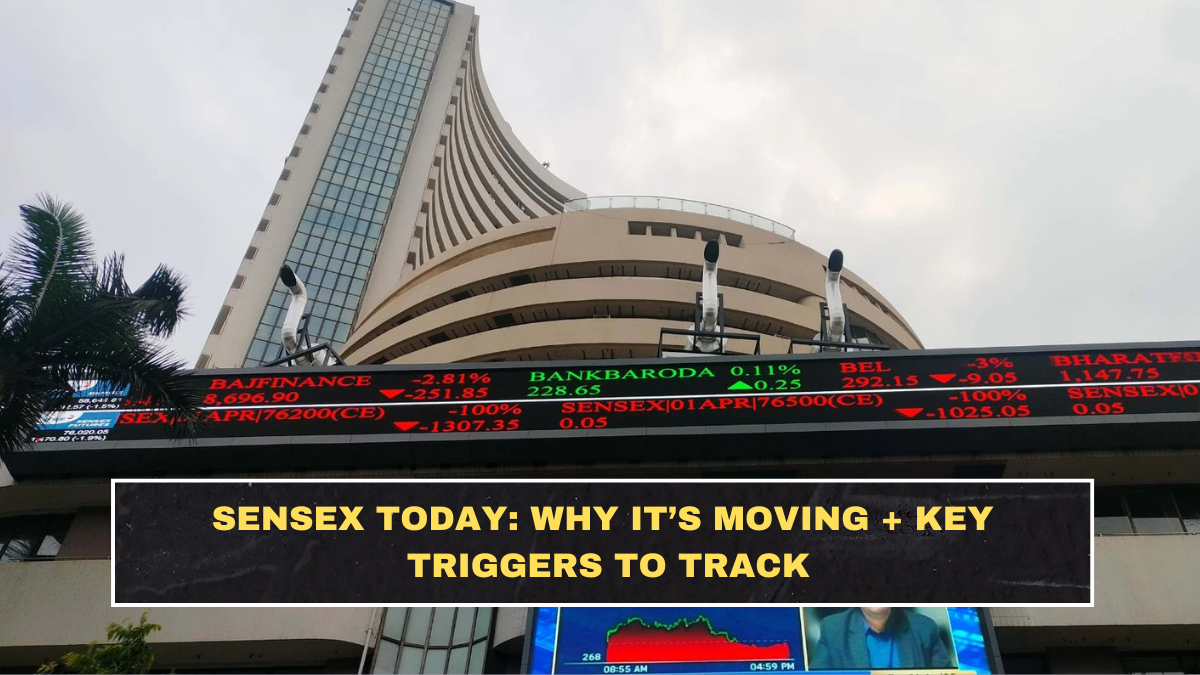
The BSE Sensex is one of the most important stock market indices in India. It tracks the performance of 30 major companies listed on the Bombay Stock Exchange (BSE) and serves as a key indicator of the country’s overall equity market sentiment.
Daily movements in the Sensex reflect investor confidence, global market trends, economic data, corporate earnings, and sector-specific developments. Because these companies represent major industries such as banking, technology, energy, and consumer goods, changes in their stock prices can influence the direction of the entire index.
What the Sensex Represents
The Sensex measures the combined market performance of selected large-cap companies that represent major sectors of the Indian economy.
| Index Feature | Description |
|---|---|
| Exchange | Bombay Stock Exchange (BSE) |
| Number of Companies | 30 large-cap companies |
| Base Year | 1978–79 |
| Index Type | Free-float market capitalization weighted |
| Market Role | Indicator of overall market sentiment |
Because of its long history, the Sensex is often used as a benchmark for evaluating the performance of Indian equities.
Key Sectors That Influence the Sensex
Several major sectors have significant weight in the Sensex index. When stocks from these sectors move sharply, they can influence the direction of the entire index.
| Sector | Typical Impact on Sensex |
|---|---|
| Banking and financial services | Major influence due to large market capitalization |
| Information technology | Strong global demand influence |
| Energy and oil companies | Linked to commodity prices |
| Consumer goods | Reflect domestic consumption trends |
| Automobile sector | Sensitive to economic growth |
Large movements in any of these sectors can drive the index higher or lower during trading sessions.
Top Gainers and Losers in the Sensex
Stock market participants often analyze the companies contributing the most to daily Sensex movements.
| Category | Example Contribution |
|---|---|
| Top gainers | Stocks rising significantly during the session |
| Top losers | Stocks declining sharply |
| Stable performers | Stocks showing minimal price movement |
These categories help investors understand which sectors are driving market sentiment.
Global Factors Affecting Sensex Movement
Indian markets are increasingly influenced by global financial trends. International developments often affect investor confidence and capital flows.
| Global Factor | Market Influence |
|---|---|
| US stock market trends | Can impact investor sentiment |
| Crude oil price movement | Affects inflation and company costs |
| Global interest rate policies | Influences foreign investment |
| Geopolitical events | Can trigger volatility |
Because of global integration, Indian markets often react to overnight developments in international financial markets.
Role of Institutional Investors
Institutional investors play a significant role in daily market movements. Their buying or selling activity can move large-cap stocks and influence index performance.
| Investor Type | Market Impact |
|---|---|
| Foreign Institutional Investors (FIIs) | Large inflows can push markets higher |
| Domestic Institutional Investors (DIIs) | Provide stability during volatility |
| Mutual funds | Long-term investment flows |
| Insurance companies | Large capital deployment |
Tracking these investment flows helps analysts understand market direction.
Key Triggers for the Next Trading Session
Investors often monitor several indicators to anticipate how the market might move in the next trading session.
| Trigger | Why It Matters |
|---|---|
| Global market performance | Influences opening sentiment |
| Corporate earnings announcements | Impact stock valuations |
| Economic data releases | Affect macroeconomic outlook |
| Commodity price changes | Influence sector performance |
Monitoring these factors helps traders and investors prepare for potential market volatility.
Conclusion
The Sensex remains one of the most important indicators of India’s stock market performance and economic sentiment. Daily fluctuations in the index reflect movements across major sectors such as banking, technology, and energy. By tracking global market trends, institutional investment flows, and sector-specific developments, investors can better understand the factors influencing Sensex movements and make informed investment decisions.
Frequently Asked Questions
What is the Sensex?
The Sensex is a stock market index that tracks the performance of 30 major companies listed on the Bombay Stock Exchange.
Why does the Sensex move daily?
The index moves based on changes in stock prices of its constituent companies, influenced by economic data, global markets, and investor sentiment.
How many companies are included in the Sensex?
The Sensex consists of 30 large-cap companies representing major sectors of the Indian economy.
Who manages the Sensex index?
The index is managed by BSE and reflects the performance of selected listed companies.
Why do investors track the Sensex?
Investors use the Sensex as a benchmark to evaluate the performance of the Indian stock market.