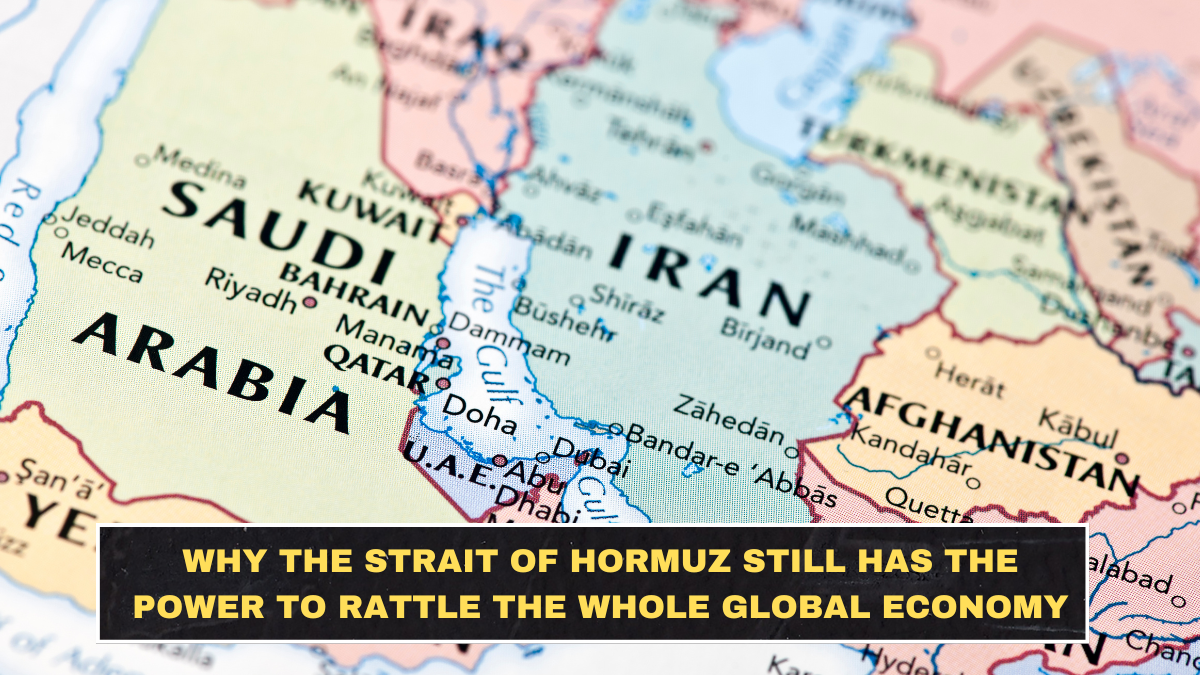
The Strait of Hormuz matters because it is not just another shipping lane. It is one of the world’s most important energy chokepoints, and any disruption there quickly hits oil prices, freight costs, factory input prices, and inflation expectations. Reuters reported this week that around 20% of global oil and LNG transport is tied to the strait, while Asian economies rely on it for roughly 80% of their oil imports. That is why even partial disruption gets treated like a global economic threat, not just a regional security story.
Why markets still panic over Hormuz
The market reaction is simple: too much supply passes through too narrow a route. Reuters reported that Brent forecasts for 2026 jumped to $82.85 a barrel from $63.85 in February, the biggest one-month increase ever recorded in that Reuters poll. U.S. crude forecasts also rose sharply. That is not random volatility. It reflects fear that even if the strait is not fully shut for long, repeated disruption can still cut exports, delay tankers, and force buyers into more expensive backup supply.
Who is most exposed
Asia is the obvious weak point because it buys the most energy moving through Hormuz. China, India, Japan, and other major Asian importers face the biggest direct risk when flows are interrupted. Reuters also reported that March factory activity slowed across much of Asia as the Iran war pushed up fuel costs and uncertainty, with China’s PMI easing to 50.8 and Japan’s PMI at 51.6. That matters because Hormuz disruption does not stay inside energy markets. It moves into manufacturing, logistics, and consumer inflation very quickly.
Who can cope better
Some countries can absorb the shock better than others. The United States is less directly dependent because it produces much more of its own oil than many Asian importers do. China may also be in a better position than smaller import-dependent economies if it can lean on strategic reserves, supplier diversification, and state-directed procurement. But “cope better” does not mean “safe.” A Hormuz shock still lifts global benchmark prices, and those higher prices spread through trade and transport even in countries with stronger buffers. Reuters’ reporting on petrochemical disruption shows the same pattern: buyers far from the Gulf still end up paying more.
Why shipping risk matters beyond oil
This is where many readers miss the real story. Hormuz is not only about crude barrels. Reuters reported that the conflict is also choking petrochemical supply, with plastic prices rising to four-year highs and Middle Eastern supply disruptions hitting global manufacturing chains. Asia’s naphtha margins reportedly jumped from $108 to more than $400 per ton, while producers in Europe and the U.S. started passing on higher costs. So the economic damage shows up not only at the petrol pump but also in packaging, chemicals, industrial inputs, and eventually retail prices.
What the current risk looks like
| Risk area | What is happening | Why it matters |
|---|---|---|
| Oil and LNG flows | Around 20% of global oil and LNG transport depends on Hormuz | Small disruption can move global prices fast |
| Asian import exposure | Around 80% of Asia’s oil imports are tied to the strait | Asia is hit first and hardest |
| Oil forecasts | Reuters poll lifted 2026 Brent forecast to $82.85 from $63.85 | Markets are pricing in sustained risk |
| Factory costs | Asian PMIs show cost pressure from higher fuel prices | Energy risk is feeding inflation and growth worries |
| Petrochemicals | Plastic prices hit four-year highs amid disrupted Gulf supply | Consumer and industrial costs rise beyond fuel |
The table shows the core truth: Hormuz matters because it transmits stress across several layers of the economy at once. It is not just a tanker story. It is a cost-of-living story, a factory-margin story, and a central-bank headache.
Why India and China are being watched closely
India and China matter because both are large energy buyers and both need stable import routes. Reuters reported how an Indian LPG tanker carrying 45,000 metric tons took an unusual exit route under tense conditions, while 18 other Indian-linked vessels with about 485 Indian crew members remained stuck in the Gulf at that point. That kind of operational stress tells you the issue is not theoretical. It is already affecting cargo movement, crew safety, and emergency energy planning.
What readers should watch next
Watch these signals first:
- Brent crude and insurance costs, because they reflect immediate fear.
- Tanker movement and delays, because physical disruption matters more than political slogans.
- Asian factory and inflation data, because that shows whether the shock is spreading.
- Alternative sourcing moves by big importers, especially India and China.
Conclusion
The Strait of Hormuz still scares markets because the world has not built a clean replacement for it. Too much oil, gas, and petrochemical trade still depends on that narrow route, and the biggest buyers are in Asia. Some countries can cushion the hit better than others, but no major economy is truly insulated once prices, insurance, and shipping costs start climbing together. That is why Hormuz still has the power to rattle the whole global economy: the chokepoint is regional, but the consequences are global.
FAQs
Why is the Strait of Hormuz so important?
Because roughly 20% of global oil and LNG transport moves through it, making it one of the world’s most critical energy chokepoints.
Which countries are most exposed to Hormuz disruption?
Asian economies are the most exposed, since Reuters reported that about 80% of Asia’s oil imports depend on flows through the strait.
Does Hormuz risk only affect oil prices?
No. It also affects LNG, petrochemicals, plastics, freight costs, factory margins, and inflation.
Can large economies avoid the damage?
They can cushion it better, but not avoid it entirely. Even countries with more domestic production or reserves still face higher global benchmark prices and supply-chain costs.
Why do markets react so quickly to Hormuz headlines?
Because traders know even short disruptions can reduce exports, raise insurance and freight costs, and trigger wider economic stress well before a full closure happens.