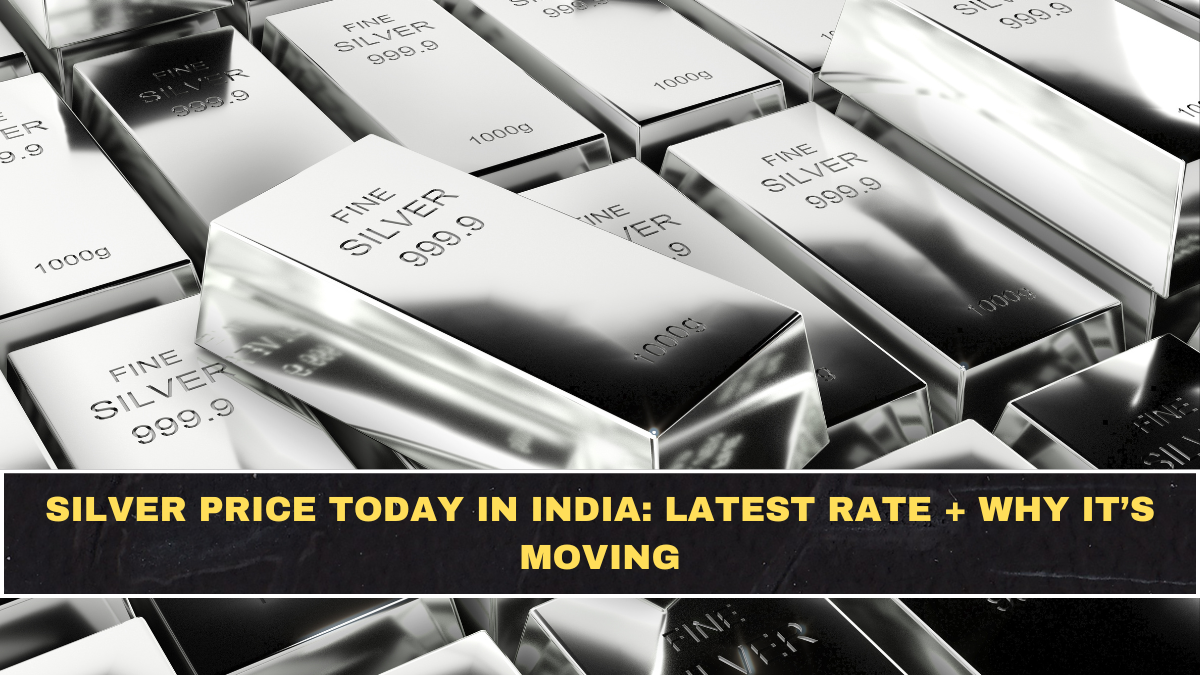
Silver has a weird personality in India: some days it quietly follows gold, and other days it swings hard enough to confuse even regular buyers. That’s exactly why silver price today India keeps trending whenever there’s market volatility, a currency move, or sudden demand from industry and bullion buyers. Unlike jewellery-driven gold buying, silver sits at the intersection of investment and industrial usage, and that mix makes its “today” movement feel less predictable.
If you’re checking rates today, don’t treat it like a single fixed number that applies everywhere. Silver pricing in India changes by city, by purity, by whether you’re buying coins/bars/granules, and by the dealer’s premium. So the smarter goal isn’t chasing the perfect bottom; it’s understanding what moved silver today and what you should do next based on your purpose.

Why Your “Today” Silver Rate Can Look Different Across Sellers
When people search silver rates, they expect one clean national number. In reality, your final quoted price depends on the seller’s premium, local demand, and the form of silver you’re buying. A bullion dealer selling higher volume can quote tighter premiums, while a smaller seller may quote higher margins to manage risk. Even the same seller can quote slightly different rates at different times of the day depending on market movement.
Another reason is product form and purity. Silver bars, coins, and raw silver granules can carry different premiums, and “sterling” or lower-purity silver products are a different market entirely. So if you’re comparing rates, compare like-for-like: same purity, same product type, and similar weight brackets, otherwise you’ll keep feeling like “someone is cheating” when it’s just pricing structure.
The One-Liner Reason Silver Moves So Fast
Silver tends to move sharply because it behaves like two assets at once: a precious metal and an industrial input. That means it reacts to safe-haven sentiment like gold, but it also reacts to industrial demand expectations like a commodity. If markets feel uncertain, precious-metal buying can lift silver; if growth expectations shift, industrial demand signals can also push it around.
On top of that, silver’s market depth is smaller than gold’s, so price swings can look exaggerated during high-volume sessions. In simple terms: silver often “overreacts” on the way up and on the way down, which is why daily moves can look dramatic even when the long-term story hasn’t changed.
What Usually Drives Silver Price Today in India
Most daily movement in India comes from a blend of global silver price action and the rupee-dollar rate. Because precious metals are priced internationally, a weaker rupee often makes silver look more expensive in India even if global prices are stable. A stronger rupee can soften the domestic rate, sometimes giving buyers a short window where local pricing feels friendlier.
Local premiums also matter. When there’s sudden demand from bullion buyers, jewellers, or industrial buyers, dealers adjust premiums to manage inventory. During periods where buyers are cautious, premiums can compress and the market feels calmer. So when you check silver price today India, you’re not just checking “silver,” you’re checking silver plus currency plus local premium.
Gold-Silver Ratio: What It Means and Why People Talk About It
You’ll often hear people mention the gold-silver ratio, especially when silver starts trending. This ratio compares how many units of silver are needed to buy one unit of gold at current prices. People watch it because it can signal when silver looks relatively cheaper or more expensive versus gold, which sometimes influences investor behavior.
Here’s the practical interpretation that actually helps normal buyers. If the ratio is rising, it usually means silver is underperforming gold, or gold is outperforming silver. If the ratio is falling, silver is gaining relative strength. This ratio doesn’t predict tomorrow, but it can help you decide whether you’re buying silver because you genuinely need it or because you’re chasing momentum.
Quick gold–silver ratio guide (for decision-making, not prediction):
| Ratio behavior | What it often indicates | What a cautious buyer does |
|---|---|---|
| Ratio rising | Silver weaker vs gold | Buys only if there’s a clear need or long-term plan |
| Ratio falling | Silver stronger vs gold | Avoids FOMO and compares premiums before buying |
| Ratio stable | Market balanced | Focuses on product premiums and resale ease |
How to Check Silver Rates the Smart Way (Without Getting Misled)
If you want a “today” rate that’s usable, don’t rely on one quote. Check a few sellers and focus on the final buy price for your specific product type. A base rate without premiums is not the price you will actually pay. Also confirm whether the quote is for 1 kg, 100 grams, or per gram, because sellers often display the rate in whatever format looks most appealing.
Also, confirm what purity standard you’re buying. For bullion-style purchases, buyers typically look for high-purity silver with clear invoices and markings where applicable. If you’re buying jewellery-grade silver or silverware, pricing behavior is different because design, making, and craftsmanship dominate the bill, not just the metal value.
Should You Buy Silver Today or Wait? Use This Decision Rule
Buying today makes sense when you have a clear use-case: gifting, a planned purchase, or a long-term accumulation approach where you buy in small tranches instead of trying to time the market. People who “wait for the perfect dip” often end up buying at worse levels because they don’t have a trigger; they have hope. Hope is not a strategy.
Waiting makes sense if today’s move is unusually sharp and you’re not under time pressure. When silver spikes quickly, premiums often widen, which makes your entry worse even if the headline rate looks exciting. A sensible approach is to set a range and buy in parts, so you’re not making a single all-in decision based on one day’s emotion.
Hidden Costs That Matter More Than the Rate
The biggest trap is thinking silver is “cheap” so details don’t matter. They do. Premiums, taxes, and the buy-sell spread can destroy your efficiency if you don’t check them. A seller can quote an attractive rate but quietly widen the premium, and you’ll only notice when you try to sell later.
If your goal is investment-style holding, prioritize transparency: clear billing, clear purity, and clarity on buyback terms if the seller offers any. If your goal is utility purchase like silverware or jewellery, treat it as a consumption purchase first and an investment second, because resale value rarely matches the emotional value you paid for.
Conclusion
The right way to read silver price today India is not as a single number but as a signal that combines global pricing, currency movement, and local premiums. Silver moves faster because it sits between precious-metal sentiment and industrial demand, so daily swings can look dramatic even when nothing “mystical” is happening. If you understand the drivers, you stop reacting emotionally and start buying with control.
If you’re buying today, compare final prices across sellers for the same product type, watch premiums, and avoid rushing in after a sharp spike. If you’re not under time pressure, using a staggered buying plan will usually beat trying to nail one perfect entry. In 2026, the winners aren’t the people who predict the next move; they’re the ones who buy with rules and avoid bad spreads.
FAQs
Why does silver price change daily in India?
Silver changes daily mainly due to global silver price movement, USD-INR changes, and local dealer premiums based on demand and inventory conditions.
Why is silver rate different in different cities?
Rates vary because local premiums, transport costs, demand intensity, and dealer margins differ by region and seller, even on the same day.
What is the gold-silver ratio and why does it matter?
It compares gold and silver prices to show which metal is relatively stronger. It’s useful for context, but it should not be treated as a guaranteed prediction tool.
Is buying silver coins better than buying silver jewellery for investment?
Coins/bars are usually closer to pure metal value, while jewellery includes design and making charges. For investment-style holding, bullion products are typically more efficient.
What should I check before buying silver today?
Check purity, final buy price including premium, taxes, product type, invoice clarity, and how wide the buy-sell spread is for that seller.