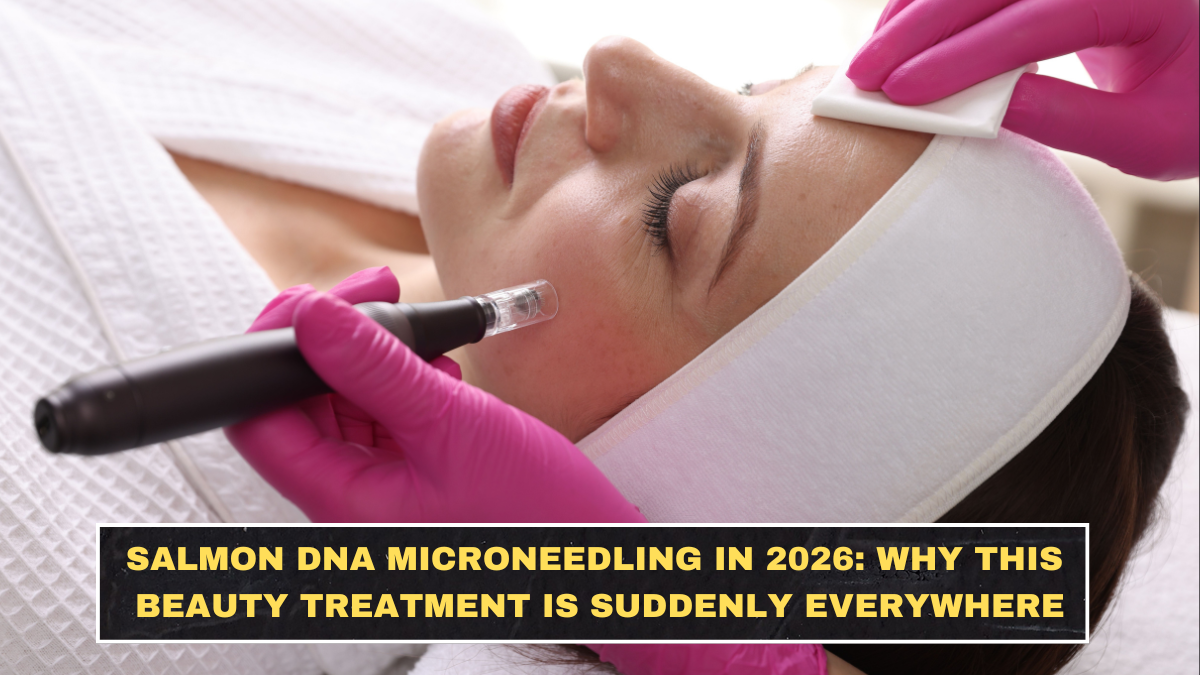
Salmon DNA microneedling is a treatment that combines traditional microneedling with a serum or solution containing PDRN or polynucleotides, ingredients often marketed as “salmon DNA.” Microneedling itself is not new. It works by creating controlled micro-injuries in the skin, which can trigger healing, collagen production, and gradual texture improvement. The salmon DNA part is the newer layer, and that is what turned an established treatment into a viral beauty topic again in 2026.
The key thing most people misunderstand is this: the treatment is not magic, and it is not literally rebuilding your face with fish DNA. What clinics are usually referring to is PDRN, a purified DNA-derived material that has been studied for wound healing and regenerative effects. In aesthetic medicine, it is being used because early studies suggest it may help with skin texture, hydration, elasticity, and recovery. That sounds impressive, but the quality of evidence still matters more than the marketing language.

Why are people suddenly talking about it in 2026?
This treatment is blowing up because it sits at the intersection of three things people already want: collagen support, faster recovery, and a “biostimulatory” treatment that sounds more advanced than a basic facial. Microneedling already had mainstream credibility because dermatologists use it for acne scars, fine lines, pores, uneven tone, and texture. Adding salmon DNA gave clinics and creators a newer story to sell, especially in short-form beauty content where “repair,” “regeneration,” and “glass skin” get attention fast.
There is also a practical reason for the hype. Compared with more aggressive laser treatments or surgery, microneedling is easier for many people to understand, usually has less downtime, and sounds more approachable. When a trend promises glow, bounce, and skin repair without a huge jump in price or recovery, it spreads fast. That does not prove it works better. It only explains why demand rises faster than the evidence.
What does the evidence actually support?
Microneedling on its own has the stronger evidence base. Dermatology sources and recent reporting summarizing expert views both point to benefits for acne scars, fine lines, uneven tone, pigmentation, and overall skin texture. Results are not instant. Improvement usually builds over weeks to months because collagen production is gradual, and many patients need a series of sessions rather than one appointment.
For salmon DNA or PDRN, the evidence is more promising than proven. Reviews published in 2024 and 2025 report improvements in wrinkles, elasticity, skin texture, and hydration across multiple studies. But there is a catch that most beauty content ignores: many studies are small, short-term, and not the kind of large, rigorous trials that settle the question. Even recent consumer-friendly expert coverage in 2026 says the overall evidence remains limited, especially for topical use.
One reason this matters is penetration. Microneedling creates microchannels that can help serums get deeper into the skin. That makes the combination more plausible than putting a trendy serum on top of intact skin. But plausible is not the same as decisively proven. The honest reading is that salmon DNA microneedling may help some people, especially for hydration, glow, and texture, yet the dramatic claims often run ahead of the data.
What are clinics promising, and where do they overreach?
The strongest clinic claims usually revolve around collagen stimulation, faster healing, smoother texture, and brighter skin. Some of that lines up with what is known about microneedling and with early PDRN literature. The problem starts when those claims get exaggerated into “age reversal,” “instant lifting,” or the idea that one session can transform skin quality. That is marketing, not disciplined evidence reading.
A smarter way to look at it is to separate likely outcomes from inflated ones. Better texture and gradual improvement make sense. Permanent anti-aging results do not. Mild improvement after several sessions is realistic. Dramatic structural change from a single viral treatment is not. People do not get burned because a treatment is always fake. They get burned because they believe the best-case result is the standard result.
How does salmon DNA microneedling compare with regular microneedling?
| Factor | Regular Microneedling | Salmon DNA Microneedling |
|---|---|---|
| Main mechanism | Controlled micro-injury stimulates collagen | Microneedling plus PDRN/polynucleotide serum |
| Best-supported benefits | Scars, texture, fine lines, tone | Similar goals, with added claims around repair and hydration |
| Strength of evidence | Stronger and more established | Promising but still limited |
| Results timeline | Usually weeks to months | Also gradual, not instant |
| Biggest risk | Overexpectation, irritation if poorly done | Overexpectation plus uncertainty about how much extra benefit PDRN adds |
This is the comparison buyers should care about. Regular microneedling already has credible support and a known role in cosmetic dermatology. The salmon DNA version may offer an added boost, but the premium only makes sense if the clinic is experienced, the treatment plan is realistic, and the provider is not selling fantasy outcomes.
Who should be careful before trying it?
Anyone with active acne, skin infection, open wounds, rashes, or a history of problematic scarring should be cautious. Recent expert guidance also notes that at-home microneedling devices are where people make bad decisions. They often do not penetrate deeply enough to deliver meaningful collagen benefits, but they can still irritate skin, spread infection, and cause damage when used poorly. That is the kind of corner-cutting that ruins skin and then gets blamed on the trend itself.
Another issue is expectations. If someone wants a quick glow before an event, they may like it. If they expect dramatic scar removal, major tightening, or instant anti-aging, they are setting themselves up for disappointment. The better mindset is to see it as a possible incremental treatment, not a miracle reset.
Conclusion
Salmon DNA microneedling is popular in 2026 because it combines a treatment people already know with a regenerative story people want to believe. The microneedling part has solid support. The salmon DNA or PDRN part has promising early evidence, especially around texture, hydration, and skin quality, but the research is still not strong enough to justify the wildest claims. That is the truth many beauty trend articles dodge.
So yes, the treatment may have value. But the smarter position is not hype or dismissal. It is restraint. If a clinic sells this as a gradual skin-quality treatment with realistic limits, that is credible. If it sells it like a breakthrough that changes everything in one sitting, that is nonsense dressed up as innovation.
FAQs
Is salmon DNA microneedling the same as a regular facial?
No. It is a procedure-based treatment built around microneedling, not a basic facial. The skin is being intentionally punctured in a controlled way, which makes the treatment more serious than a standard glow-focused session.
Does salmon DNA microneedling really build collagen?
Microneedling does stimulate collagen as part of the skin’s healing response. PDRN may support skin repair and regeneration, but claims about dramatic extra collagen gains from the salmon DNA component are still ahead of the strongest evidence.
Are the results immediate?
Not really. Some people may notice short-term glow or hydration, but fuller results from microneedling usually appear gradually over weeks or months, and multiple sessions are often needed.
Is at-home salmon DNA microneedling worth trying?
Usually not. At-home devices bring more risk than most people admit and generally offer weaker results than professional treatment. That is where people tend to damage their skin while chasing a trend.
Click here to know more