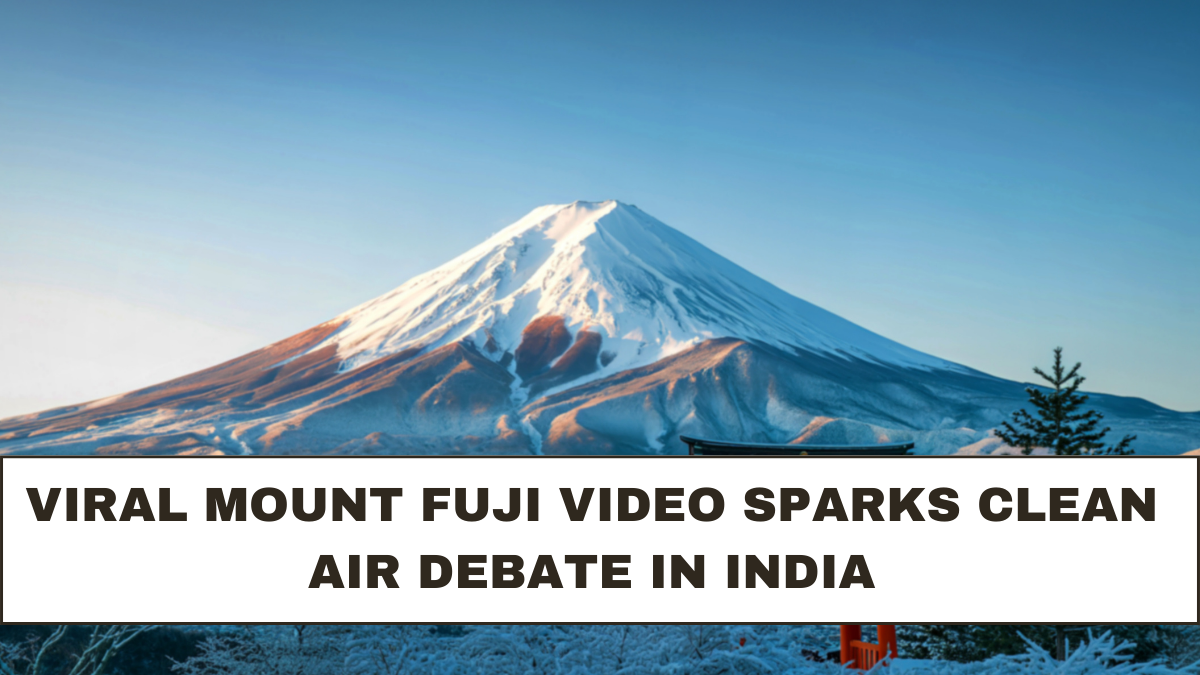
The Mount Fuji vs Delhi smog viral comparison has taken over social media, triggering intense discussions around pollution, governance and public health. A short smog viral video showing Japan’s crystal-clear view of Mount Fuji placed alongside Delhi’s thick smog shocked viewers and reignited national concern over air quality India continues to struggle with.
The stark contrast in the visuals made the issue impossible to ignore and quickly turned the clip into one of the most shared environment-related videos online.

How the Viral Comparison Video Emerged
The Mount Fuji vs Delhi smog viral comparison originated from a side-by-side video posted online. On one side, Mount Fuji appeared sharply visible under clear blue skies. On the other, Delhi’s skyline was barely visible through a dense layer of pollution.
What made the video explode online was:
• The dramatic visual contrast
• No background narration needed
• Real-time footage authenticity
• Emotional impact on viewers
• Growing frustration around pollution
The smog viral video spread rapidly across platforms, sparking debates in comment sections nationwide.
Why the Video Struck a Nerve in India
The Mount Fuji vs Delhi smog viral comparison resonated deeply because it visually represented what statistics often fail to convey. Many viewers felt the comparison highlighted systemic failures rather than temporary seasonal issues.
Reasons for strong public reaction included:
• Daily exposure to polluted air
• Health concerns for children and elderly
• Repeated winter smog crises
• Comparisons with global air standards
• Lack of visible long-term solutions
The video amplified existing concerns around air quality India faces every year.
Social Media Reactions and Public Sentiment
The smog viral video triggered widespread emotional responses. Users expressed anger, sadness and frustration, while others called for accountability and stronger policies.
Common reactions included:
• Calls for stricter pollution control
• Criticism of urban planning
• Comparisons with other global cities
• Discussions around public transport
• Concerns about long-term health impact
The Mount Fuji vs Delhi smog viral comparison became more than just a video; it turned into a digital protest.
Health Concerns Highlighted by the Viral Clip
The comparison also renewed attention on the health implications of poor air quality India struggles with. Doctors and health professionals joined the conversation online, explaining how prolonged exposure affects daily life.
Health issues discussed included:
• Breathing difficulties
• Reduced lung capacity
• Eye and throat irritation
• Increased respiratory illnesses
• Long-term cardiovascular risks
The smog viral video acted as a visual warning rather than just a trending clip.
Environmental Experts Weigh In
Environmental experts responding to the Mount Fuji vs Delhi smog viral comparison highlighted differences in policy execution, urban planning and public compliance.
Key points raised included:
• Strong emission control in Japan
• Effective public transport usage
• Strict industrial regulations
• Green urban infrastructure
• Long-term environmental planning
These insights added depth to the air quality India discussion.
Why Visual Comparisons Go Viral So Fast
The success of the Mount Fuji vs Delhi smog viral comparison proves that visuals often create stronger impact than written reports. A few seconds of contrast can shape public opinion instantly.
Reasons such videos go viral include:
• Immediate emotional response
• Easy understanding without context
• Shareability across platforms
• Relatability to daily experiences
• Strong storytelling through visuals
The smog viral video followed this exact formula.
Renewed Calls for Clean Air Action
Following the Mount Fuji vs Delhi smog viral comparison, citizens renewed calls for cleaner air and long-term solutions. Many demanded accountability and action rather than temporary measures.
Popular demands included:
• Better public transport systems
• Reduced vehicular emissions
• Stronger industrial monitoring
• Green urban development
• Public awareness initiatives
The video has intensified pressure around air quality India discussions.
What This Viral Moment Means for India
The Mount Fuji vs Delhi smog viral comparison serves as a reminder that pollution is not just a seasonal inconvenience but a serious quality-of-life issue. It has pushed environmental conversations back into mainstream discourse.
Key takeaways include:
• Visual evidence drives awareness
• Public frustration is growing
• Clean air is a basic expectation
• Long-term planning is essential
• Citizen voices matter
The smog viral video may fade, but its message remains strong.
Conclusion
The Mount Fuji vs Delhi smog viral comparison has sparked one of the most powerful online debates on pollution in recent times. By showing what clean air looks like versus what millions breathe daily, the video has reignited national concern over air quality India continues to battle. As conversations grow louder, this viral moment may become a turning point in how seriously clean air is treated as a public priority.
FAQs
What is the Mount Fuji vs Delhi smog viral comparison?
It is a viral video comparing Japan’s clear Mount Fuji skies with Delhi’s heavy smog.
Why did the video go viral?
The dramatic visual contrast made pollution issues instantly relatable and shocking.
What does the video say about air quality in India?
It highlights the severity of pollution and the need for long-term solutions.
How are people reacting online?
With anger, concern and renewed demands for clean air action.
Can viral videos influence environmental change?
They raise awareness and public pressure, which can push policy discussions forward.
Click here to know more.