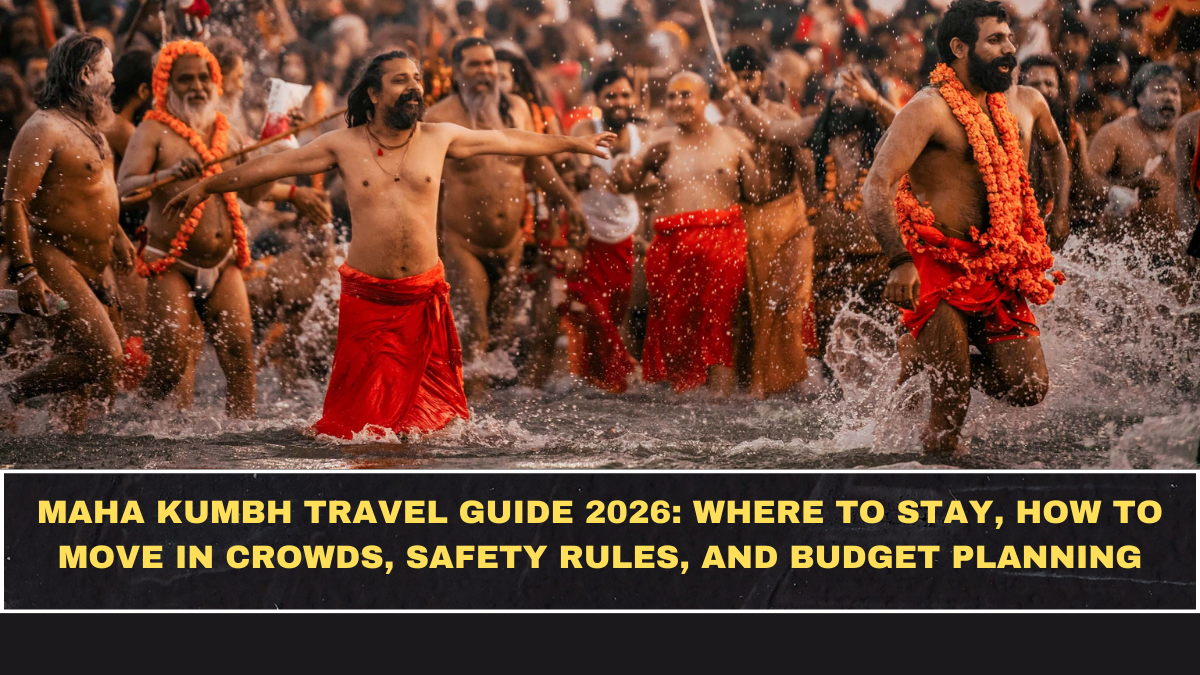
The Maha Kumbh in Prayagraj is not just a religious gathering; in 2026 it functions like a temporary mega-city that runs on its own logic. Millions of people arrive with different intentions—faith, curiosity, photography, cultural immersion, or family tradition—and the experience can feel overwhelming without preparation. This is not the kind of trip where casual planning works, especially when crowd density, weather, and movement restrictions shape every hour of the day.
A realistic Maha Kumbh travel guide in 2026 must focus less on ideal scenarios and more on how the event actually functions on the ground. Where you stay decides how exhausted you feel. When you move determines whether your day flows smoothly or collapses into long waiting hours. Budgeting is not about luxury, but about avoiding last-minute costs that spike due to demand. With the right approach, the Maha Kumbh can feel deeply meaningful instead of physically draining.
Understanding the Scale and Crowd Reality of Maha Kumbh
The single most important thing to understand is scale. Maha Kumbh crowds are not comparable to festivals, concerts, or even large religious gatherings elsewhere in India. Movement is slow, security is layered, and routes change dynamically based on crowd pressure.
Crowd density peaks around key ritual periods, but even on so-called “normal” days, foot traffic remains heavy throughout daylight hours. Entry and exit routes are often one-way, and crossings between sectors can involve long detours.
In 2026, authorities rely heavily on crowd zoning, temporary bridges, and time-based access controls. This means your experience depends more on planning your movement than on the exact date you arrive.
Where to Stay for Maha Kumbh: Zones and Comfort Reality
Accommodation during Maha Kumbh falls into three broad categories: tent cities, hotels within Prayagraj, and stays in surrounding towns. Each comes with trade-offs that travelers often underestimate.
Tent cities offer proximity and cultural immersion, but comfort varies widely by category. Basic tents are functional but exposed to cold nights and shared facilities, while premium tents provide better insulation and private amenities at a significantly higher cost.
Hotels within the city offer predictable comfort but often involve longer daily commutes due to traffic restrictions. Stays in nearby towns are cheaper but require early starts and patience with transport bottlenecks.
Choosing where to stay should depend on your physical stamina, budget flexibility, and tolerance for walking rather than on convenience assumptions.
How to Move Inside the Kumbh Area Without Getting Stuck
Movement planning is the difference between a calm experience and total exhaustion. Walking is unavoidable, regardless of where you stay. Expect long stretches on foot, often on temporary pathways.
Shuttle services, e-rickshaws, and designated transport routes operate in controlled zones, but availability fluctuates based on crowd pressure. Relying entirely on vehicles inside the core areas usually leads to delays.
The smartest strategy is to cluster activities within one zone per day. Crossing multiple sectors repeatedly is physically taxing and time-consuming. Early morning and late evening are the easiest windows for movement.
Safety Rules That Matter More Than You Think
Safety at Maha Kumbh is not just about crowd control; it is about personal preparedness. Weather conditions, fatigue, dehydration, and disorientation are common issues, especially for elderly travelers and children.
Carrying minimal belongings reduces risk. Keeping emergency contacts written on paper is essential because mobile networks often fluctuate under heavy load. Designated lost-and-found centers operate, but reunions take time.
Authorities enforce strict entry rules for certain areas, and instructions from volunteers and police should be followed without resistance. In a crowd of this scale, small delays can escalate quickly if instructions are ignored.
Budget Planning: What Actually Costs Money During Maha Kumbh
Budgeting for Maha Kumbh in 2026 is less about luxury spending and more about avoiding inflated convenience costs. Food, water, basic transport, and emergency supplies add up faster than expected.
Accommodation prices vary dramatically based on proximity and category. Food inside the Kumbh area is affordable but limited in variety. Outside vendors charge more during peak hours.
Keeping a small buffer budget is crucial for unexpected expenses such as last-minute transport changes or warmer clothing purchases due to weather shifts. Cash availability is improving, but digital payments may fail intermittently.
Photography and Crowd-Friendly Planning
For many travelers, photography is an important part of the experience. However, stopping abruptly in dense areas creates safety risks and attracts unwanted attention.
Open areas during early morning provide the best light and space for photos. Avoid narrow pathways during peak movement times. Always remain aware of crowd flow rather than focusing solely on the frame.
Respect privacy and religious sensitivities. Not every ritual moment is appropriate for close photography, and authorities may restrict cameras in certain zones.
Who Should Travel Differently at Maha Kumbh
Families with children should prioritize accommodation comfort and limit daily movement. Elderly travelers benefit from guided plans or assistance services offered by authorized providers.
Solo travelers have more flexibility but must be extra cautious about navigation and fatigue. Group travelers should appoint a fixed meeting point in case members get separated.
Understanding your travel profile helps you adapt plans realistically instead of forcing an ideal itinerary that does not match ground conditions.
Conclusion: Planning Makes the Difference at Maha Kumbh
Maha Kumbh in 2026 rewards preparation and punishes assumptions. It is not a trip where spontaneity works well, especially for first-time visitors. The scale, the systems, and the crowd logic demand respect and patience.
With thoughtful planning around stay zones, movement strategy, safety awareness, and realistic budgeting, the experience becomes meaningful rather than overwhelming. The spiritual and cultural depth of Maha Kumbh is unmatched, but accessing it comfortably requires practical decisions.
Treat the event as a temporary city with its own rules, and you will return with clarity instead of fatigue.
FAQs
Is Maha Kumbh safe for families in 2026?
Yes, it is safe for families if accommodation is chosen carefully, daily movement is limited, and safety instructions are followed strictly throughout the visit.
How many days are ideal for a Maha Kumbh visit?
A stay of two to three days is practical for most travelers, allowing participation without excessive physical strain.
Are tent stays comfortable during Maha Kumbh?
Comfort depends on the category. Premium tents offer good facilities, while basic tents are functional but require tolerance for cold and shared spaces.
Can elderly people manage Maha Kumbh travel?
Yes, but they should avoid peak crowd hours, stay closer to activity zones, and consider assisted travel services if needed.
Is digital payment reliable at Maha Kumbh?
Digital payments work intermittently. Carrying some cash is recommended as a backup for essential expenses.
What is the biggest mistake first-time visitors make?
Underestimating walking distance and crowd movement is the most common mistake, leading to fatigue and missed plans.