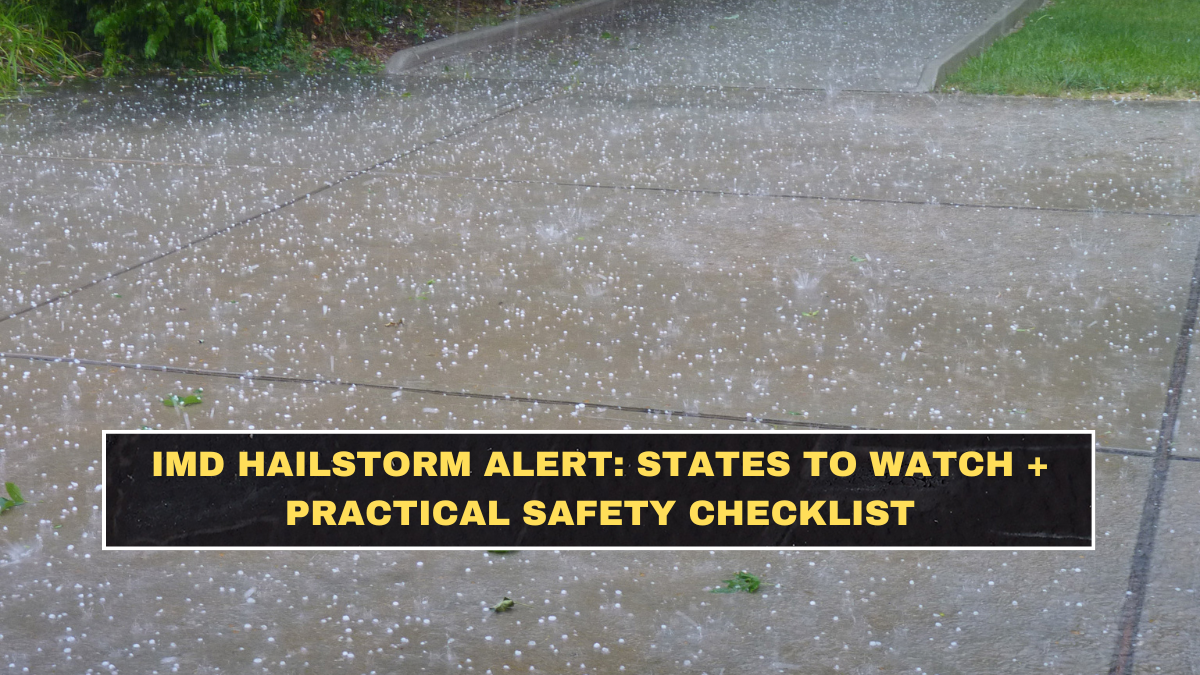
The India Meteorological Department has issued alerts for thunderstorms and possible hailstorm activity across parts of India. Such alerts are typically based on satellite data, atmospheric pressure changes, and moisture movement.
Hailstorms are more common during seasonal transitions when warm surface temperatures combine with cold upper-air conditions, creating instability in the atmosphere.

States Likely to Be Affected
Based on recent IMD advisories, hailstorm and thunderstorm activity is usually expected in:
-
North and Central India regions
-
Parts of Rajasthan, Madhya Pradesh, Uttar Pradesh
-
Some areas in eastern states depending on moisture flow
Exact district-level alerts are updated frequently by IMD and should be checked through official sources.
Key Weather Conditions Behind Hailstorms
| Factor | Role in Hailstorm Formation |
|---|---|
| Warm Surface Air | Creates upward air movement |
| Cold Upper Layers | Helps ice formation |
| Moisture Levels | Supports cloud development |
| Strong Updrafts | Keeps hail suspended before falling |
These are scientifically established conditions behind hail formation.
What This Means for Daily Life
Hailstorms are not just a weather event—they can disrupt normal activities:
-
Sudden travel delays due to poor visibility
-
Crop damage in agricultural areas
-
Vehicle damage from falling hail
-
Power disruptions in severe cases
The impact depends on intensity and duration.
Travel and Commuting Advisory
If hailstorm alerts are active in your area:
-
Avoid unnecessary travel during peak storm hours
-
Park vehicles under covered spaces
-
Drive slowly if caught in a storm
-
Stay updated with real-time weather alerts
Ignoring alerts is where most avoidable damage happens.
Safety Checklist for Households
| Situation | What You Should Do |
|---|---|
| At Home | Stay indoors, secure windows |
| Outdoors | Seek shelter immediately |
| With Vehicles | Use covered parking if possible |
| Power Outages | Keep backup lighting ready |
These are simple but effective precautions.
Impact on Farmers and Crops
Hailstorms can cause direct damage to standing crops, especially:
-
Wheat and mustard in North India
-
Vegetables and fruit crops
Farmers are advised to follow local agricultural advisories and take protective measures where possible.
Why IMD Alerts Matter
IMD alerts are based on real-time meteorological data and forecasting models. They are not guesses—they are probability-based warnings designed to minimize risk.
Ignoring these alerts or relying on unofficial sources increases the chance of being unprepared.
What You Should Track Now
-
Latest IMD district-level alerts
-
Weather updates through official apps or websites
-
Local administration advisories
-
Sudden temperature or wind changes
These indicators help you stay ahead of sudden weather shifts.
Conclusion
The IMD hailstorm alert highlights the possibility of sudden and localized weather disruptions. While not every alert results in severe impact, preparedness is critical.
Most damage happens not because of the storm—but because people ignore early warnings. Stay informed, act early, and reduce avoidable risks.
FAQs
What causes hailstorms in India?
They are caused by atmospheric instability, moisture, and strong updrafts.
Which states are affected by the current alert?
Primarily parts of North and Central India, depending on IMD updates.
Can hailstorms damage vehicles?
Yes, falling hail can cause dents and damage.
How can I stay safe during a hailstorm?
Stay indoors, avoid travel, and secure property.
Are IMD alerts reliable?
Yes, they are based on scientific forecasting models.
Click here to know more.