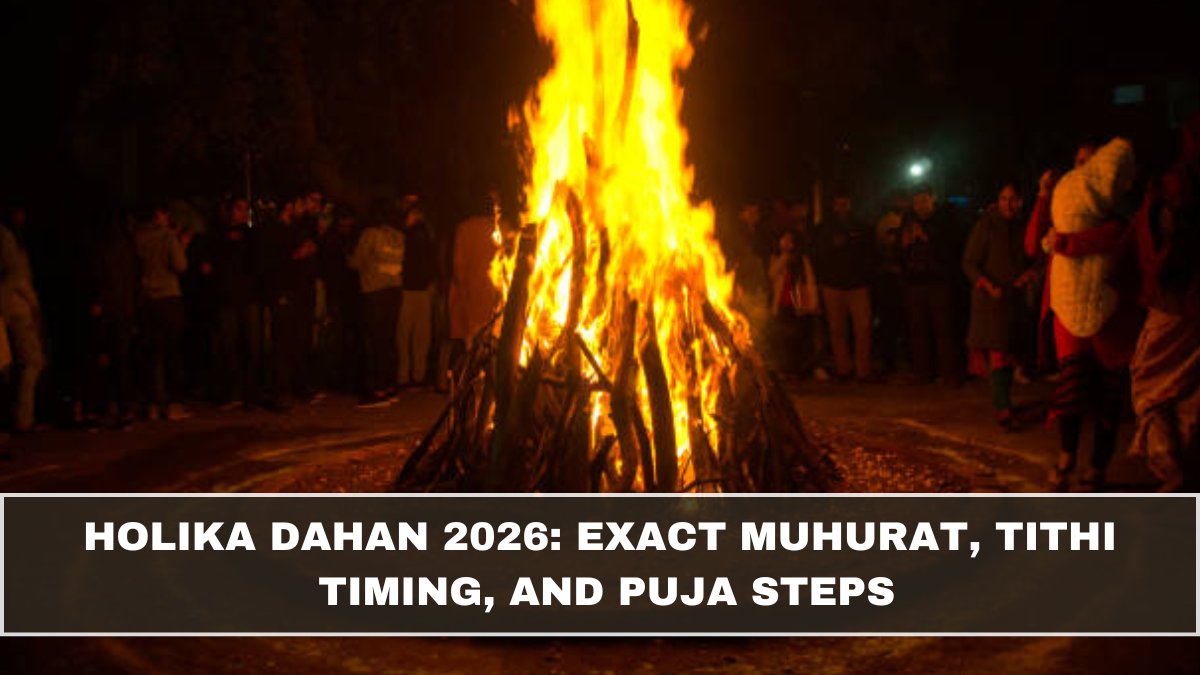
Holika Dahan marks the symbolic victory of good over evil and is observed one day before Rangwali Holi. The ritual involves lighting a sacred bonfire, performing puja, and following traditional practices based on specific muhurat timing. The festival is deeply connected with the Hindu calendar and depends on the Purnima tithi of the Phalguna month.
For 2026, understanding the exact muhurat, correct tithi timing, and proper rituals helps ensure the ceremony is performed according to traditional beliefs and customs.
Holika Dahan 2026 Date and Muhurat Timing
Holika Dahan in 2026 will be observed around the full moon (Purnima) of the Phalguna month. The ritual must be performed after sunset during an auspicious time when Bhadra period is over, as performing Holika Dahan during Bhadra is traditionally avoided.
The muhurat generally falls in the evening hours after sunset, but the exact timing depends on local Panchang calculations, city location, and lunar positioning. Devotees are advised to follow regional calendars or temple announcements for precise timing applicable to their location.
The ceremony usually begins with gathering wood for the bonfire, followed by prayers, offerings, and circumambulation of the sacred fire.
Importance of Purnima Tithi for Holika Dahan
The Purnima tithi plays a central role in determining Holika Dahan timing. According to Hindu traditions, the ritual must occur when the full moon phase is active and the inauspicious Bhadra period has ended.
This timing is believed to enhance the spiritual significance of the ritual and symbolizes the burning of negativity, ego, and harmful influences. Observing the correct tithi ensures that the festival aligns with traditional beliefs described in religious texts and Panchang calculations.
Holika Dahan Puja Vidhi (Step-by-Step Ritual)
Holika Dahan rituals are simple but symbolically meaningful. Families and communities perform the ceremony with devotion and follow traditional steps.
First, a bonfire structure is prepared using wood and dried leaves in an open area or community space. Before lighting the fire, devotees offer roli, rice, flowers, turmeric, coconut, and new crops such as wheat or barley.
After lighting the bonfire, people walk around it while offering prayers for prosperity and protection from negative energies. Some devotees also apply ash from the sacred fire on their foreheads, believing it brings purification and good fortune.
The ritual strengthens community bonds and marks the transition into the joyful celebration of Holi.
Do’s and Don’ts to Follow During Holika Dahan
Following certain traditional practices is considered important for maintaining the spiritual purpose of the festival.
Devotees should perform the ritual during the prescribed muhurat and maintain a clean and respectful environment around the bonfire. Offering natural materials and participating with positive intentions is encouraged.
It is generally advised to avoid performing Holika Dahan during the Bhadra period, using harmful materials in the fire, or treating the ritual casually without proper reverence. Respect for local customs and environmental responsibility are also emphasized.
Mythological Story Behind Holika Dahan
The festival is rooted in the legend of Prahlad and Holika. According to Hindu mythology, Prahlad was a devoted follower of Lord Vishnu, which angered his father, the demon king Hiranyakashipu. To destroy Prahlad, Holika attempted to burn him using her supposed immunity to fire.
However, divine protection saved Prahlad while Holika was destroyed, symbolizing the triumph of faith and righteousness over evil. Holika Dahan commemorates this victory and reinforces the importance of devotion and moral strength.
Why Holika Dahan Matters in Modern Times
Beyond religious significance, Holika Dahan represents renewal, community bonding, and emotional cleansing. The ritual encourages people to let go of negativity and begin the festive season with positivity and unity.
In modern celebrations, the festival also highlights cultural traditions, seasonal transition from winter to spring, and social harmony within communities.
Conclusion
Holika Dahan 2026 is an important Hindu festival that symbolizes the victory of good over evil and marks the beginning of Holi celebrations. Observing the correct muhurat, understanding the Purnima tithi, and following traditional rituals enhances the spiritual meaning of the ceremony. The festival continues to hold cultural, religious, and social importance, bringing families and communities together in celebration and devotion.
FAQs
What is the exact date of Holika Dahan 2026?
Holika Dahan in 2026 will be observed on the full moon day of the Phalguna month, one day before Rangwali Holi. The exact date may vary slightly based on regional calendars.
Why is Bhadra period avoided during Holika Dahan?
Bhadra is considered inauspicious in Hindu astrology. Performing Holika Dahan after Bhadra ensures the ritual follows traditional guidelines.
What items are required for Holika Dahan puja?
Common offerings include roli, rice, turmeric, coconut, flowers, and new harvest crops such as wheat or barley.
What does Holika Dahan symbolize?
The festival symbolizes the victory of good over evil and commemorates the story of Prahlad and Holika.
Can Holika Dahan timing differ by location?
Yes, muhurat timing varies depending on city location, Panchang calculations, and lunar positioning. Local calendars provide the most accurate timing.