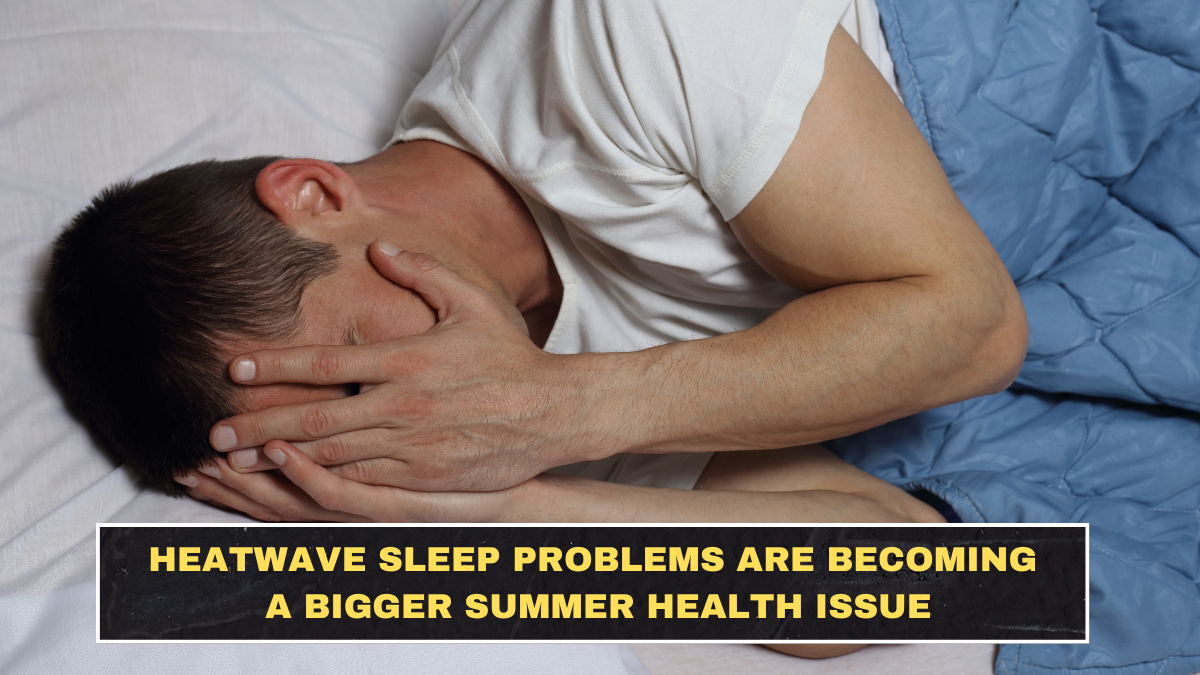
Most people underestimate this problem because they judge heat by the afternoon. That is the wrong lens. Heatwaves become worse when nights stay hot, because the body loses its main recovery time. The WHO says extended periods of high day and night temperatures create cumulative stress on the human body, increasing the risk of illness and even death from heat exposure.
India’s 2026 heat outlook has already warned about above-normal minimum temperatures and warm nights in multiple periods and regions. That matters because poor sleep is often the first daily-life effect people notice before they even understand they are under serious heat stress.
Why hot weather ruins sleep quality
Sleep depends on the body cooling down. When bedrooms, walls, mattresses, and surrounding air remain hot late into the night, people take longer to fall asleep and wake up more often. A 2024 systematic review found that higher outdoor or indoor temperatures are generally associated with degraded sleep quality and quantity worldwide, with stronger effects during hotter periods and in warmer regions.
That is why heatwave sleep problems are not just “feeling uncomfortable.” They often lead to shorter sleep, lighter sleep, and lower recovery. Recent research also links heat exposure with sleep-duration loss, especially among more vulnerable groups.
What people usually feel after a few hot nights
After two or three disturbed nights, the effects usually become obvious in daily life. The damage is practical, not theoretical.
- more morning tiredness
- lower concentration at work or study
- irritability and mood swings
- slower physical recovery
- more dependence on caffeine
- less patience during commuting and household tasks
A newer study on heat and cognition found that good sleep quality during heat exposure can reduce cognitive impairment risk compared with poor sleep during heatwaves. That means sleep loss is not a side issue. It directly worsens how people function.
Main effects of heatwave sleep disruption
| Problem area | What happens during hot nights | Why it matters |
|---|---|---|
| Sleep quality | More waking up, less deep sleep | Poor recovery |
| Energy levels | Morning fatigue and daytime sleepiness | Lower productivity |
| Mental focus | Slower thinking and shorter attention span | Study and work suffer |
| Health stress | Body gets less time to cool down | Heat risk rises |
| Home costs | Longer fan and AC usage | Electricity bills go up |
Who gets affected the most
Not everybody faces the same level of risk. The WHO says infants, older adults, and people with chronic health conditions are especially vulnerable during heatwaves. Its guidance also says indoor temperatures should ideally stay below 32°C during the day and 24°C at night, especially for vulnerable people. That is a serious benchmark, and many Indian homes do not meet it during peak summer.
Urban residents can face extra trouble because dense areas often hold heat longer after sunset. So if someone lives in a top-floor room, concrete-heavy colony, or poorly ventilated rented flat, the problem is usually worse. Pretending all homes handle summer the same way is nonsense.
What actually helps during a heatwave
People often respond too late. They wait until they feel miserable. Smarter prevention works better.
- block afternoon sunlight with curtains or shades
- use cross-ventilation early morning and late evening
- avoid heavy meals close to bedtime
- wear loose cotton sleepwear
- keep bedding light
- pre-cool the room before sleep if using AC
- drink enough water across the day, not only at night
These steps will not erase an extreme heatwave, but they can reduce sleep damage and next-day fatigue. The real mistake is treating repeated bad sleep as normal summer inconvenience.
Conclusion
Heatwave sleep problems are becoming a bigger summer health issue because hot nights stop the body from recovering. The result is worse sleep, lower focus, higher fatigue, and more heat stress the next day. This is why warm nights deserve as much attention as daytime highs. If nights stay hot for several days, the impact on health, work, mood, and electricity use builds faster than most people realize.
FAQs
Can heatwaves really reduce sleep quality?
Yes. Research shows higher indoor and outdoor temperatures are linked with worse sleep quality and shorter sleep duration.
Why are hot nights worse than hot afternoons for sleep?
Because the body needs cooler conditions at night to fall asleep and recover properly. When minimum temperatures stay high, sleep becomes more broken and less restorative.
Who is most at risk during heatwave sleep disruption?
Older adults, infants, and people with chronic health conditions face higher risk, especially when indoor temperatures remain high overnight.
Does poor sleep during heatwaves affect productivity?
Yes. Poor sleep during heat exposure is linked with lower cognitive performance, fatigue, and weaker daily functioning.
Click here to know more