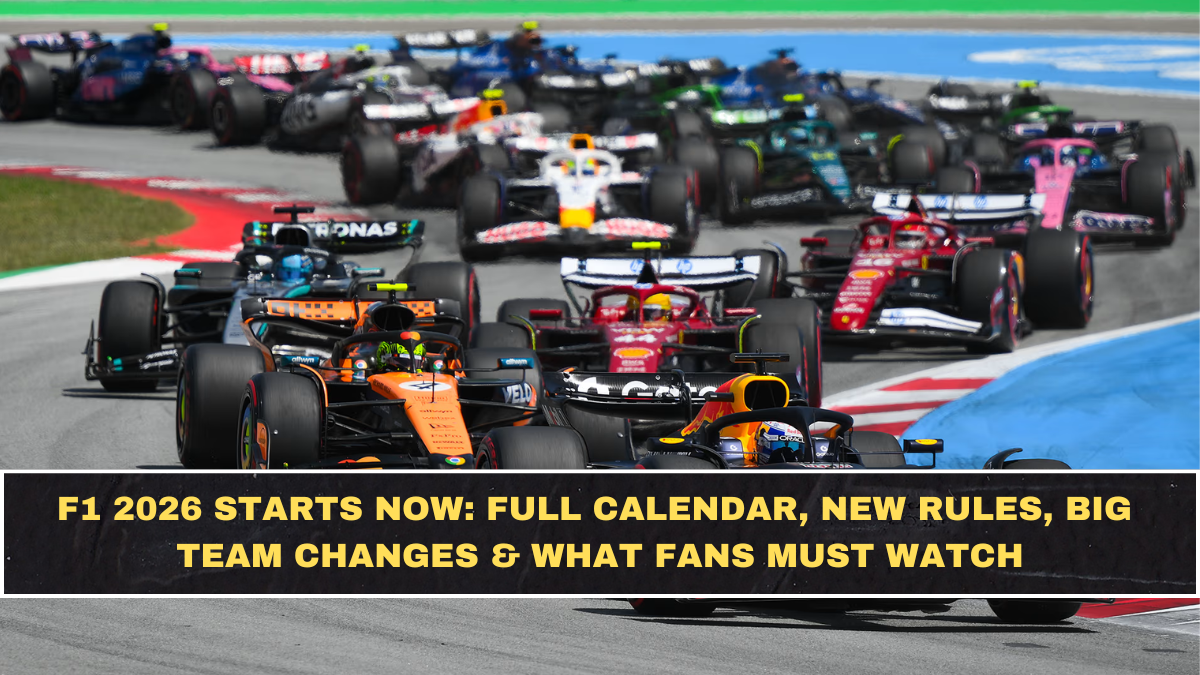
The f1 2026 season start guide: race calendar, teams and what’s new is essential reading for motorsport fans because the 2026 season marks one of the biggest regulation shifts in modern Formula 1 history. Unlike minor annual tweaks, 2026 introduces completely new power unit regulations along with aerodynamic adjustments that will reshape how cars look, sound, and perform. This is not just another season; it is the beginning of a new technical era.
When looking at the f1 2026 season start guide: race calendar, teams and what’s new, the first thing fans need to understand is that the calendar remains global and packed. The season traditionally opens with the Australian Grand Prix in Melbourne, followed by a mix of Middle Eastern, European, Asian, and American races across the year. The calendar is structured to balance classic circuits like Monza and Silverstone with newer venues that expand Formula 1’s global reach.
Race Calendar Overview
The f1 2026 season start guide: race calendar, teams and what’s new confirms that Australia continues to host the opening round, a role it has frequently played in recent seasons. From there, the championship moves through key early races before entering the European leg during the summer months. Iconic tracks remain central to the schedule, ensuring continuity even during a technical transition year.
Fans should pay close attention to sprint race weekends as well. These shorter race formats have been integrated into select rounds in recent years and are expected to continue in 2026. Sprint events alter race strategy and can dramatically affect championship standings early in the season, making them critical viewing rather than side attractions.
Major Rule Changes in 2026
The most important part of the f1 2026 season start guide: race calendar, teams and what’s new revolves around power unit changes. The 2026 regulations increase the electrical component of the hybrid system while simplifying certain engine elements. This aims to make the sport more sustainable and attract new manufacturers while maintaining high performance standards.
Aerodynamics are also being revised to improve racing quality. Active aerodynamic components are expected to be introduced, allowing cars to adjust wing configurations under certain conditions. This shift is designed to enhance overtaking and reduce the aerodynamic turbulence that has historically made close racing difficult.
Teams and Driver Lineups
Every new regulation cycle brings shifts in team competitiveness, and the f1 2026 season start guide: race calendar, teams and what’s new highlights this uncertainty. Established front-runners must adapt quickly to new technical demands, while midfield teams may see an opportunity to close the gap. Historically, regulation resets have reshuffled the competitive order, making predictions risky.
Driver lineups remain one of the biggest storylines entering 2026. Established champions, rising stars, and new rookies all face the challenge of mastering redesigned cars. In seasons with major technical changes, adaptability often matters more than raw speed, which means experience can provide a decisive advantage.
What Fans Should Watch Closely
Beyond the headline changes, the f1 2026 season start guide: race calendar, teams and what’s new suggests fans should monitor early-season performance trends. Pre-season testing results may not fully reveal the competitive order, but they provide clues about reliability and pace. Mechanical issues early in a new regulation cycle can shape championship outcomes significantly.
Another factor to watch is energy deployment strategy. With increased electrical contribution from the power unit, drivers and engineers must optimize energy recovery and release during races. Strategy decisions regarding energy usage could become as important as tire management in determining race results.
Championship Battle Expectations
New regulations often produce tighter competition in the early phases before one team pulls ahead. The f1 2026 season start guide: race calendar, teams and what’s new indicates that adaptability and development speed will be critical in the first half of the season. Teams that interpret the rules creatively without compromising reliability often gain a decisive advantage.
Fans should also track constructor standings closely. Even if the drivers’ championship remains close, the team battle can shift quickly depending on development upgrades introduced mid-season. Aerodynamic and engine updates in 2026 may carry greater impact than in stable regulation years.
Conclusion
The f1 2026 season start guide: race calendar, teams and what’s new makes one thing clear: this is a transformation year for Formula 1. With new power units, aerodynamic concepts, and evolving team dynamics, the championship will likely look very different compared to previous seasons. Regulation resets historically reshape the grid, and 2026 appears poised to do the same.
For fans, this means unpredictability, fresh rivalries, and potentially closer racing. Watching how teams interpret the rules and how drivers adapt will define the season narrative. The 2026 campaign is not just another year on the calendar; it is the start of a new competitive chapter in Formula 1.
FAQs
When does the F1 2026 season start?
The season traditionally begins with the Australian Grand Prix, which serves as the opening round on the race calendar.
What are the biggest changes in F1 for 2026?
The major changes include new hybrid power unit regulations and aerodynamic adjustments designed to improve sustainability and racing quality.
Will new rules change team competitiveness?
Yes, major regulation resets often reshuffle the competitive order, giving some teams opportunities to move up the grid.
Why is the 2026 season considered important?
It marks the beginning of a new technical era that could shape Formula 1’s direction for several years.