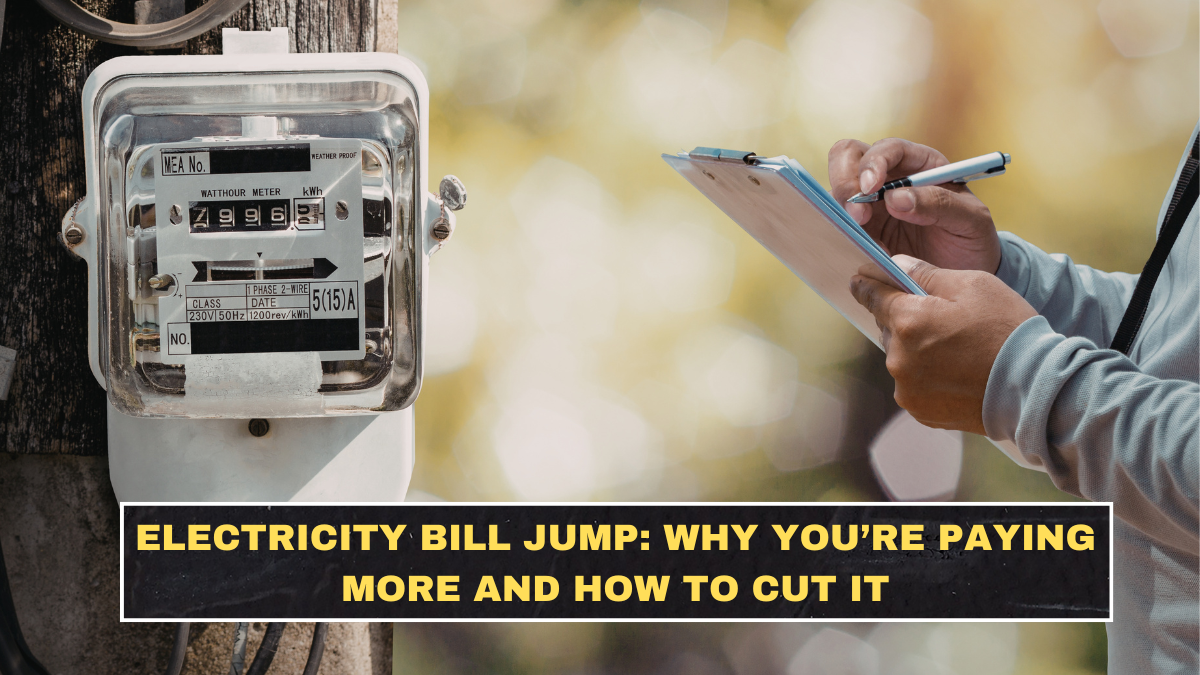
Your electricity bill didn’t suddenly become expensive for no reason.
The problem is not just usage—it’s how pricing actually works.
If you don’t understand this, your bill will keep increasing every month.

Why This Matters
Electricity is one of those expenses that feels “invisible” until the bill arrives. Unlike LPG, where you see the cylinder, electricity runs in the background. That’s why people often underestimate how much they are actually using.
But here’s the reality: electricity costs are rising across many parts of India due to tariff revisions, higher fuel costs, and increased demand. And when prices go up, it’s not just about paying more—it affects your savings, your monthly planning, and even how you use appliances at home.
Main Explanation
Let’s break this down in the simplest way.
Electricity bills are calculated based on “units.” One unit = one kilowatt-hour of electricity used. The more units you consume, the higher your bill. Sounds simple, right? But here’s where people get it wrong.
Electricity pricing in India is slab-based. This means:
-
First few units are cheaper
-
As your usage increases, each additional unit becomes more expensive
So if you cross a certain limit, your entire bill jumps—not just slightly, but significantly.
Now add another layer. Electricity isn’t just about what you use. Your bill also includes:
-
Fixed charges (you pay this even if usage is low)
-
Fuel surcharge (depends on power generation cost)
-
Taxes and duties
So even if your usage stays the same, your bill can still increase.
That’s why many people say, “I used the same electricity, but the bill is higher.” It’s not always your fault—but it’s also not completely out of your control.
Table: How Your Electricity Bill Is Calculated
| Component | Simple Meaning | Why It Increases Your Bill |
|---|---|---|
| Units consumed | Total electricity used | More usage = higher cost |
| Slab rates | Pricing changes after limits | Crossing slabs makes each unit expensive |
| Fixed charges | Base charge every month | You pay even with low usage |
| Fuel surcharge | Cost of producing electricity | Increases when fuel cost rises |
| Taxes & duties | Government charges | Added on total bill |
What’s Happening
Electricity demand in India is increasing due to rising temperatures, urbanization, and appliance usage like ACs and coolers. At the same time, power generation costs are also increasing, especially when fuel costs go up.
State electricity boards revise tariffs periodically, which means your per-unit cost may increase even if your consumption stays the same. This is why many households are seeing higher bills without any major lifestyle change.
What You Should Do
Start by tracking your unit consumption, not just the bill amount. If you don’t know how many units you’re using, you can’t control anything.
Next, identify high-consumption appliances. ACs, geysers, and heaters are the biggest contributors. Even reducing their usage by a small amount can make a noticeable difference.
Also, try to stay within lower slabs. Crossing a slab limit is where your bill really spikes. Small changes like switching off unused appliances or using energy-efficient devices can help you stay under that limit.
Common Mistakes
The biggest mistake is ignoring small usage habits. Leaving lights, fans, or devices on standby may seem minor, but it adds up.
Another mistake is blaming only tariffs. Yes, prices increase—but careless usage multiplies the problem.
People also ignore appliance efficiency. Old appliances consume more electricity, which silently increases your bill every month.
What to Watch Next
Watch for tariff revision announcements in your state. Even a small change in per-unit cost can impact your monthly bill.
Also watch seasonal changes. Electricity bills usually spike during summer due to cooling appliances. If you’re not prepared, your budget will take a hit.
Reality Check
Here’s the truth most people ignore.
Your electricity bill is not “random.” It is a direct reflection of your usage patterns plus pricing structure.
If your bill is high every month and you still don’t know your unit consumption, you’re not unlucky—you’re careless with your data.
Conclusion
Electricity bills increase due to a mix of higher usage, slab-based pricing, and tariff revisions. You cannot control pricing, but you can control how you consume electricity.
The key is awareness. Track your units, manage your usage, and avoid crossing slab limits. Because once you understand how billing works, reducing your bill becomes much easier.
FAQs
Why is my electricity bill suddenly high?
It could be due to increased usage, higher tariff rates, or crossing a pricing slab.
What is a unit of electricity?
One unit equals one kilowatt-hour of electricity consumed.
How can I reduce my electricity bill?
Reduce usage of heavy appliances, switch to energy-efficient devices, and avoid unnecessary consumption.
Do electricity prices increase every month?
Not every month, but tariffs can be revised periodically by state authorities.
Which appliances use the most electricity?
Air conditioners, geysers, heaters, and refrigerators consume the most power.
Click here to know more.