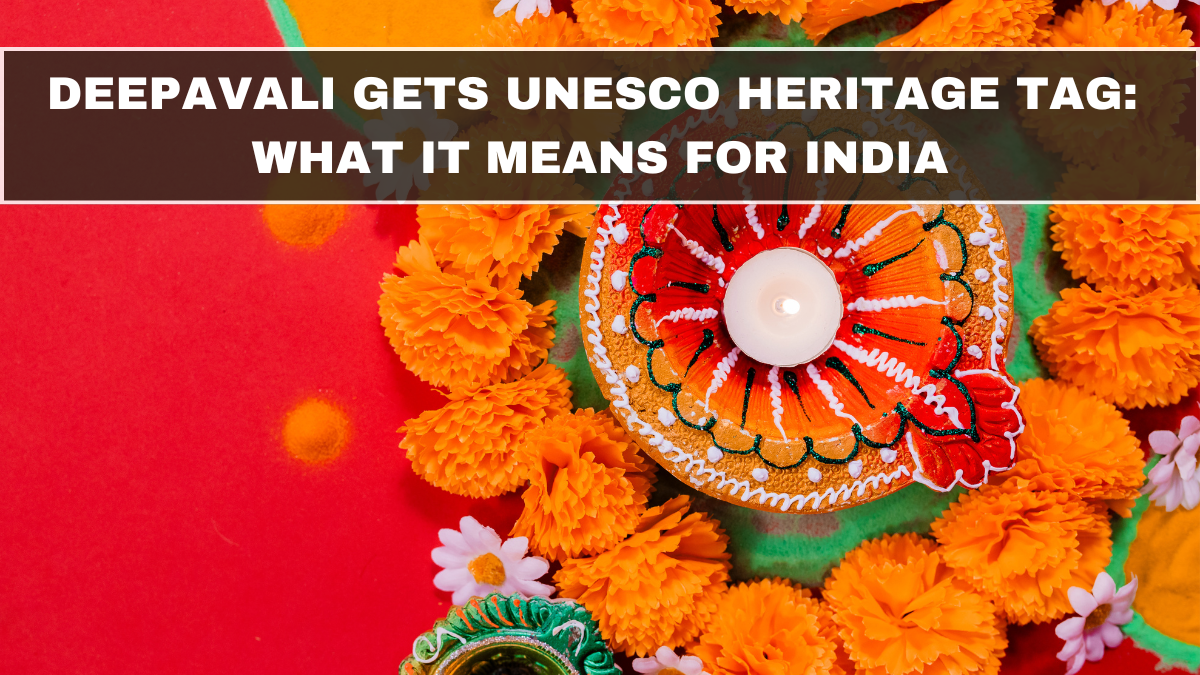
The announcement of Deepavali UNESCO recognition has become one of India’s most celebrated cultural milestones of the year. With UNESCO officially adding Deepavali (Diwali) to its prestigious list of intangible cultural heritage, the festival now stands acknowledged globally for its cultural depth, traditions, rituals, and symbolism. This recognition marks a proud moment for millions of families who celebrate Deepavali across India and the world.
The inscription also highlights the festival’s social and cultural significance, from its diverse regional traditions to its themes of light, renewal, and unity. As Deepavali enters UNESCO’s heritage list, India gains an important global spotlight for one of its most iconic celebrations.
Why UNESCO Chose Deepavali
The Deepavali UNESCO recognition is based on the festival’s centuries-old traditions, community participation and rich cultural layers. UNESCO’s intangible cultural heritage list is designed to protect and promote cultural practices that communities consider essential to their identity.
Deepavali’s eligibility was strengthened by several key aspects:
• Multi-regional celebrations across India
• Symbolism of light over darkness and knowledge over ignorance
• Deep-rooted rituals involving families and communities
• Artistic traditions like rangoli, diya-lighting and festive crafts
• Social harmony and cultural togetherness
These elements made Deepavali a strong candidate for intangible cultural heritage, showcasing India’s cultural diversity on a global platform.
India’s Cultural Pride and Global Impact
With the Deepavali UNESCO recognition, India’s cultural footprint strengthens significantly. The festival is already one of the most widely celebrated traditions in the world, observed in countries like Malaysia, Singapore, Sri Lanka, Nepal, Mauritius, Fiji, the UK, the United States, and Canada.
UNESCO’s recognition amplifies:
• India’s soft power
• Global awareness of traditional Indian festivals
• Cultural tourism surrounding festive seasons
• Positive representation of Indian heritage
For the Indian diaspora, this recognition is emotionally significant, reinforcing cultural identity across generations.
Deepavali as an Intangible Cultural Heritage
Being listed as intangible cultural heritage focuses not on physical monuments but on living traditions. It recognises cultural practices that adapt with time yet preserve their core meaning.
Deepavali fits this category perfectly because:
• The festival is celebrated through customs, stories, music, food and rituals
• Traditions differ among states yet remain deeply connected
• Knowledge about rituals is passed down through families
• Community participation is a central element
This makes the Deepavali UNESCO recognition not just symbolic, but a validation of a living, evolving culture.
Regional Traditions That Strengthened the Recognition
Deepavali is celebrated differently across Indian states, and this diversity played a major role in UNESCO’s selection. Some unique regional practices include:
• North India: Lakshmi Puja, firecrackers, sweets, and lighting homes
• Tamil Nadu: Naraka Chaturdashi rituals, early morning oil baths
• Karnataka & Andhra Pradesh: Balipadyami and Govardhan Puja
• West Bengal & Odisha: Kali Puja traditions
• Maharashtra: Vasu Baras, Dhanteras, Padwa and Bhai Dooj as a multi-day festival
These variations show how the festival impact stretches across communities, reinforcing Deepavali as one of India’s most culturally layered celebrations.
Social and Economic Impact of the UNESCO Recognition
The festival impact after UNESCO recognition is expected to be wide-ranging, especially in areas of tourism, crafts and cultural events. While not speculative, the immediate benefits include:
• Increased domestic and international cultural tourism
• Higher global demand for traditional Indian crafts and diya-making
• More visibility for classical performances, rangoli art and festive markets
• Stronger support for artisans involved in festive products
This listing also encourages cultural preservation programs and community-driven heritage initiatives.
Preserving Deepavali for Future Generations
With Deepavali UNESCO recognition, the focus now shifts to safeguarding traditions for the next generations. This includes:
• Protecting traditional crafts like diya-making and rangoli art
• Documenting regional festive stories and practices
• Encouraging community-led events
• Supporting artisans and small businesses
• Promoting sustainable celebration practices
The recognition strengthens India’s commitment to cultural heritage and ensures that Deepavali’s essence remains intact even as modern celebrations evolve.
Why This Recognition Matters for India
Deepavali’s inscription is more than a global title; it is a reminder of the cultural unity that binds the country. It acknowledges:
• India’s shared cultural identity
• The emotional and spiritual significance of the festival
• The power of rituals to bring families together
• India’s contribution to world cultural heritage
The Deepavali UNESCO recognition places the festival alongside other global cultural treasures, reinforcing its value as a tradition that defines Indian society.
Conclusion
The Deepavali UNESCO recognition is a milestone that honours India’s cultural richness and the festival’s deep-rooted significance. As Deepavali joins the world’s list of intangible cultural heritage, it not only strengthens India’s global cultural presence but also protects a tradition cherished by millions. The recognition ensures that the festival’s stories, rituals and symbolism continue to inspire communities for generations to come.
FAQs
Why did UNESCO select Deepavali for heritage recognition?
Because the festival represents India’s cultural diversity, community participation and centuries-old traditions that continue to thrive across regions.
What does intangible cultural heritage status mean?
It refers to cultural practices, rituals and traditions passed down through generations, which shape community identity and social unity.
How will this recognition impact India?
It boosts cultural pride, increases global visibility for Indian traditions and supports cultural tourism and artisan communities.
Does Deepavali have different traditions across India?
Yes. States celebrate Deepavali differently through rituals like Lakshmi Puja, Kali Puja, oil baths, rangoli art and multi-day festivals.
What does this recognition mean for future generations?
It ensures that Deepavali’s cultural value is preserved, documented and celebrated, helping younger generations stay connected to their heritage.
Click here to know more.