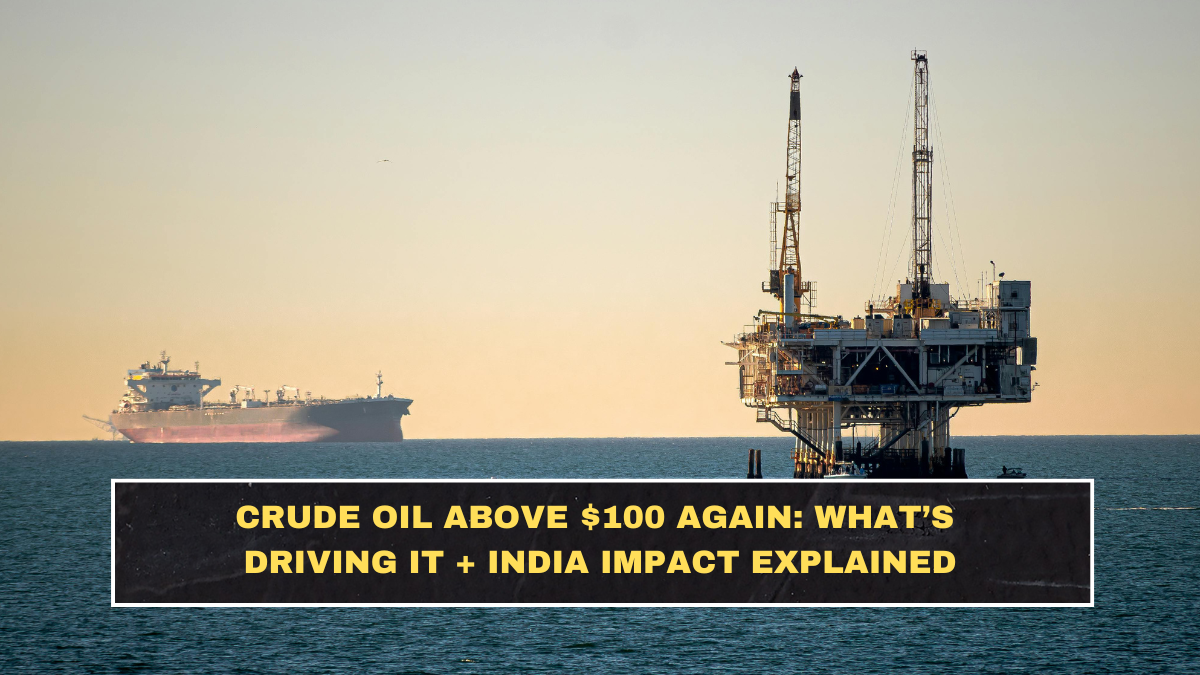
Global crude oil prices have surged above the $100 per barrel mark, triggering fresh concerns about inflation, fuel costs, and economic stability. Oil prices tend to react quickly to geopolitical developments, supply disruptions, and global demand expectations. When several of these factors appear simultaneously, the commodity market often experiences sharp price spikes.
For countries like India, which import a large portion of their crude oil requirement, rising oil prices can influence multiple sectors of the economy. Higher crude prices affect fuel costs, transportation expenses, and even the price of everyday goods. This is why crude oil movements are closely watched by policymakers, investors, and consumers alike.
Current Global Crude Oil Price Snapshot
Oil markets are primarily tracked through two benchmark prices: Brent crude and West Texas Intermediate (WTI). These benchmarks represent different regional oil markets but often move in similar directions.
| Oil Benchmark | Current Price | Daily Change | Key Market |
|---|---|---|---|
| Brent Crude | $101.20 | +3.5% | Europe / Global |
| WTI Crude | $98.70 | +3.1% | United States |
| OPEC Basket | $100.10 | +2.9% | OPEC Countries |
Brent crude is the benchmark most closely tracked by India because many Asian crude contracts are linked to it.
Major Reasons Behind the Oil Price Surge
Several key factors have contributed to the recent spike in oil prices. Commodity markets usually react to supply concerns and geopolitical risks much faster than other financial markets.
| Trigger | What Happened | Impact on Oil Prices |
|---|---|---|
| Geopolitical Tension | Conflict concerns in oil-producing regions | Supply risk premium |
| Production Cuts | OPEC+ output control policies | Reduced supply |
| Rising Demand | Economic activity increasing fuel demand | Higher consumption |
| Shipping Disruptions | Oil transport routes under pressure | Supply delays |
| Dollar Strength | Currency movement affecting commodity pricing | Price volatility |
When markets anticipate supply disruptions, traders often bid oil prices higher even before an actual shortage occurs.
How Oil Prices Affect India’s Economy
India imports around 85% of its crude oil requirement, making the country highly sensitive to global oil price movements. When crude prices rise sharply, the impact spreads across multiple sectors of the economy.
| Economic Area | Impact of Higher Crude Prices |
|---|---|
| Fuel Prices | Petrol and diesel may rise |
| Inflation | Transportation costs increase |
| Government Budget | Subsidy pressure increases |
| Currency | Rupee may weaken due to import bills |
| Aviation | Airline operating costs rise |
Because oil is a critical input for transportation and manufacturing, price increases often ripple through the broader economy.
Historical Context: Oil Price Milestones
Oil prices crossing major levels like $100 per barrel often attract global attention because such levels historically coincide with economic shifts.
| Year | Average Oil Price | Key Global Event |
|---|---|---|
| 2008 | $140 peak | Global financial crisis period |
| 2014 | $110 range | Shale oil expansion |
| 2022 | $120 spike | Energy crisis and supply disruption |
| 2026 | Around $100 | Geopolitical and supply concerns |
These milestones illustrate how oil markets often react strongly during periods of global uncertainty.
Why Petrol Prices in India Don’t Change Immediately
Many people assume that petrol and diesel prices rise instantly when crude oil increases. In reality, fuel pricing involves several components including taxes, refining costs, and government policy decisions.
| Component | Share in Pump Price |
|---|---|
| Crude Oil Cost | ~40–45% |
| Central Excise | ~20–25% |
| State Taxes | ~20–30% |
| Dealer Commission | ~3–5% |
Because taxes form a large part of fuel prices in India, short-term crude fluctuations do not always immediately translate into pump price changes.
What Investors and Economists Are Watching
Market participants closely monitor crude oil because it influences inflation, interest rates, and economic growth expectations.
| Indicator | Why It Matters |
|---|---|
| OPEC Meetings | Production policy signals |
| US Inventory Data | Supply-demand balance |
| Shipping Routes | Energy transport stability |
| Global Economic Growth | Oil demand outlook |
These indicators help analysts predict whether oil prices will remain elevated or stabilize in the coming months.
Conclusion
The surge in crude oil prices above $100 per barrel highlights how sensitive global commodity markets are to geopolitical events and supply disruptions. For India, rising oil prices can influence inflation, fuel costs, and currency stability.
While short-term price spikes often occur during global uncertainty, long-term oil trends depend on supply decisions, economic growth, and energy transition policies. Monitoring these factors helps both policymakers and investors understand how oil prices may evolve in the future.
FAQs
Why has crude oil crossed $100 again?
Crude prices rose due to geopolitical tensions, supply concerns, production limits, and strong global energy demand.
Which crude oil benchmark matters most for India?
Brent crude is the most relevant benchmark for India because many Asian crude contracts are priced based on it.
How does crude oil affect petrol prices in India?
Crude oil forms a large portion of fuel costs, but taxes and refining charges also play major roles in determining pump prices.
Does higher crude oil always increase inflation?
Yes, higher oil prices usually increase transportation and manufacturing costs, which can contribute to inflation.
Can crude oil prices fall again soon?
Oil prices depend on supply decisions, global demand, and geopolitical developments, so they can fluctuate significantly over time.