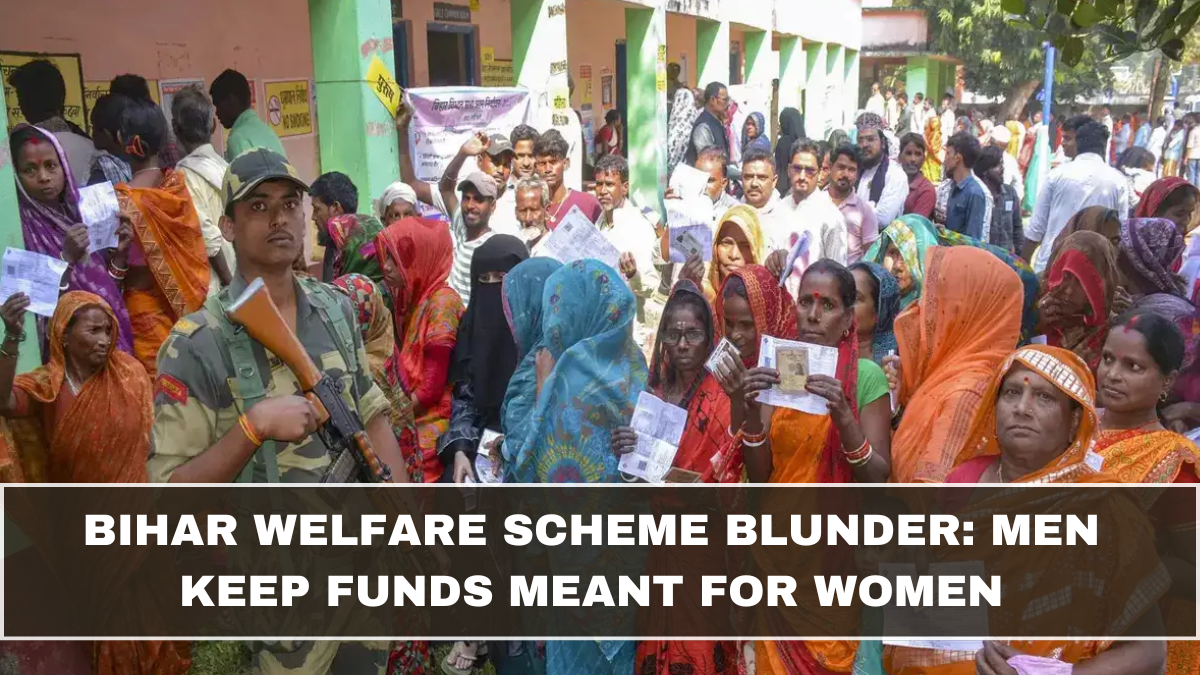
The Bihar welfare scheme blunder has sparked widespread debate after a major welfare scheme error led to men receiving financial assistance that was originally meant for women beneficiaries. What began as a technical or administrative mistake has now turned into a social and political issue, as reports suggest that several recipients are refusing to return the funds.
The incident has raised serious questions about governance, accountability and the efficiency of welfare delivery systems. As public reactions grow stronger, the Bihar welfare scheme blunder is becoming a flashpoint for broader discussions on transparency and responsibility in public welfare programs.

How the Bihar Welfare Scheme Blunder Occurred
The Bihar welfare scheme blunder reportedly occurred during a routine disbursement of funds under a women-focused welfare initiative. Due to a database mismatch or technical oversight, payments were credited to bank accounts held by male family members instead of eligible women beneficiaries.
Key factors behind the welfare scheme error include:
• Incorrect beneficiary data mapping
• Linking of shared family bank accounts
• Inadequate verification mechanisms
• Over-reliance on automated systems
• Lack of timely monitoring
While officials described the issue as a temporary glitch, the scale of the Bihar welfare scheme blunder quickly drew public attention.
Why Men Are Refusing to Return the Money
One of the most controversial aspects of the Bihar welfare scheme blunder is the refusal by some recipients to return the funds. Social media discussions and local reports suggest that many men argue the money was deposited legally into their accounts.
Common justifications cited include:
• The money was received without deception
• Financial hardship within households
• Lack of clear recovery instructions
• Perception that the funds support family needs
• Distrust in administrative follow-up
This resistance has intensified the political reaction, with critics questioning enforcement mechanisms and ethical responsibility.
Political Reaction to the Welfare Scheme Error
The Bihar welfare scheme blunder has triggered strong political reactions across party lines. Opposition leaders have accused the administration of incompetence, while ruling representatives have assured corrective action.
Political responses include:
• Demands for accountability and audits
• Calls for beneficiary verification reforms
• Accusations of negligence
• Public assurances of fund recovery
• Promises of improved system safeguards
The welfare scheme error has become a talking point in legislative discussions, highlighting systemic gaps in public welfare execution.
Impact on Intended Women Beneficiaries
The most significant fallout of the Bihar welfare scheme blunder is its impact on women who were supposed to receive the assistance. For many beneficiaries, the funds were intended to support health, nutrition, education or household needs.
Consequences faced by women include:
• Delayed financial support
• Increased dependency on family members
• Emotional distress and frustration
• Loss of trust in welfare systems
This aspect has amplified societal concern and intensified the political reaction, with advocacy groups demanding immediate corrective steps.
Governance and Systemic Issues Exposed
Beyond individual recovery challenges, the Bihar welfare scheme blunder has exposed deeper governance issues. Experts argue that welfare schemes must balance automation with accountability.
Systemic weaknesses highlighted include:
• Insufficient beneficiary verification
• Limited grievance redressal mechanisms
• Poor coordination between departments
• Lack of transparency in fund tracking
The welfare scheme error underscores the need for stronger safeguards to prevent similar incidents.
Public Opinion and Social Debate
Public opinion around the Bihar welfare scheme blunder remains divided. While many empathise with financially struggling families, others argue that retaining funds meant for women is ethically wrong.
Key themes in public debate include:
• Moral responsibility versus legal loopholes
• Gender-focused welfare integrity
• Trust in government systems
• Fairness in recovery processes
The issue has sparked nationwide discussions about social responsibility and governance ethics.
What Authorities Are Doing Now
In response to the Bihar welfare scheme blunder, authorities have begun reviewing beneficiary databases and issuing notices for fund recovery. Officials have also indicated that future disbursements will involve stricter checks.
Corrective steps include:
• Verification of beneficiary accounts
• Issuance of recovery notices
• System audits
• Improved data validation
• Public awareness campaigns
These measures aim to restore confidence and address the welfare scheme error effectively.
Conclusion
The Bihar welfare scheme blunder serves as a cautionary example of how administrative errors can escalate into social and political controversies. While technology has streamlined welfare delivery, this incident highlights the importance of accountability, transparency and ethical responsibility. As authorities work to correct the welfare scheme error, the outcome will shape public trust and future policy decisions. Ensuring that benefits reach the intended recipients remains critical for the credibility of welfare initiatives.
FAQs
What is the Bihar welfare scheme blunder?
It refers to a disbursement error where men received funds meant for women beneficiaries.
Why are recipients refusing to return the money?
Some claim the funds were legally received and needed for household expenses.
Has there been a political reaction?
Yes, opposition and ruling parties have both responded, demanding accountability and reforms.
Are women beneficiaries affected?
Yes, many women experienced delays and loss of access to intended financial support.
What steps are being taken to fix the issue?
Authorities are verifying data, issuing recovery notices and improving system safeguards.
Click here to know more.