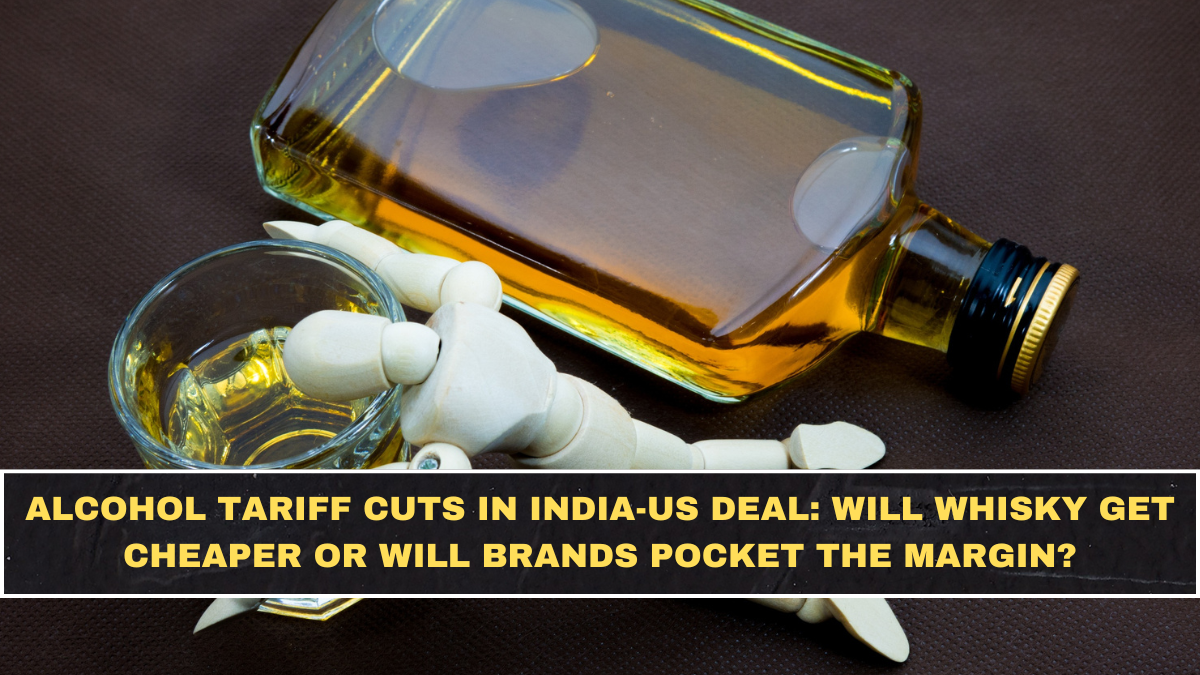
Imported alcohol pricing has always been a sensitive topic in India, and the India US trade deal alcohol tariff reduction meaning is being widely misunderstood in 2026. Headlines often suggest that tariff cuts will instantly make foreign whisky and spirits cheaper on store shelves, but the reality is far more layered. Alcohol pricing in India is shaped by multiple taxes, state controls, and distribution structures that dilute the impact of any single policy change.
To understand the India US trade deal alcohol tariff reduction meaning, it is important to separate policy intent from market behavior. Trade negotiations may reduce certain import duties at the central level, but what consumers ultimately pay depends on how brands, distributors, and state governments respond. This gap between expectation and outcome is why alcohol prices rarely fall as dramatically as people hope after tariff adjustments.
What Alcohol Tariff Reduction Actually Means in Trade Terms
In trade agreements, tariff reduction usually refers to lowering customs duties applied at the point of import. Under the India US trade deal alcohol tariff reduction meaning in 2026, any adjustment is expected to be selective and structured rather than universal. This means only certain categories or volumes may see lower duties, often under negotiated conditions.
Importantly, this reduction applies only to the import stage. After that, alcohol in India passes through a complex tax stack that includes excise duty, state levies, distribution margins, and retail markups. Each layer significantly influences final pricing.
As a result, even when import tariffs are adjusted, the reduction represents only a fraction of the total price consumers pay.
Why Whisky Prices Rarely Drop the Way People Expect
One of the most common assumptions around the India US trade deal alcohol tariff reduction meaning is that whisky prices will visibly fall. In practice, this happens rarely and unevenly. Imported whisky prices are heavily influenced by state excise policies, which vary widely across India and often change independently of central trade decisions.
Brands also play a major role in price outcomes. Premium alcohol brands typically position themselves based on perception rather than cost-plus pricing. When input costs fall slightly, companies may choose to protect margins instead of passing savings to consumers.
This behavior explains why past tariff changes have not consistently translated into cheaper bottles, even when import costs were reduced.
Who Actually Benefits from Alcohol Tariff Reductions
The primary beneficiaries of tariff reductions are usually importers and brand owners rather than end consumers. Lower duties improve profitability, help brands expand distribution, or support marketing and positioning strategies.
In some cases, reduced tariffs allow brands to introduce new variants or expand presence in additional states without raising prices. This increases choice rather than lowering cost. The India US trade deal alcohol tariff reduction meaning therefore shows benefits that are strategic rather than immediately visible to buyers.
Restaurants, hotels, and duty-linked retail segments may also benefit indirectly through improved sourcing flexibility and supply stability.
Why State Taxes Matter More Than Trade Deals
Alcohol remains a state-controlled subject in India, and this is the biggest reason tariff cuts have limited consumer impact. Even if import duties are reduced, state excise structures often absorb or override those savings.
States use alcohol taxes as a major revenue source and rarely adjust them downward in response to trade agreements. In some cases, states may even revise levies upward, offsetting any central-level reductions.
This layered taxation system is central to understanding the India US trade deal alcohol tariff reduction meaning from a realistic perspective.
What Buyers Should Expect in 2026
For most consumers, expectations should remain grounded. A few premium or niche labels may see marginal price adjustments in select markets, but broad-based reductions are unlikely. Any visible change tends to be slow and inconsistent across states.
Buyers may notice better availability, wider portfolios, or fewer supply disruptions rather than cheaper pricing. These are indirect outcomes of improved trade conditions rather than direct benefits of tariff cuts.
Understanding this helps avoid disappointment driven by overhyped interpretations of policy headlines.
Why Brands Might Choose Not to Cut Prices
Alcohol brands invest heavily in positioning, distribution, and compliance. When tariffs fall slightly, companies often view it as an opportunity to stabilise margins rather than trigger price competition.
Lower prices can also dilute premium perception, especially in the imported spirits category. Brands may prefer to maintain price points while improving profitability or reinvesting savings elsewhere.
This strategic behavior is a consistent pattern and a key reason the India US trade deal alcohol tariff reduction meaning does not align with popular expectations.
Conclusion: The Real Meaning Behind Alcohol Tariff Cuts
The India US trade deal alcohol tariff reduction meaning is less about cheaper drinks and more about trade calibration. While tariff adjustments can improve business viability and market access, they rarely deliver immediate consumer price relief in India’s alcohol market.
Multiple layers of taxation, state control, and brand strategy ensure that any duty cut has a diluted effect by the time a bottle reaches a buyer. In 2026, understanding this reality matters more than chasing headline promises. For consumers, the biggest change is likely to be choice and availability, not significantly lower prices.
FAQs
What does alcohol tariff reduction mean in the India-US trade deal?
It refers to lowering certain import duties on alcohol at the central level, often in a limited or conditional manner.
Will imported whisky get cheaper after tariff cuts?
In most cases, no significant price drop is seen due to state taxes and brand pricing strategies.
Who benefits the most from alcohol tariff reductions?
Importers, brand owners, and distributors benefit more than retail consumers.
Why don’t states reduce alcohol taxes after tariff cuts?
Alcohol is a major revenue source for states, and excise policies are independent of central trade decisions.
Should consumers expect any change at all?
Consumers may see better availability or new product launches, but not widespread price reductions.