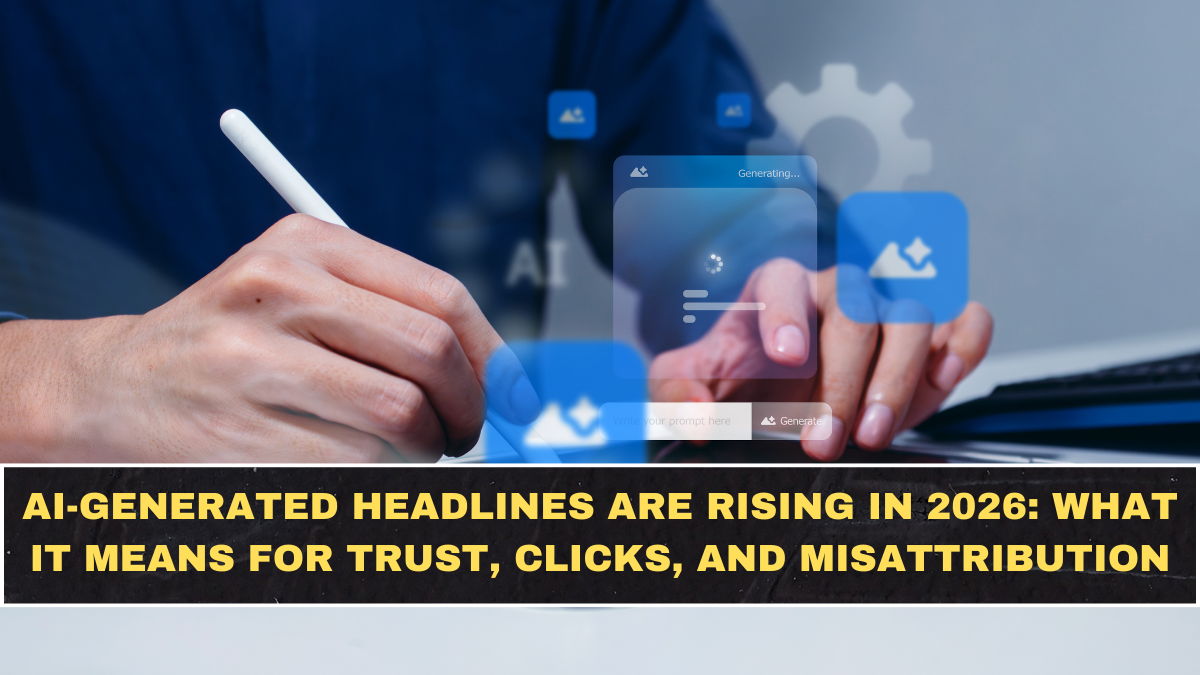
In 2026, headlines are no longer written only by editors racing against deadlines. A growing share of headlines across news feeds, content platforms, and social discovery surfaces are now generated or assisted by AI systems. For users, this shift feels subtle at first, but over time it changes how stories are perceived, trusted, and clicked. The headline is still the doorway to content, but the way that doorway is built has changed.
What makes this moment important is scale. AI-generated headlines are not limited to experiments or niche publishers anymore. They are appearing everywhere, optimized for feeds, summaries, and recommendation systems that reward speed and engagement. This rise has consequences for click-through rates, publisher credibility, and the growing problem of misattribution, where headlines drift away from the actual story beneath them.
Why AI-Generated Headlines Are Spreading So Fast
The primary reason AI-generated headlines are rising in 2026 is efficiency. Publishers are under constant pressure to produce content quickly across multiple platforms, each with different headline constraints. AI tools make it possible to generate dozens of headline variations in seconds.
Another driver is platform optimization. Algorithms favor headlines that match user behavior patterns, emotional triggers, and engagement signals. AI systems are trained to recognize and reproduce these patterns at scale, something human editors cannot do as quickly.
This combination of speed and optimization makes AI headlines attractive, even for publishers who are cautious about automation elsewhere.
How AI Headlines Change Click-Through Behavior
AI-generated headlines tend to be clearer, more direct, and more emotionally tuned than traditional ones. They often reduce ambiguity and highlight outcomes rather than nuance, which can increase initial click-through rates.
However, this clarity comes with trade-offs. When headlines oversimplify or over-promise, users feel misled after clicking. Over time, this erodes trust and reduces repeat engagement.
In 2026, users are becoming more sensitive to this pattern. They click faster, but they also abandon content faster when expectations are not met.
The Growing Trust Gap Between Headlines and Content
Trust is where the impact of AI-generated headlines becomes most visible. When headlines are produced by systems trained on engagement data rather than editorial judgment, subtle distortions creep in.
A headline may technically reflect the article but frame it in a way that exaggerates conflict, certainty, or importance. Readers may not consciously identify this shift, but they feel it.
Over time, repeated mismatch between headline tone and content depth leads users to distrust not just the headline, but the publisher itself.
Misattribution: When AI Headlines Drift Too Far
Misattribution has become a serious concern in 2026. This happens when an AI-generated headline introduces implications, conclusions, or emphasis that the article does not fully support.
In fast-moving feeds, many users only read headlines or summaries. If those are inaccurate or skewed, misinformation spreads even if the article itself is careful and balanced.
This creates a paradox. The content may be responsible, but the AI-generated headline becomes the source of distortion. Publishers bear the reputational cost either way.
Why Publishers Are Still Using AI Headlines Despite Risks
Despite these issues, publishers continue using AI-generated headlines because the alternatives are limited. Manual headline writing at scale is expensive and slow.
AI tools also allow rapid testing. Multiple headline versions can be rotated to see which performs best, something that aligns closely with platform-driven metrics.
In 2026, many publishers accept the risks because short-term visibility feels necessary for survival, even if it complicates long-term trust.
What Readers Are Learning to Look For
Readers are not passive in this shift. Many users now subconsciously evaluate headlines for credibility signals. Extreme certainty, emotional exaggeration, or vague urgency are treated with skepticism.
Users increasingly rely on source familiarity, writing tone, and consistency over time to decide whether to trust a headline. This means that brand reputation matters more than ever.
AI-generated headlines that respect reader intelligence perform better in the long run than those optimized purely for clicks.
How Publishers Can Reduce Misattribution Risk
The most effective strategy is human oversight. AI-generated headlines work best when editors review and adjust them rather than publishing them untouched.
Clear internal guidelines help. Limiting exaggeration, enforcing alignment with article conclusions, and avoiding speculative framing reduce long-term damage.
Some publishers also align AI systems with editorial values rather than pure engagement data, training them to prioritize accuracy over click potential.
The Balance Between CTR and Credibility
Click-through rate still matters in 2026, but it is no longer the only metric that counts. Retention, repeat visits, and brand trust increasingly influence platform visibility.
AI-generated headlines that chase short-term clicks at the cost of credibility often underperform over time. Users remember how content made them feel, not just whether they clicked.
The challenge for publishers is not choosing between AI and humans, but finding the right balance between automation and judgment.
Conclusion: Headlines Still Matter More Than Ever
AI-generated headlines are not killing journalism, but they are reshaping how trust and attention are earned. In 2026, the headline remains the most powerful piece of content most people see.
When AI is used thoughtfully, headlines become clearer and more accessible. When used carelessly, they create distance between readers and reality.
The publishers who succeed will be those who treat AI as an assistant, not an authority, and who remember that trust is harder to rebuild than clicks are to gain.
FAQs
What are AI-generated headlines?
AI-generated headlines are titles created or assisted by machine learning systems designed to optimize clarity, engagement, or platform performance.
Do AI-generated headlines increase click-through rates?
They often increase short-term clicks, but mismatches with content can reduce long-term trust and repeat engagement.
Why is misattribution a risk with AI headlines?
Because AI systems may emphasize or imply conclusions that the article itself does not fully support, especially when optimized for engagement.
Are publishers required to label AI-generated headlines?
There is no universal requirement, but transparency practices are evolving as trust concerns grow.
How can readers protect themselves from misleading headlines?
By checking source credibility, reading beyond headlines, and noticing patterns of exaggeration or inconsistency over time.
Will human editors still matter in headline writing?
Yes. In 2026, human oversight remains essential to maintain accuracy, alignment, and long-term credibility.