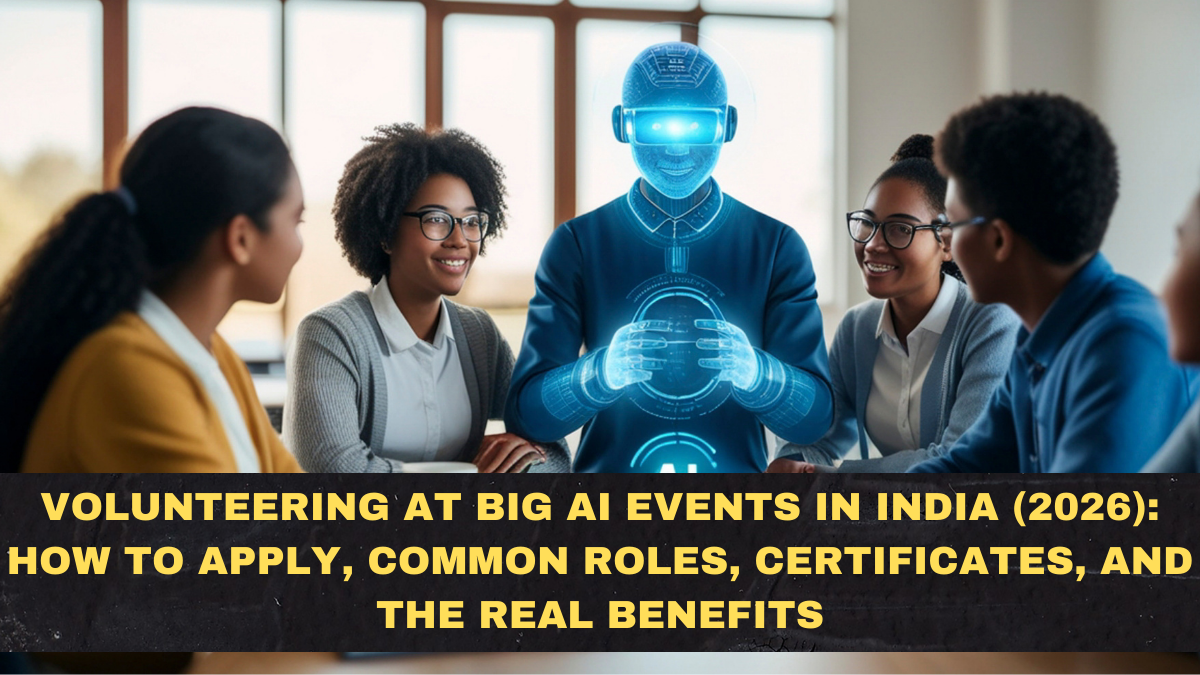
Volunteering at big AI events in India is no longer a “nice extra” for students and early-career professionals. In 2026, it has quietly become one of the smartest low-cost ways to break into the AI ecosystem without pedigree, referrals, or paid conference passes.
Here’s the uncomfortable truth most people don’t say out loud. AI events are packed with people who all look the same on paper: same degrees, same online courses, same LinkedIn buzzwords. Volunteering is one of the only legal ways to cut through that noise and get proximity to speakers, founders, policy teams, and recruiters without begging for coffee chats.
That’s why searches for AI event volunteering India 2026 are climbing fast. People aren’t asking because they love unpaid work. They’re asking because they want access, credibility, and learning leverage without burning cash.
This guide breaks down how volunteering actually works, what roles exist, how to apply strategically, what certificates are worth, and whether the real benefits justify your time.

Why AI Event Volunteering Is Suddenly High-Value in 2026
The AI job and startup market in India has tightened. Entry-level roles are saturated. Internships are competitive. Conferences are expensive. At the same time, the number of AI summits, expos, and policy events has exploded.
That combination has created a weird gap.
There are more high-quality events than ever. But there are not enough skilled volunteers who can handle logistics, content coordination, tech support, and speaker management professionally.
Organizers need reliable people. Attendees want access. Volunteers sit in the middle.
If you treat volunteering like free labor, you’ll get exploited and forgotten. If you treat it like a structured access play, it becomes one of the highest ROI career moves you can make in 2026.
Who Should Seriously Consider Volunteering
Not everyone should volunteer. This only makes sense if it aligns with your actual goals.
You should strongly consider AI event volunteering if:
-
You’re a student trying to break into AI, data, policy, or tech
-
You’re switching careers into AI or product roles
-
You’re building a startup and want founder-level access cheaply
-
You want real exposure to how AI decisions get made
-
You need proof of involvement beyond online certificates
You should skip volunteering if:
-
You only care about free food and swag
-
You hate structured work and accountability
-
You expect guaranteed job offers
-
You’re unwilling to do operational tasks
This is not a shortcut to fame. It’s a positioning move.
Common Volunteer Roles at AI Events
Most people imagine volunteering means standing at a registration desk all day. That’s outdated.
In 2026, AI event volunteer roles are more specialized and more strategic than before.
Here are the most common categories and what they actually involve.
-
Registration and attendee support: handling check-ins, badge issues, and on-ground queries
-
Speaker coordination: managing schedules, green rooms, slides, and timekeeping
-
Session operations: room setup, mic handling, recording coordination, and crowd flow
-
Content and media support: helping with social posts, photography, reels, and live updates
-
Startup showcase support: booth logistics, demo flow, and lead capture coordination
-
Technical support: Wi-Fi issues, screen sharing, projector setup, and live stream help
-
Volunteer team leads: coordinating shifts, tracking attendance, and reporting issues
Here’s the reality.
Speaker coordination, content support, and startup showcase roles give you far more leverage than generic front-desk roles. They put you close to high-value people and real conversations.
How the Volunteer Application Process Usually Works
Most big AI events in India follow a similar volunteer selection pattern.
First, they release an online application form asking for:
-
Basic profile details
-
Education and skills
-
Past volunteering or event experience
-
Availability
-
Preferred roles
-
A short motivation statement
Then they shortlist based on three things:
-
Reliability signals
-
Communication quality
-
Role fit
Here’s what actually matters.
Organizers don’t care about your CGPA or certificates. They care whether you will show up on time, follow instructions, and not embarrass them in front of speakers.
If your application sounds generic, you’re invisible.
How to Write an Application That Actually Gets Selected
This is where most people screw up.
They write emotional nonsense about “passion for AI” and “eagerness to learn.” That’s useless.
Your application should do three things clearly.
First, show operational reliability.
Mention any past event, club, fest, or team experience, even if it wasn’t tech-related. Organizers value proof that you understand coordination and deadlines.
Second, show role alignment.
Don’t tick every role. Pick one or two and explain why you fit them.
Third, show contribution intent.
Explain what you can actually do for the event, not what you want to get from it.
A strong application sounds boring, practical, and useful. That’s exactly why it wins.
Certificates: Do They Actually Matter
This is where people delude themselves.
Most AI event volunteer certificates have zero standalone market value. Recruiters don’t hire you because you have a certificate that says “Volunteer.”
What matters is what the certificate represents.
If it’s from a nationally visible AI summit, expo, or policy event, it becomes a credibility signal when combined with:
-
Your LinkedIn story
-
Your project work
-
Your networking references
The certificate itself won’t get you a job. But it supports a narrative that you were inside the ecosystem, not just watching it online.
What You Actually Learn by Volunteering
This is the most underappreciated part.
If you volunteer properly, you’ll learn things no online course teaches you.
-
How speakers think and prepare
-
What founders actually pitch behind closed doors
-
What policy people worry about privately
-
How sponsorship and partnerships work
-
How AI demos fail in the real world
-
How events manage chaos
This is institutional knowledge. It changes how you think about careers, startups, and strategy.
That learning alone can be worth more than a paid workshop ticket.
The Real Benefits Nobody Advertises
This is the part that actually matters.
If you perform well as a volunteer, three quiet things happen.
You get remembered by organizers.
You get informal referrals to internships, projects, or roles.
You get access to WhatsApp groups, private follow-ups, and post-event work.
This is how people slide into opportunities without applying through portals.
It doesn’t happen automatically. It happens if you are useful, calm, and reliable under pressure.
Common Mistakes That Kill Your Leverage
This is where most volunteers fail.
They show up late.
They disappear between shifts.
They flirt instead of working.
They overshare opinions.
They treat speakers like celebrities instead of busy humans.
They ask for selfies instead of offering help.
If you behave like a fan, you’ll be treated like staff.
If you behave like a professional, you’ll be treated like a peer-in-training.
Is AI Event Volunteering Worth It in 2026
Here’s the blunt answer.
Volunteering is worth it if you use it as a positioning move.
It is not worth it if you treat it as charity or entertainment.
In a crowded AI market, access beats credentials. Proximity beats resumes. Reliability beats raw talent.
AI event volunteering India 2026 is one of the cheapest ways to buy all three.
Conclusion: Use Volunteering as a Strategic Career Move
Volunteering at big AI events in India is no longer about free entry and certificates. It’s about access, positioning, and narrative control over your career story.
If you apply intelligently, choose high-leverage roles, and behave like a professional, volunteering can quietly outperform online courses, unpaid internships, and cold LinkedIn messages.
But only if you stop treating it like free labor and start treating it like a strategic move.
FAQs
How do I apply for AI event volunteering in India in 2026?
Most events release online volunteer forms where you submit your profile, skills, availability, and role preferences. Selection depends more on reliability and role fit than academic background.
What roles are best for maximum learning and access?
Speaker coordination, content support, and startup showcase roles offer the most proximity to high-value people and real conversations.
Do volunteer certificates help in getting jobs?
Certificates alone don’t help. Their value comes from the credibility narrative they support when combined with projects, networking, and references.
Is volunteering useful for students with no experience?
Yes, if you contribute operationally, synthesize notes, or support logistics professionally. Reliability matters more than experience.
How many hours do volunteers usually work?
It varies by event, but most volunteers work in shifts across multiple days, with defined responsibilities and time blocks.
Is AI event volunteering worth it in 2026?
Yes, if you use it strategically for access, learning, and relationships rather than treating it as free labor or a casual activity.