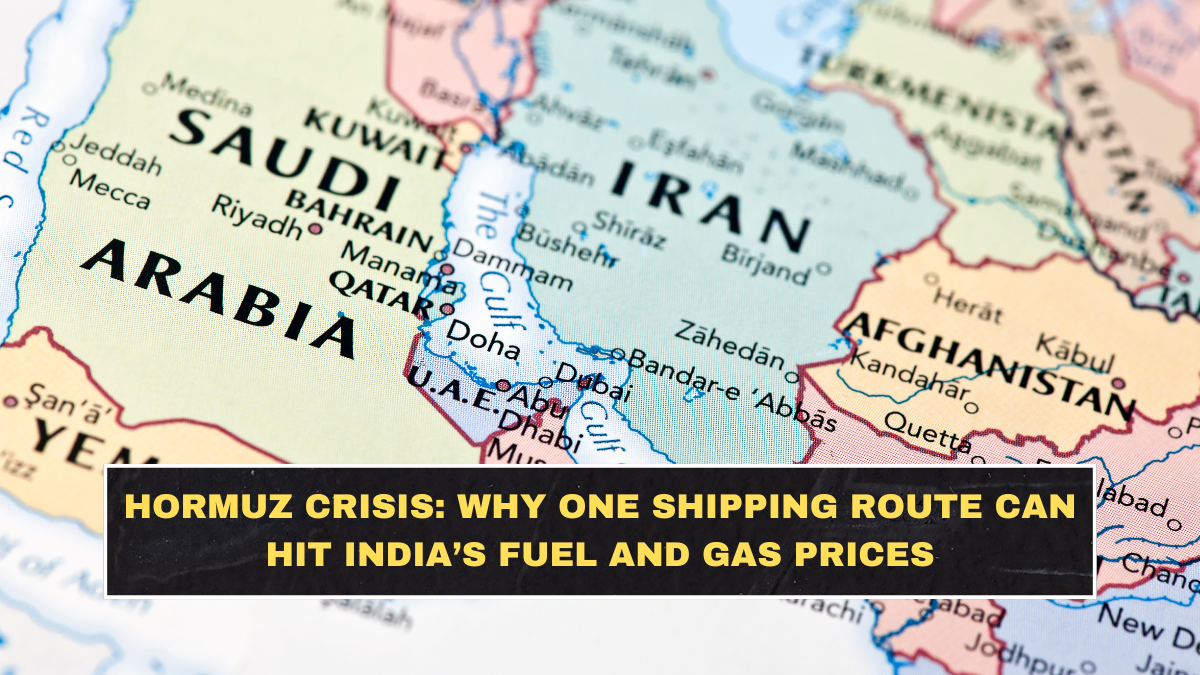
The Strait of Hormuz is one of the world’s most important energy routes because a huge share of global crude oil and liquefied natural gas moves through this narrow passage between Iran and Oman. For India, this is not some distant geopolitical issue. It directly connects to crude imports, LNG supply, petrol prices, diesel prices, cooking gas costs, fertiliser prices, transport costs, and inflation pressure.
Recent market reports show that oil prices rose again on April 27, 2026, as US-Iran talks stalled and supply through the Strait of Hormuz remained restricted. Reuters reported Brent crude at $106.68 a barrel and WTI at $95.35 a barrel, showing how quickly markets react when the route looks unsafe.
India is vulnerable because it imports most of its crude oil requirement. Even if ships are not fully blocked, higher risk premiums, insurance costs, freight charges, and delayed cargo movement can raise the final cost of energy. That cost does not stay inside oil company balance sheets forever; it eventually reaches businesses and households.
How Does The Hormuz Crisis Affect Petrol And Diesel Prices?
Petrol and diesel prices in India do not always rise immediately when crude oil jumps. The government and oil marketing companies may absorb some pressure for a period, especially when inflation is politically sensitive. But this does not mean India is safe from the impact. It only means the pressure is temporarily hidden.
If crude remains expensive for many weeks, oil import bills increase. India then has to spend more foreign exchange to buy the same amount of oil. This can pressure the rupee, widen the current account deficit, and make imports costlier. Fuel retailers may eventually face pressure to revise prices, especially if the crude spike becomes structural rather than temporary.
The bigger issue is diesel. Diesel powers trucks, buses, farm equipment, logistics chains, and many industrial activities. If diesel costs rise, transport costs rise. If transport costs rise, food, vegetables, construction material, manufactured goods, and delivery services can also become more expensive for normal consumers.
Why Can LNG And Gas Prices Become A Bigger Problem?
Crude oil gets most of the headlines, but LNG may become an even more painful issue for industries. India imports LNG for city gas distribution, fertiliser plants, power generation, refineries, and industrial fuel use. If LNG cargoes are delayed or global spot prices rise sharply, industries that depend on gas can face higher costs or supply uncertainty.
The World Economic Forum recently noted that India’s crude oil, LNG, and LPG supply remains vulnerable to geopolitical disruption linked to the Iran conflict. It also highlighted that fuel shortages, shipping disruptions, and rising input costs had already started affecting sectors such as steel production.
This matters because gas is not only about household piped gas or CNG vehicles. It is connected to fertilisers, metals, chemicals, power, ceramics, and other industries. When energy costs rise for producers, they either reduce production, delay orders, or pass costs to customers. That is how a shipping route can slowly become an inflation story.
What Is The Simple Breakdown Of India’s Risk?
India’s risk comes from three linked problems: supply disruption, price shock, and inflation pass-through. A disruption may delay cargoes. A price shock raises crude and LNG costs. Inflation pass-through happens when companies begin pushing higher costs into the market through fuel, freight, food, and manufactured goods.
| Risk Area | How It Affects India | Who Feels It First |
|---|---|---|
| Crude oil disruption | Higher import cost and possible fuel price pressure | Oil companies, transport sector |
| LNG disruption | Higher gas cost for industries and city gas firms | Fertiliser, steel, power, CNG users |
| Shipping risk | Higher insurance and freight rates | Importers, exporters, logistics firms |
| Rupee pressure | Larger oil bill can weaken currency sentiment | Import-heavy businesses |
| Inflation pressure | Transport and production costs rise | Households and small businesses |
The mistake many people make is thinking fuel prices are only about petrol pumps. In reality, energy is buried inside almost every product. If the cost of moving goods and producing goods rises, inflation becomes broader than just petrol and diesel.
Can India Avoid A Fuel Or Gas Supply Shock?
India can reduce the damage, but it cannot fully avoid the risk if the crisis becomes prolonged. The government has said earlier that energy supplies remain secure and that refiners are operating at high capacity utilisation, with additional crude cargoes expected to strengthen supply.
That is reassuring for the short term, but it should not make anyone careless. Emergency cargoes, reserves, and diversified sourcing can help during temporary disruption. They cannot completely neutralise a long Hormuz shutdown or a sustained global oil price spike. India still remains highly exposed to imported energy.
The practical solution is not panic buying. It is smarter planning: more supplier diversification, faster renewable energy adoption, stronger strategic reserves, better gas storage, and reduced dependence on fragile shipping routes. Energy security is not built during a crisis; it is tested during a crisis.
Why Should Indian Households Care About A Global Shipping Route?
Indian households should care because the Hormuz crisis can affect monthly budgets indirectly. Even if petrol and diesel rates stay unchanged for a few days or weeks, the pressure can show up through food prices, cab fares, airline tickets, LPG costs, electricity input costs, and general inflation.
A working family may not track Brent crude every day, but they will feel the impact if vegetables, groceries, school transport, delivery charges, or travel costs rise. Businesses may also delay hiring or reduce margins if input costs climb. That is why energy shocks can quietly affect jobs, savings, and consumer spending.
The brutal truth is simple: India’s growth story still depends heavily on imported energy. Until that changes, any major disruption in West Asia will remain a direct economic risk for Indian households.
Conclusion?
The Hormuz crisis matters to India because it sits at the centre of crude oil, LNG, shipping, and inflation risk. This is not just a foreign policy headline. It can affect fuel costs, gas supply, industrial production, transport charges, and household budgets.
India has buffers and diversified suppliers, but those protections have limits if the disruption continues. The smartest way to read this crisis is not panic, but preparation. If energy prices stay high, the pain will not remain limited to oil companies; it will travel through the entire economy.
FAQs
Why Is The Strait Of Hormuz Important For India?
The Strait of Hormuz is important because a large volume of crude oil and LNG passes through it. India depends heavily on imported energy, so any disruption in this route can increase oil, gas, freight, and insurance costs.
Will Petrol And Diesel Prices Rise Immediately In India?
Not necessarily. Petrol and diesel prices may stay unchanged in the short term because pricing decisions also involve government policy and oil marketing companies. But if crude remains high for a long time, pressure on fuel prices can increase.
How Can LNG Disruption Affect Common People?
LNG disruption can raise costs for fertiliser plants, industries, power producers, CNG networks, and city gas companies. These higher costs may later affect food prices, transport costs, manufacturing prices, and household energy expenses.
Can India Fully Avoid The Hormuz Impact?
India can reduce the impact through reserves, alternative suppliers, and emergency planning, but it cannot fully avoid the risk if the crisis becomes prolonged. Imported energy dependence remains the main vulnerability.