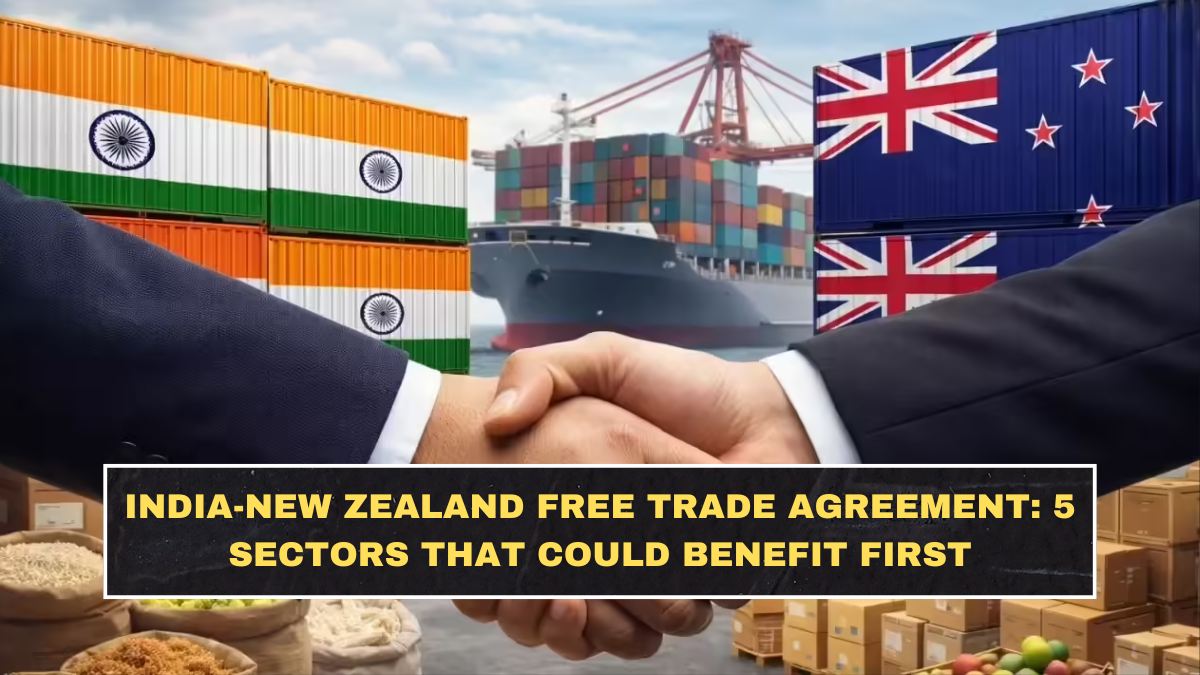
The India-New Zealand Free Trade Agreement is getting attention because it gives Indian exporters full duty-free access to the New Zealand market. According to India’s official communication, the FTA eliminates duty on 100% of Indian exports and includes a USD 20 billion investment commitment over 15 years. This makes the deal more than a normal trade announcement; it is also being positioned as a long-term economic partnership.
For Indian businesses, the biggest benefit is simple: lower duty can make Indian products cheaper and more competitive in New Zealand. That matters because many small and mid-sized exporters lose foreign orders not because their product is weak, but because the final landed price becomes too high after tariffs, logistics, and compliance costs.
But let’s be honest. A free trade agreement is not a money button. It opens market access, but exporters still need quality, certificates, packaging, timely shipment, and buyer relationships. The sectors that benefit first will be the ones already prepared for international standards.
Which 5 Sectors Could Benefit First?
The five sectors likely to benefit first are textiles and garments, leather and footwear, engineering goods, food products, and chemicals or electronics. India Today reported that all 8,284 Indian export products will get duty-free access to New Zealand from day one, while sectors such as garments, leather, engineering goods, chemicals, electronics, and food products are expected to gain from the agreement.
These sectors are important because they already have export experience and can respond faster when tariff barriers fall. Labour-intensive industries like textiles and leather may benefit strongly because some products earlier faced duties of up to 10%, which can now drop to zero under the deal.
| Sector | Why It Could Benefit | Main Challenge |
|---|---|---|
| Textiles and garments | Lower duty can improve price competitiveness | Quality, sizing, sustainability |
| Leather and footwear | Strong Indian manufacturing base | Compliance and finishing standards |
| Engineering goods | Demand for reliable industrial products | Technical standards and documentation |
| Food products | Scope for Indian processed and ethnic foods | Food safety approvals and packaging |
| Chemicals and electronics | Better access to developed market buyers | Certification and consistent supply |
Why Could Textiles And Garments Gain Quickly?
Textiles and garments could gain quickly because New Zealand imports apparel and made-up garments, and Indian suppliers already have experience in this category. The Confederation of Indian Textile Industry said the FTA may help India reduce dependence on select markets, while noting that made-up garments were among New Zealand’s major Indian import categories in the year ending December 2025.
This is important because Indian textile exporters need more market diversification. Depending too much on a few countries creates risk when demand slows or trade rules change. New Zealand is not a huge market like the United States or Europe, but it can become useful for niche, premium, sustainable, and diaspora-linked textile demand.
Exporters should not assume that cheap pricing alone will work. New Zealand buyers may care about fabric quality, ethical sourcing, environmental standards, and reliable delivery. Indian garment makers who can offer clean designs, transparent production, and consistent sizing may have a better chance than exporters who only compete on low cost.
Why Are Leather And Footwear Being Discussed?
Leather and footwear are being discussed because India has strong manufacturing clusters, including Agra, Kanpur, Chennai, and Kolkata. Commerce Minister Piyush Goyal specifically mentioned leather exporters from Agra while speaking about opportunities from the India-New Zealand trade deal.
This matters because leather products can be sensitive to tariff changes. Even a small duty reduction can help when exporters are competing with countries that already enjoy strong trade access. If Indian footwear, bags, belts, and leather accessories become more price-friendly in New Zealand, exporters can pitch better to importers and retail buyers.
But the weak point is quality consistency. Many Indian leather exporters have strong craftsmanship, but global buyers expect finishing, packaging, compliance, and documentation without excuses. The exporters who treat this as a serious B2B opportunity will win; those who only forward old catalogues and wait for buyers will waste the FTA advantage.
How Can Engineering Goods And Electronics Use This Opening?
Engineering goods and electronics can use this opening by targeting industrial buyers, distributors, and small businesses in New Zealand. These categories often depend on technical specifications, product reliability, safety standards, and after-sales support. Lower duties can help, but they cannot replace trust.
Indian exporters in machinery parts, tools, components, electrical products, and light engineering items should prepare product sheets, certification documents, and clear warranty terms. New Zealand buyers are less likely to take risks on unclear technical claims, so vague marketing will not work here.
The opportunity is real, but it requires discipline. Exporters must be ready to answer detailed questions, provide samples, meet regulatory requirements, and deliver on time. In technical categories, one failed shipment can damage trust faster than in fashion or general goods.
What About Food Products And Processed Goods?
Food products and processed goods could benefit because Indian spices, packaged foods, snacks, ready-to-cook items, tea, and ethnic food products have diaspora demand. New Zealand has an Indian-origin population and broader interest in global food categories, which gives Indian brands a natural entry point.
However, food exports are not easy. They need strict compliance with food safety rules, labelling standards, shelf-life requirements, packaging rules, and import documentation. A product may be popular in India, but that does not mean it can immediately enter a foreign retail shelf.
The smarter approach is to begin with products that are already export-ready. Brands should focus on clean labels, attractive packaging, longer shelf life, and reliable distributor partnerships. This sector can grow, but only if exporters understand that food safety is not a formality.
Conclusion?
The India-New Zealand Free Trade Agreement can create real opportunities for Indian exporters, especially in textiles, leather, engineering goods, food products, chemicals, and electronics. The duty-free access gives Indian products a better chance to compete in a developed market.
But the uncomfortable truth is this: the FTA will reward prepared exporters, not lazy ones. Businesses that improve quality, documentation, packaging, certifications, and buyer outreach can benefit. Those who only celebrate the headline and do nothing operationally will see no serious result.
FAQs
What Is The Biggest Benefit Of The India-New Zealand Free Trade Agreement?
The biggest benefit is duty-free access for Indian exports to New Zealand. This can reduce tariff pressure and make Indian goods more competitive for buyers in the New Zealand market.
Which Sectors Could Gain First From The FTA?
Textiles, garments, leather, footwear, engineering goods, chemicals, electronics, and food products are among the sectors expected to benefit early. These categories already have export potential and can respond faster to lower duties.
Will The FTA Help Small Exporters?
Yes, small exporters can benefit, but only if they prepare properly. They need international packaging, quality consistency, certificates, buyer communication, and proper documentation to convert market access into actual orders.
Does The Agreement Mean Indian Products Will Automatically Sell More?
No, the agreement only improves access and pricing. Exporters still need to compete on quality, trust, delivery, compliance, and branding. A trade deal creates opportunity, but execution decides who actually benefits.