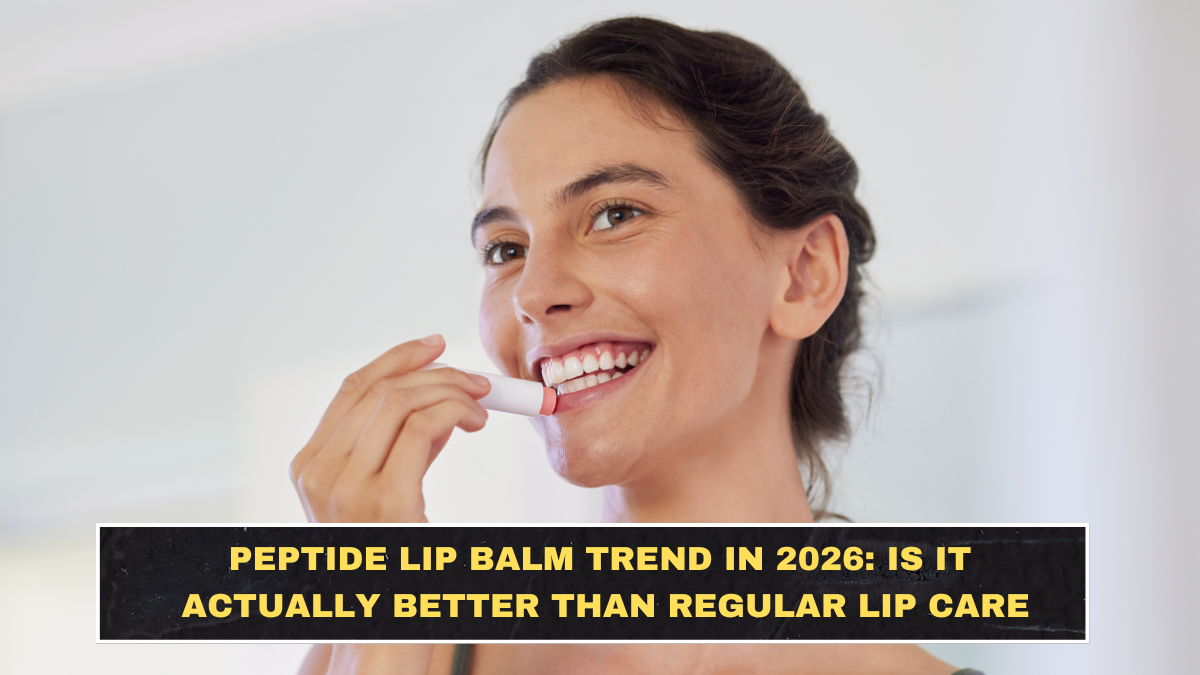
Peptide lip balm is trending because it fits what beauty buyers want right now: a small product, a lower price than treatments, and a promise that sounds more advanced than plain petroleum jelly. Industry reporting in 2025 described peptide-based lip treatments as one of the standout skincare trends, and market research shows the wider lip care category is still growing, with the global lip care market estimated at $2.47 billion in 2024 and projected to reach $3.48 billion by 2030. Lip balm alone held 44.2% of category revenue in 2024, which tells you this is not some niche corner of beauty anymore.
The trend also got a push from brands that made “peptide” part of the product identity instead of burying it in the ingredient list. Forbes reported that Rhode’s Peptide Lip Treatment sold out within three days at launch and built a waitlist of more than 440,000 people. That kind of demand matters because beauty trends are often less about scientific breakthroughs and more about one product proving there is money in a category.
What do peptide lip balms actually claim to do?
Most peptide lip balms promise three things: better hydration, smoother texture, and a fuller-looking lip surface. That sounds impressive, but it helps to separate what is likely from what is mostly packaging. Lips get dry because the skin barrier there is thin and loses moisture easily, so any good lip product needs to reduce water loss and improve comfort first. Dermatology and moisturizer research consistently point to the basic formula structure as the real workhorse: emollients soften, humectants attract water, and occlusives help seal it in.
Peptides are then layered on top of that story. Reviews on cosmeceutical peptides note that peptides are widely used in skincare because they are believed to support signaling linked to repair and collagen-related processes. That sounds useful, but in real-world lip balms the effect depends heavily on formulation, concentration, and how long the product stays on the lips. So the honest answer is that peptides may add value, but they do not replace the boring barrier-support ingredients that do most of the heavy lifting.
Is there real evidence behind the peptide claims?
There is some evidence, but not enough to justify the exaggerated claims beauty marketing loves. A 2025 peer-reviewed study on a topical peptide-hyaluronic acid lip treatment reported significant improvements in lip shine, texture, and vermilion border appearance, with high participant satisfaction. That suggests peptide-containing lip products can improve how lips look and feel, at least in the short term.
But do not oversell it. Clinical studies on lip hydration and repair also show that well-formulated non-peptide lip products can restore moisture, reduce roughness, and improve lip condition. Another line of research shows lip creams and barrier-focused treatments can protect against drying and chapping even without trendy peptide branding. So the evidence points to a blunt truth: peptide lip balm can work, but regular lip care can also work very well when the formula is strong.
What makes peptide lip balm different from regular lip care?
The difference is not that peptide balms moisturize while regular balms do nothing. That is nonsense. The real difference is that peptide balms are sold as treatment products, not just protective coatings. Many regular balms focus mainly on preventing moisture loss, while peptide lip products often pair occlusives and emollients with ingredients like peptides, hyaluronic acid, oils, or plumping agents to create a more cosmetic finish and a more premium story.
Here is the cleaner comparison buyers should use:
| Factor | Regular Lip Balm | Peptide Lip Balm |
|---|---|---|
| Main job | Protect and reduce moisture loss | Protect plus support smoother, more treated-looking lips |
| Core ingredients | Waxes, oils, petrolatum, butters | Similar base plus peptides and often HA or actives |
| Best use | Dryness, chapping, everyday barrier support | Dryness plus cosmetic finish and texture-focused claims |
| Evidence strength | Strong for hydration and protection | Mixed but promising for appearance improvements |
| Biggest downside | Can feel basic or heavy | Usually costs more than the extra benefit justifies |
That is the actual buyer decision. Not “old balm versus science,” but “cheap effective barrier care versus pricier treatment-style lip care.”
Are peptide lip balms really better than basic balm?
Sometimes yes, often no. If your lips are chronically dry, the best product may simply be the one with strong occlusive performance and good repeat use, not the one with the flashiest marketing. Research on moisturizers keeps landing in the same place: hydration and barrier repair depend more on the formula system than on a single hero ingredient. That means a peptide balm can be better, but only if the full formula is good. A weak formula with peptides is still a weak formula.
Where peptide lip balm tends to win is in user experience. These products often feel glossier, look smoother, and are marketed more like skincare-meets-makeup hybrids. That matters because consumers do not buy only for function. They also buy for finish, prestige, and routine appeal. The problem is when buyers confuse a nicer finish with dramatically better repair. Those are not the same thing.
Who should actually buy into this trend?
Peptide lip balm makes the most sense for people who already use lip balm regularly and want a product that feels more polished or treatment-like. It can also make sense for buyers who enjoy overnight lip care, glossy daytime wear, or products that sit between makeup and skincare. For them, paying more may be reasonable because they are buying comfort and finish as much as function.
It makes less sense for people who just need dry lip relief. Those buyers often do better with simple, proven formulas and consistent use. This is where people fool themselves: they think a trend product will compensate for bad habits, dehydration, lip licking, harsh weather, or inconsistent care. It will not. A peptide label does not rescue lazy lip care. It just gives it prettier packaging.
Conclusion
Peptide lip balm is popular in 2026 because it is the perfect beauty-category upgrade: cheap enough to impulse-buy, premium enough to feel smarter than regular balm, and backed by just enough science to sound convincing. There is some real support for peptide-based lip treatments improving texture, shine, and overall appearance. But the evidence does not show that peptide lip balm automatically crushes regular lip care.
The smarter view is simple. If you want a better lip-care experience and like treatment-style formulas, peptide lip balm can be worth it. If you just need reliable hydration and protection, regular balm still does the job perfectly well. Most of the difference is not miracle science. It is formulation quality, consistency, and marketing doing what marketing always does.
FAQs
Is peptide lip balm anti-aging?
It is marketed that way, but that wording is usually inflated. A peptide lip balm may help lips look smoother and more conditioned, but that is not the same as meaningful anti-aging in the way consumers often imagine it.
Can peptide lip balm make lips look fuller?
Some products can create a fuller-looking appearance through smoothing, hydration, shine, and sometimes added plumping ingredients. That is different from producing a large or lasting volume change.
Is a peptide lip balm better for dry lips than petroleum jelly?
Not automatically. Petroleum-based and other occlusive balms are still highly effective for preventing moisture loss. A peptide balm may feel nicer or look better, but that does not guarantee better repair.
Should you pay extra for peptide lip products?
Only if you value the finish, texture, and treatment-style experience. If your goal is basic lip protection, simpler balms often deliver better value for money.
Click here to know more