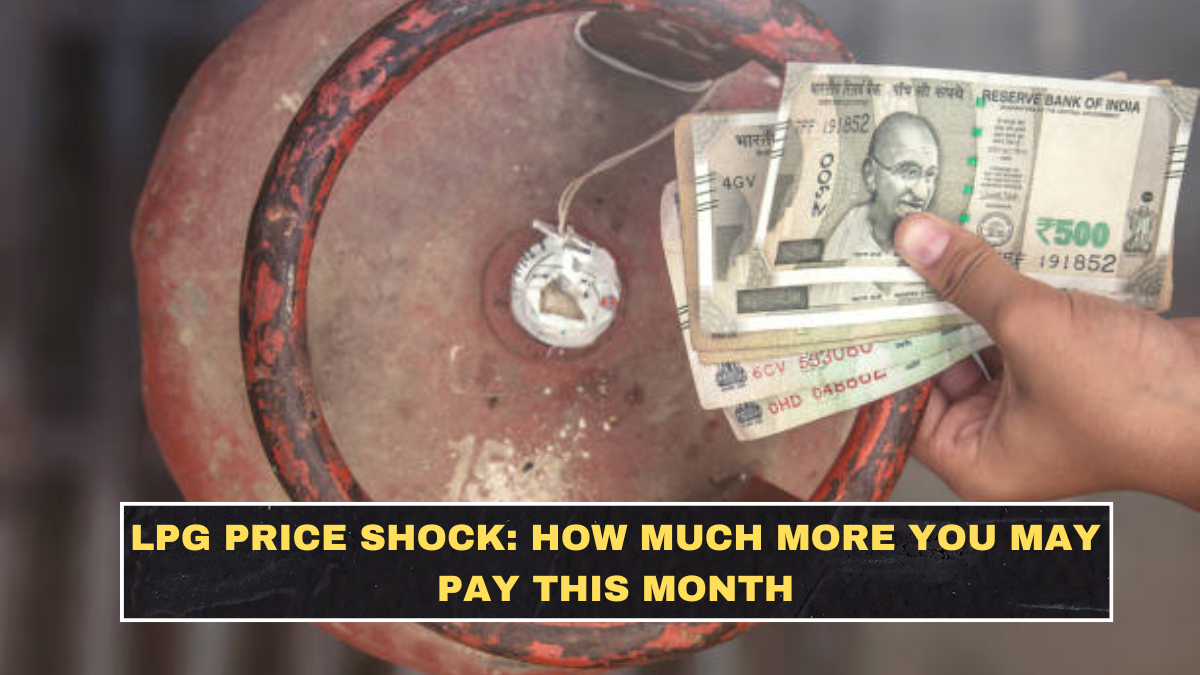
An LPG cylinder is not optional—it’s a basic need in most Indian homes. That’s why even a small price increase feels big.
The real issue is not just the price, but who actually ends up paying more.
Why This Matters
LPG is one of the few expenses that directly impacts daily life. You cannot delay cooking like you delay buying clothes or gadgets. So when the price of a cylinder increases, the impact is immediate. Families don’t just “adjust”—they feel the pressure in their monthly budget instantly.
Think of it like this: if your monthly budget is already tight and LPG suddenly costs more, you are forced to cut something else. That “something else” is usually groceries, savings, or small lifestyle expenses. This is why LPG price changes matter more than many other economic updates.
Main Explanation
Let’s simplify this like you’re explaining it to a child.
Imagine LPG is like milk. If the cost of milk increases everywhere in the world, then even your local shop has to increase the price. LPG works in a similar way. India depends on global fuel systems, so when international fuel prices increase, LPG becomes expensive here too.
Now add one more layer. Earlier, the government used to protect many people by giving subsidies. That means even if the real price was high, people paid less. But now, subsidies are more targeted. Some people still get help, but many households pay the full price.
So two families in the same city can pay different amounts for the same LPG cylinder. One gets support, the other doesn’t.
That’s why people feel confused. They hear “price increased,” but what they actually experience depends on their own situation.
Table: What Actually Controls LPG Price in India
| Factor | Simple Meaning | Why It Affects You |
|---|---|---|
| Global fuel prices | LPG cost depends on international energy prices | If global prices rise, your cylinder becomes expensive |
| Rupee value | India imports fuel in dollars | If rupee weakens, LPG cost increases |
| Subsidy system | Some households get financial support | Not everyone pays the same price |
| Government policy | Rules change over time | Your cost depends on current policy |
| Usage pattern | How often you refill | More usage = more impact from price hike |
What’s Happening
LPG pricing in India has been gradually moving toward a more market-linked system. This means prices are influenced more by real costs rather than being fully controlled. At the same time, support has become targeted instead of universal.
This creates a situation where price increases feel sharper today than they did earlier. Even if the increase is small on paper, the real burden feels bigger because fewer people are shielded by subsidies.
What You Should Do
First, stop guessing—check whether you are actually receiving any subsidy. Many people assume they are getting benefits when they are not.
Second, start treating LPG like a fixed budget item. If you know your refill cycle, you can plan better instead of getting surprised.
Third, reduce waste. Simple habits like using the right flame size, covering utensils while cooking, and maintaining burners can reduce gas usage more than you think.
Common Mistakes
The biggest mistake is ignoring your own usage and blaming only price hikes. Yes, prices rise—but careless usage makes the problem worse.
Another mistake is believing every viral message about LPG price changes. Most of them are either outdated or misleading.
And many people don’t check subsidy status at all. That’s like losing money and not even realizing it.
What to Watch Next
Watch for price revision patterns, not just one update. LPG doesn’t suddenly become expensive overnight without reason—there are trends behind it.
Also watch for any policy changes. If subsidy rules or eligibility change, your actual cost can change even if the official price doesn’t move much.
Reality Check
Here’s the blunt truth.
LPG is not going back to being “cheap and stable” like people expect. The system is shifting, and households are expected to adapt.
If your budget is already tight and you’re not tracking your expenses, LPG is not your only problem—you just haven’t noticed the rest yet.
Conclusion
LPG price changes are not random—they are the result of global costs, policy decisions, and subsidy structure. You cannot control these factors, but you can control how you respond to them.
The smartest approach is awareness and planning. Understand what affects your cost, track your usage, and stop relying on assumptions.
Because in the end, the price is not what hurts the most—lack of preparation does.
FAQs
What is the current LPG price in India?
LPG prices vary by city and are updated periodically by oil companies based on multiple factors.
Why do LPG prices increase?
Prices increase mainly due to global fuel costs, currency value, and government policy changes.
Who gets LPG subsidy?
Subsidy is given to eligible households under specific government schemes, not to everyone.
Can LPG prices go down?
Yes, if global fuel prices decrease or policies change, LPG prices can reduce.
How can I reduce LPG usage?
Use efficient cooking methods, maintain burners, and avoid unnecessary gas usage.
Click here to know more.