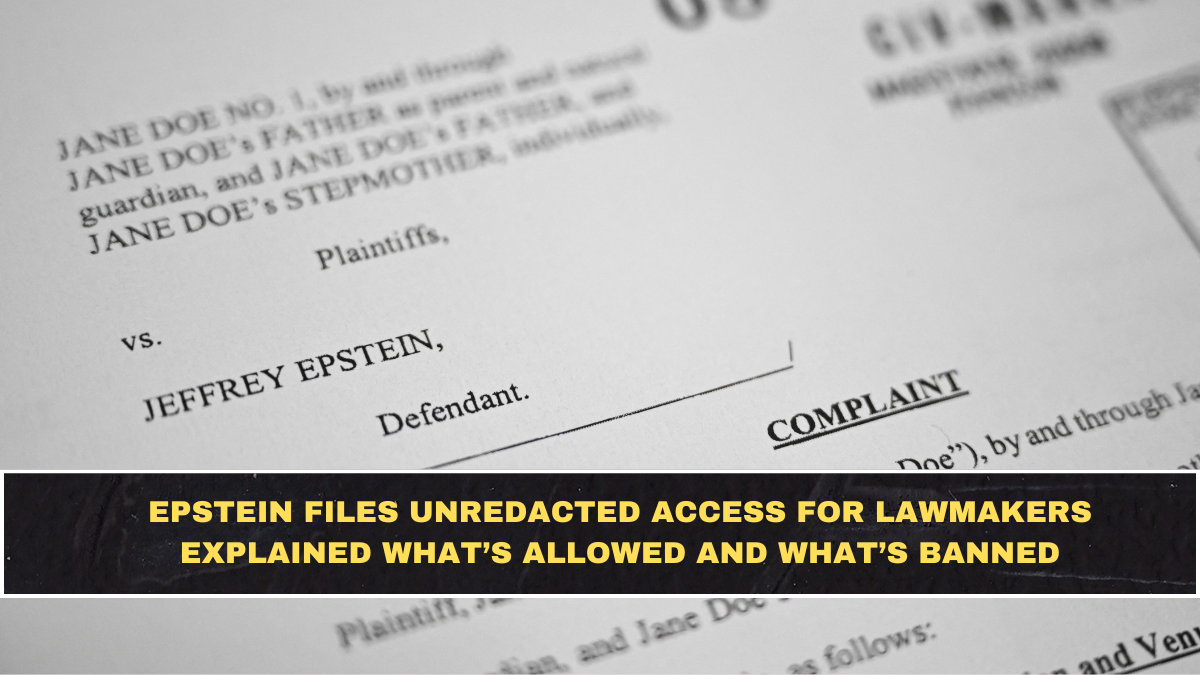
The phrase “unredacted access” has sparked confusion, speculation, and a wave of viral claims, but the reality is far more constrained than social media suggests. When the U.S. Department of Justice allowed certain lawmakers to view unredacted Epstein-related records, it did not open a free-for-all. It created a narrow, supervised window designed to balance oversight with legal protections that still apply.
Understanding what this access actually means requires separating oversight procedure from public disclosure. Lawmakers are not investigators running a parallel probe, and they are not free to publish what they see. The distinction matters because misunderstanding it fuels misinformation, reputational harm, and unrealistic expectations about what will happen next.
What “Unredacted Access” Means in Practice
Unredacted access means lawmakers can view records without the black bars that normally obscure sensitive information. This access is typically provided in secure settings, under supervision, and with strict rules governing how the material can be handled. It does not equate to possession of the documents.
The purpose is oversight, not publication. Lawmakers are allowed to examine whether agencies handled cases properly, followed procedure, and applied the law consistently. That scope is narrow by design, and it exists to protect due process and privacy while enabling accountability.
What Lawmakers Are Allowed to See
Within the secure review, lawmakers may see names, dates, communications, and contextual details that are usually redacted from public versions. This allows them to assess whether redactions are justified and whether investigative steps were taken appropriately at the time.
However, access does not convert lawmakers into prosecutors or judges. They are reviewing records to understand decisions, not to assign guilt or reopen cases on their own authority. The material is informational, not actionable evidence for public release.
What Lawmakers Are Explicitly Barred From Doing
There are firm restrictions on copying, photographing, or removing documents. Lawmakers cannot publish the records, upload excerpts, or share screenshots. Note-taking is typically allowed, but notes themselves may be subject to rules depending on the setting.
Crucially, lawmakers cannot name individuals publicly based solely on what they view in these records. Doing so would risk violating privacy laws, defamation standards, and congressional rules. Oversight access does not override existing legal boundaries.
Why Names in These Files Are Especially Sensitive
Epstein-related records often include names that appear for many reasons, not all of them incriminating. Being mentioned in a document can reflect contact, scheduling, or third-party reference rather than wrongdoing.
This is why unredacted access is tightly controlled. Releasing names without context can cause irreversible reputational harm, even when no allegation or evidence exists. The legal system treats this risk seriously, which is why redactions remain the default for public releases.
What Happens After Lawmakers Review the Records
After reviewing unredacted materials, lawmakers may raise concerns through formal channels. This can include closed briefings, written questions to agencies, or legislative proposals aimed at improving oversight or procedures.
What typically does not happen is immediate public disclosure of new names or details. Any broader release would require separate legal processes, court approval, or legislative action. Oversight review is a step, not an endpoint.
Why This Is Not the Same as Public Disclosure
Public disclosure follows a different legal standard than oversight review. Courts weigh privacy, victim protection, and due process before allowing records to be released more widely. Lawmakers viewing unredacted files does not bypass that process.
This distinction explains why headlines suggesting “everything is now public” are misleading. Access for oversight exists precisely because full public disclosure is not legally or ethically appropriate in many cases.
How Misinformation Spreads Around This Topic
Viral posts often collapse multiple ideas into one claim, suggesting that unredacted access equals confirmation, exposure, or imminent revelation. These posts usually omit the restrictions and legal context that define what lawmakers can actually do.
Screenshots, edited summaries, and “lists” circulating online frequently rely on this confusion. Understanding the real limits of unredacted access helps readers avoid amplifying claims that are not grounded in fact.
Conclusion: Oversight, Not Revelation
Unredacted access to Epstein-related records is about oversight, not spectacle. It allows lawmakers to scrutinize past handling while preserving the legal safeguards that protect victims and prevent unfounded accusations. The process is deliberately constrained because the stakes are high.
For readers, the key takeaway is restraint. Access does not mean disclosure, and review does not mean proof. In an environment where partial truths travel fast, understanding these limits is essential to staying informed without spreading harm.
FAQs
Does unredacted access mean lawmakers can release names publicly?
No. Lawmakers are prohibited from publishing or sharing names based solely on what they view during unredacted access.
Why does the DOJ allow unredacted access at all?
It enables congressional oversight, allowing lawmakers to evaluate whether agencies acted appropriately while maintaining legal protections.
Can lawmakers take copies of the documents?
No. Documents are reviewed in secure settings, and copying or removing them is not permitted.
Does a name appearing in these files imply wrongdoing?
No. Names can appear for many non-incriminating reasons and do not by themselves indicate guilt or involvement.
Will this lead to more public document releases?
Not automatically. Any broader release would require separate legal processes and approvals.
Why are victims’ details still protected even with unredacted access?
Privacy laws and ethical standards require protecting victims regardless of oversight needs, which is why such details remain restricted.