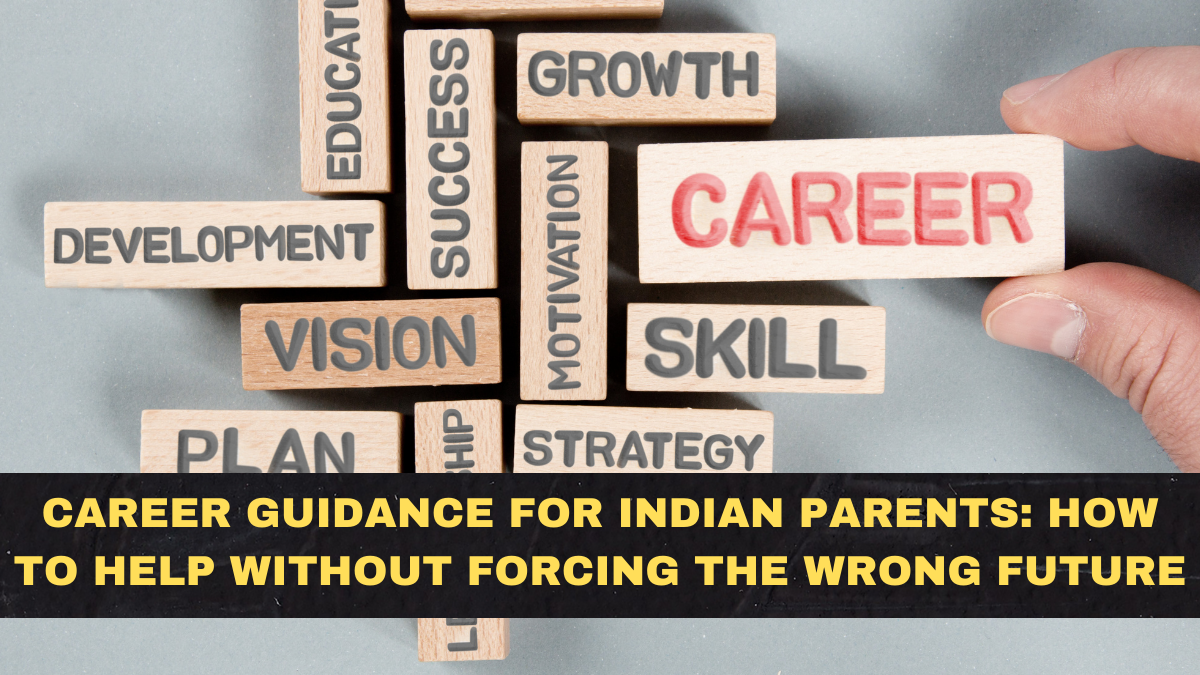
In 2026, parenting around careers has become far more complicated than it was a generation ago. The job market is changing faster, traditional paths are less predictable, and children are exposed to far more options and opinions than their parents ever were. Yet many families still rely on outdated assumptions about success, stability, and respectability when guiding career choices.
The problem is not that parents want the best for their children. The problem is that well-meaning guidance often turns into pressure, comparison, or fear-driven decisions. Effective career guidance for parents in 2026 requires a mindset shift. It is no longer about choosing the “safest” path. It is about helping children build clarity, resilience, and realistic expectations in an uncertain world.
Why Traditional Career Advice Is Failing Families Today
For decades, parents relied on a narrow set of “approved” careers that promised stability and social status. That framework worked when jobs were fewer but predictable. In 2026, that same framework often pushes children into overcrowded fields with shrinking returns.
Many parents also underestimate how much the hiring process has changed. Degrees alone no longer guarantee outcomes, and employers increasingly value skills, adaptability, and problem-solving ability. When guidance is based only on degree names, it creates a mismatch between effort and reward.
This gap between parental expectations and market reality is one of the biggest sources of conflict and disappointment in Indian households today.
The Hidden Cost of Pressure-Based Career Decisions
Pressure may produce short-term compliance, but it creates long-term damage. Students who choose careers primarily to satisfy family expectations often struggle with motivation, confidence, and persistence.
In 2026, career paths require continuous learning and self-driven growth. A child who feels trapped in a chosen path is less likely to adapt or upskill when the market demands change.
Parents may believe they are ensuring security, but excessive pressure often increases anxiety, burnout, and eventual career instability rather than reducing it.
Understanding the New Career Reality in India
The Indian job market today rewards alignment more than conformity. Careers that match a student’s strengths, interests, and learning style tend to grow faster over time, even if they start modestly.
High-growth roles now exist across technology, design, analytics, healthcare, finance, operations, and creative fields. Many of these did not exist in a clear form when today’s parents were choosing careers.
Career guidance for parents in 2026 must start with accepting that success no longer follows one fixed route, and that comparison with neighbors or relatives is a poor decision tool.
How Parents Can Support Without Controlling
Supportive guidance begins with listening rather than directing. Parents should aim to understand what their child enjoys, what they struggle with, and how they respond to challenge.
Asking open questions creates trust and clarity. Questions about interests, preferred work styles, and long-term values are far more useful than pushing specific job titles.
When parents shift from decision-makers to advisors, children are more likely to share doubts early instead of hiding them until it is too late.
Evaluating Career Options Realistically Together
One of the most constructive roles parents can play is helping evaluate options objectively. This includes discussing cost of education, time to employability, early income reality, and long-term growth potential.
Instead of labeling careers as “good” or “bad,” families should analyze trade-offs. Every path has risks, effort requirements, and uncertainty.
Involving children in this evaluation builds decision-making skills and reduces fear. It also ensures that the final choice feels owned rather than imposed.
Handling Uncertainty Without Panic Decisions
Uncertainty is unavoidable in 2026. Markets change, technologies evolve, and roles disappear or transform. Parents often react to this uncertainty by pushing children toward whatever seems most stable at the moment.
The irony is that panic-driven choices often age poorly. Careers chosen in fear are rarely flexible enough to survive long-term change.
Parents who model calm, thoughtful decision-making help children develop the confidence to adapt when plans need revision.
What Parents Should Avoid Saying or Doing
Certain patterns consistently harm career conversations. Comparing children to others creates shame rather than motivation. Dismissing interests as “useless” shuts down honest dialogue.
Using financial sacrifice as emotional leverage also damages trust. While cost matters, it should be discussed rationally, not as guilt.
Career guidance works best when conversations feel safe, respectful, and ongoing rather than final and judgmental.
Building a Long-Term Support Framework
The most effective parents focus on building capability, not controlling outcomes. Encouraging skill development, discipline, and self-reflection prepares children for multiple career shifts over a lifetime.
Support may include helping find mentors, evaluating courses critically, or simply providing emotional stability during setbacks.
In 2026, a parent’s greatest gift is not a perfect career decision, but the confidence to recover from imperfect ones.
Conclusion: Guidance Works Best When It Builds Independence
Career guidance for parents in 2026 is less about steering and more about strengthening. The world children are entering is complex, fast-changing, and unpredictable. No parent can map it perfectly.
What parents can do is create an environment where exploration is safe, mistakes are survivable, and growth is continuous. When children feel supported rather than controlled, they make better decisions and adapt faster.
The goal is not to choose a future for them, but to help them build the skills and mindset to choose wisely again and again.
FAQs
How involved should parents be in career decisions?
Parents should act as advisors and sounding boards, offering perspective without taking over the decision-making process.
Is it risky to allow children to choose unconventional careers?
Every career has risk. Unconventional paths can be stable if backed by skills, planning, and realistic expectations.
How can parents judge if a career option is practical?
By discussing cost, employability timeline, entry-level income, and long-term growth rather than reputation alone.
What if parents disagree with a child’s choice?
Open dialogue is better than force. Express concerns clearly, listen actively, and evaluate trade-offs together.
Should parents push for “safe” careers in uncertain times?
Pushing purely for safety often backfires. Flexibility and skill alignment usually provide better long-term security.
How can parents reduce career-related stress at home?
By avoiding comparisons, encouraging honest conversations, and focusing on progress rather than perfection.