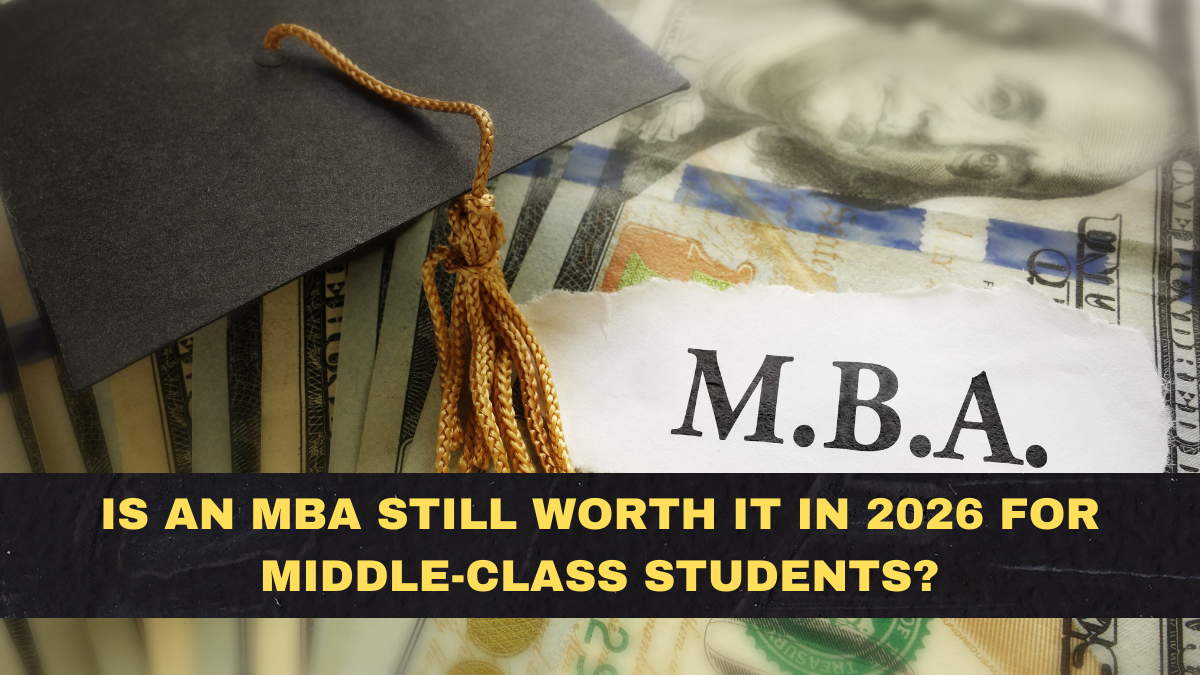
For decades, an MBA symbolized upward mobility for middle-class families in India. It promised better salaries, leadership roles, and a fast track into corporate stability. In 2026, that promise feels far less certain. Rising fees, uneven placement outcomes, and changing hiring preferences have forced students to ask a hard question: is MBA still worth it anymore.
This doubt is not coming from cynicism alone. It is driven by numbers, lived experiences, and the visible gap between expectations and outcomes. While some MBAs still deliver exceptional value, many do not. Understanding where the MBA stands today requires separating legacy perception from present-day reality.
How the MBA Promise Changed Over Time
The original appeal of an MBA was clear. Companies needed managers who could scale operations, handle teams, and make decisions. An MBA filled that gap and rewarded graduates with rapid growth and higher pay.
Over time, the number of MBA colleges exploded. Seats increased faster than quality, and the market became saturated. In 2026, the degree is no longer scarce, which has weakened its signaling power.
As a result, employers now differentiate far more aggressively. The MBA title alone no longer guarantees credibility or competence.
The Real Cost of an MBA in 2026
The financial burden of an MBA has grown sharply. Tuition fees, living expenses, and opportunity cost together create a heavy investment, especially for middle-class students relying on loans.
For many, repayment pressure begins immediately after graduation. If placements do not match expectations, stress multiplies quickly. The risk profile of an MBA has therefore increased significantly.
This is why the question “is MBA still worth it” is now deeply tied to return on investment, not just academic ambition.
Placement Reality vs Brochure Promises
Placement reports often highlight top packages, but median outcomes tell a different story. A small percentage of students secure high-paying roles, while many accept average or below-average offers.
In several cases, roles offered post-MBA resemble entry-level positions that could have been accessed without such an expensive degree. Growth then depends more on individual performance than qualification.
In 2026, students must look beyond headline numbers and understand placement distribution, not just best-case outcomes.
Where an MBA Still Makes Sense
Despite the challenges, an MBA is not obsolete. It still delivers strong value when pursued from top-tier institutions with rigorous selection, strong alumni networks, and deep industry connections.
An MBA also works well for professionals with clear goals, such as transitioning into leadership, consulting, or specialized management roles. In such cases, the degree amplifies existing experience.
The key difference is intent and context. An MBA pursued blindly carries risk, while a targeted MBA can still be powerful.
Why Many MBA Graduates Feel Disappointed
Disappointment often stems from mismatched expectations. Students expect transformation simply by enrolling, but the degree is only a platform, not a guarantee.
Without internships, networking, and skill-building, many graduates struggle to stand out. The realization that effort must continue post-degree surprises many.
In India, where MBA is often seen as a reset button, this realization fuels regret and career anxiety.
MBA Alternatives Gaining Ground in 2026
The rise of specialized master’s programs, certifications, and skill-based learning has created credible alternatives. Employers increasingly value domain expertise over generic management knowledge.
Fields like product management, data analytics, operations, and marketing now reward focused learning paths that cost less and deliver faster outcomes.
This shift explains why many professionals are skipping MBAs altogether or postponing them until the value case is clearer.
What Middle-Class Students Must Evaluate Honestly
For middle-class students, the MBA decision carries higher stakes. Debt tolerance, risk appetite, and fallback options must be evaluated realistically.
Questions around college quality, placement transparency, and long-term growth matter more than brand names alone. Emotional decisions based on social pressure often backfire.
In 2026, asking “is MBA still worth it” without this evaluation is financially dangerous.
How Employers Now View MBA Graduates
Employers are no longer impressed by the degree itself. They look for problem-solving ability, communication skills, adaptability, and business understanding.
An MBA can support these traits, but it cannot replace them. Candidates who rely solely on the qualification often struggle during interviews and on the job.
This shift reflects a broader move toward outcome-based hiring rather than credential-based filtering.
Conclusion: MBA Is No Longer a Safe Bet, But Not a Bad One Either
In 2026, an MBA is no longer the universal career upgrade it once was. It has become a high-risk, high-reward option that works only under the right conditions.
For students with clarity, strong colleges, and realistic expectations, the degree can still open doors. For others, it may amplify debt without delivering proportional returns.
The honest answer to whether an MBA is still worth it depends less on the degree itself and more on how, where, and why it is pursued.
FAQs
Is an MBA still valuable in India in 2026?
Yes, but only when pursued from quality institutions or aligned with clear career goals. Generic MBAs offer limited value today.
Why are many MBA graduates unhappy?
High fees, average placements, and unrealistic expectations contribute to disappointment after graduation.
Do employers still prefer MBA candidates?
Employers value skills and experience first. An MBA helps only when it complements these qualities.
Are MBA alternatives better now?
In many cases, specialized programs and certifications offer faster and cheaper career returns.
Should middle-class students take MBA loans?
Only after evaluating placement data, repayment capacity, and long-term growth potential very carefully.
When does an MBA make the most sense?
When it aligns with career transitions, leadership goals, or comes from institutions with proven outcomes.